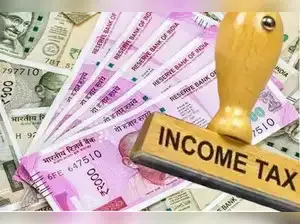
In the Union Budget 2025, Finance Minister Nirmala Sitharaman announced a major overhaul of income tax slabs along with a higher rebate under the new tax regime. The revised structure aims to make taxation more progressive and ease the burden on middle-income earners.
Under the new framework, individuals earning up to ₹12 lakh will pay zero income tax. For salaried taxpayers, the benefit extends up to ₹12.75 lakh annually after factoring in the standard deduction of ₹75,000.
For incomes above ₹12 lakh under the new regime, the Budget has introduced fresh slabs for calculating tax liability for FY 2025-26. Income up to ₹4 lakh remains fully exempt. A 5% tax applies to earnings between ₹4 lakh and ₹8 lakh, 10% for ₹8–12 lakh, and 15% for ₹12–16 lakh. Income between ₹16 lakh and ₹20 lakh will attract 20% tax, 25% for ₹20–24 lakh, and 30% for earnings above ₹24 lakh.

In the 2020-21 Budget, she unveiled an optional new tax regime with reduced rates for those willing to forgo exemptions. Under this system, incomes between ₹5 lakh and ₹7.5 lakh were taxed at 10%, ₹7.5 lakh to ₹10 lakh at 15%, ₹10 lakh to ₹12.5 lakh at 20%, ₹12.5 lakh to ₹15 lakh at 25%, and income above ₹15 lakh at 30%.
Budget 2023 made the new regime the default, though taxpayers were allowed to opt for the old one. Income up to ₹7.5 lakh became tax-free under the new system after including the standard deduction, and the highest surcharge rate was reduced from 37% to 25%.
The most consequential change yet came in Budget 2025, where income up to ₹12 lakh under the new regime was made entirely tax-free.
However, industry body PHDCCI has urged the government to rationalise personal tax slabs further, proposing a 20% rate for income up to ₹30 lakh, 25% up to ₹50 lakh, and 30% beyond ₹50 lakh to support the middle class and encourage greater tax compliance.
Under the new framework, individuals earning up to ₹12 lakh will pay zero income tax. For salaried taxpayers, the benefit extends up to ₹12.75 lakh annually after factoring in the standard deduction of ₹75,000.
For incomes above ₹12 lakh under the new regime, the Budget has introduced fresh slabs for calculating tax liability for FY 2025-26. Income up to ₹4 lakh remains fully exempt. A 5% tax applies to earnings between ₹4 lakh and ₹8 lakh, 10% for ₹8–12 lakh, and 15% for ₹12–16 lakh. Income between ₹16 lakh and ₹20 lakh will attract 20% tax, 25% for ₹20–24 lakh, and 30% for earnings above ₹24 lakh.
Old vs New Income Tax Regime
Here’s how the revised slabs compare with those under the old tax system for FY 2025-26.Sitharaman’s Previous Budget Moves
In her first Budget in 2019, Sitharaman did not alter income tax slabs but introduced an additional deduction of ₹1.5 lakh on interest paid for home loans sanctioned up to March 31, 2020. This was projected to provide up to ₹7 lakh in savings for middle-class homebuyers over a 15-year repayment period. Homebuyers purchasing properties worth up to ₹45 lakh under the affordable housing scheme could claim an enhanced deduction of up to ₹3.5 lakh.In the 2020-21 Budget, she unveiled an optional new tax regime with reduced rates for those willing to forgo exemptions. Under this system, incomes between ₹5 lakh and ₹7.5 lakh were taxed at 10%, ₹7.5 lakh to ₹10 lakh at 15%, ₹10 lakh to ₹12.5 lakh at 20%, ₹12.5 lakh to ₹15 lakh at 25%, and income above ₹15 lakh at 30%.
Budget 2023 made the new regime the default, though taxpayers were allowed to opt for the old one. Income up to ₹7.5 lakh became tax-free under the new system after including the standard deduction, and the highest surcharge rate was reduced from 37% to 25%.
The most consequential change yet came in Budget 2025, where income up to ₹12 lakh under the new regime was made entirely tax-free.
What to Expect in Budget 2026-27
With substantial relief already extended in the previous budget—and recent GST reductions further easing consumer costs—the government is unlikely to introduce additional cuts to income tax slabs this year.However, industry body PHDCCI has urged the government to rationalise personal tax slabs further, proposing a 20% rate for income up to ₹30 lakh, 25% up to ₹50 lakh, and 30% beyond ₹50 lakh to support the middle class and encourage greater tax compliance.