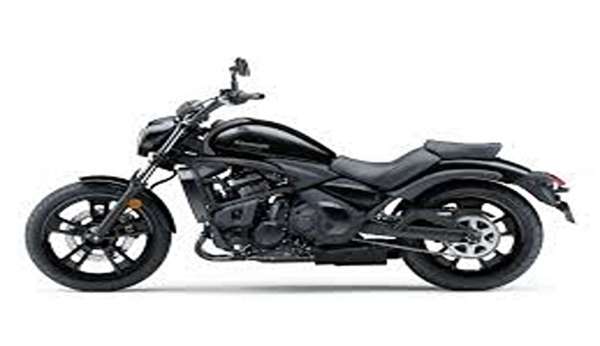
2026 Kawasaki Vulcan S: The 2026 iteration of the Kawasaki Vulcan S has officially been introduced in the Indian market at an ex-showroom price of Rs 8.13 lakh. With this update, Kawasaki continues its strategy of incremental refinement rather than radical redesign. The new model focuses on meeting updated regulatory requirements while adding a subtle visual refresh, all without altering the core character that has made the Vulcan S a popular choice among mid-capacity cruiser enthusiasts in India.
For the 2026 model year, Kawasaki has introduced a new Metallic Flat Spark Black colour option. This replaces the earlier Pearl Matte Sage Green shade and gives the motorcycle a darker, more understated appearance. The new paint finish complements the Vulcan S’s minimalist cruiser design, where exposed mechanical components and a compact silhouette play a major role in its visual identity.
The overall styling remains intentionally restrained. Kawasaki has avoided unnecessary chrome or excessive bodywork, choosing instead to highlight the motorcycle’s mechanical layout. The low-slung profile, sculpted fuel tank, and elongated wheelbase continue to define the Vulcan S as a sporty yet approachable cruiser. This design direction appeals to riders who prefer a modern cruiser aesthetic rather than a traditional retro-inspired look.
The most important update for the 2026 Vulcan S lies beneath the surface. The motorcycle is now compliant with E20 fuel norms, making it suitable for ethanol-blended petrol as mandated by evolving emission and fuel regulations in India. This change ensures long-term usability and regulatory alignment without compromising everyday performance.
Powering the motorcycle is the familiar 649cc liquid-cooled parallel-twin engine. This unit is known for its smooth power delivery and refined nature, making it well suited for both city riding and relaxed highway cruising. For 2026, the engine produces 61 bhp at 7,500 rpm and 61 Nm of torque at 6,600 rpm. The slight reduction in torque compared to earlier versions is a result of modifications required for E20 compatibility, though the difference is unlikely to be noticeable during real-world riding.
The engine is paired with a 6-speed gearbox that offers clean shifts and well-spaced ratios. Kawasaki has also retained the assist and slipper clutch, which reduces clutch lever effort and improves rear-wheel stability during aggressive downshifts. This feature enhances rider confidence, especially for those transitioning to larger displacement motorcycles.
Kawasaki has chosen to keep the Vulcan S’s chassis unchanged, and for good reason. The motorcycle is built around a high-tensile steel perimeter frame that is intentionally left exposed. This not only contributes to the bike’s distinctive look but also helps maintain structural rigidity and predictable handling.
The compact engine layout and narrow midsection make the Vulcan S relatively easy to manage despite its cruiser proportions. Riders benefit from improved ground reach and better control during low-speed manoeuvres, which is particularly valuable in urban traffic conditions. These characteristics make the motorcycle accessible to a wider range of riders, including those with less experience in the mid-capacity segment.
Suspension duties on the 2026 Vulcan S are handled by a 41mm telescopic fork at the front and a preload-adjustable monoshock at the rear. The setup offers 130mm of front wheel travel and 80mm at the rear, tuned to balance comfort with stability. This configuration is well suited to Indian road conditions, absorbing minor imperfections while maintaining composure at highway speeds.
Braking performance remains reliable and consistent. The motorcycle features a 300mm disc brake at the front and a 250mm disc at the rear, supported by dual-channel ABS as standard. This setup provides predictable stopping power and added safety during emergency braking situations.
Ergonomics continue to be a strong point. The low 705mm seat height makes the Vulcan S approachable for shorter riders, while the 130mm ground clearance is sufficient for most speed breakers and uneven road surfaces. The kerb weight has increased slightly to 235kg, around 6kg more than before, but this additional weight does not significantly impact overall handling once the motorcycle is in motion.
One of the defining features of the Vulcan S remains Kawasaki’s ERGO-FIT system. This rider-focused approach allows adjustments to key contact points, including the seat, footpegs, and handlebars. With up to 18 possible combinations across reduced reach, mid reach, and extended reach configurations, riders can tailor the motorcycle to suit their height, arm length, and riding preferences.
This level of ergonomic customisation is still uncommon in the cruiser segment and adds significant value to the Vulcan S package. It helps riders achieve a more natural and confidence-inspiring riding posture, reducing fatigue on longer journeys and improving overall control.
With the 2026 update, the Kawasaki Vulcan S continues to position itself as a refined, modern cruiser that prioritises usability, comfort, and personalisation. While it does not introduce major mechanical changes, the addition of E20 compliance and a fresh colour option ensures it remains relevant in an evolving market. For riders seeking a dependable mid-capacity cruiser with proven engineering and adaptable ergonomics, the Vulcan S remains a compelling option in its price segment.