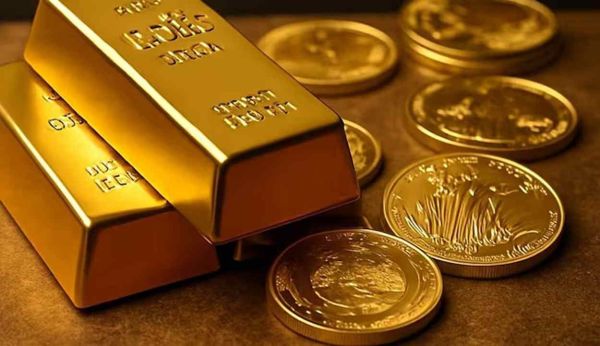
Gold Prices: Gold prices have eased slightly after reaching historic highs, leading investors to carefully evaluate whether the recent dip represents a smart entry point or simply a pause after an exceptional rally. After delivering one of its strongest annual performances in recent history, gold is now experiencing short-term volatility. However, the broader trend continues to reflect strength, supported by global economic uncertainty, monetary policy shifts, and sustained institutional demand.
In recent sessions, gold prices have shown signs of consolidation both in domestic and international markets. After touching record levels, prices witnessed a modest pullback, which is not uncommon following such a sharp upward move. Domestic futures prices remain elevated despite temporary declines, while global spot prices have also corrected from their peaks. This cooling phase has encouraged investors to reassess positioning and risk exposure.
Market participants largely view this movement as technical correction rather than a structural reversal. Trading volumes have remained relatively stable, indicating that investors are not aggressively exiting positions but are instead waiting for clearer signals.
The remarkable rise in gold prices throughout 2025 has been driven by a unique alignment of macroeconomic factors. One of the most significant influences has been the global shift toward accommodative monetary policy. Expectations of interest rate cuts by major central banks have reduced the opportunity cost of holding non-yielding assets like gold.
Additionally, persistent geopolitical tensions across multiple regions have increased demand for safe-haven assets. Concerns over rising sovereign debt, especially among developed economies, have further reinforced gold’s role as a store of value. Central banks across the world have continued to increase their gold reserves, signaling long-term confidence in the metal as a strategic asset.
Investment demand has also been boosted by higher inflows into gold-backed exchange-traded funds, reflecting growing participation from institutional and retail investors alike.
After an extended rally, markets often enter a phase of consolidation as investors book profits and reassess valuations. Analysts suggest that the recent correction in gold prices fits this pattern. Short-term volatility has been amplified by thinner trading volumes and uncertainty around upcoming economic data releases.
Rather than indicating weakness, such corrections often help establish stronger support levels. Many experts believe gold may trade within a broad range in the near term as markets digest macroeconomic developments and policy signals.
For long-term investors, the current pullback is widely viewed as a potential accumulation phase. Analysts emphasize that the underlying fundamentals supporting gold remain intact. Safe-haven demand continues to be strong, currency fluctuations remain favorable, and expectations of global monetary easing persist.
While short-term traders may encounter price swings, investors with a longer horizon may benefit from phased buying strategies during periods of weakness. The consensus among market experts is that meaningful downside risks appear limited unless there is a sharp and sustained shift in global economic conditions.
Looking beyond the immediate volatility, the outlook for gold remains constructive. Many analysts expect the broader bullish trend to extend into 2026 and beyond, although with intermittent corrections along the way. Price projections suggest that gold could establish a higher trading range over the next 12 to 18 months as macroeconomic risks continue to unfold.
Structural factors such as diversification away from traditional fiat currencies, concerns around currency debasement, and steady consumer demand from key markets are expected to provide long-term support. Institutional forecasts also indicate that global gold prices could test new highs if current trends persist.
Despite the positive outlook, investors should remain mindful of potential headwinds. A sharp rise in real interest rates, sustained strength in the US dollar, or a significant easing of geopolitical tensions could temporarily dampen gold’s appeal. Additionally, any slowdown in central bank purchases or a shift toward more restrictive monetary policies could limit upside momentum.
That said, most experts believe such scenarios are unlikely to derail the broader trend. Even if prices correct further, the depth of any decline is expected to be limited by strong underlying demand.
Gold’s recent dip appears to be a healthy pause rather than a warning sign. For investors focused on long-term portfolio stability and risk management, gold continues to play a crucial role. Strategic allocation during periods of correction may offer favorable risk-reward dynamics, especially in an environment marked by uncertainty and evolving economic policies.
As always, investors should align gold exposure with their overall financial goals, time horizon, and risk tolerance while remaining attentive to global developments.