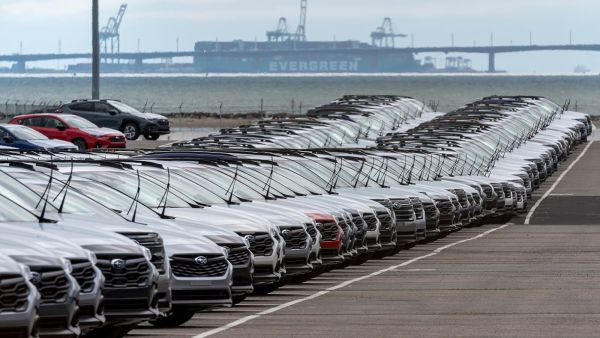
US Auto Market Outlook 2026: The United States automobile market is entering a new phase after experiencing unusual momentum in the previous year. A mix of trade policy uncertainty, tariff announcements, and changes in environmental incentives pushed many consumers to make faster purchase decisions than they otherwise would have. As the calendar turns toward 2026, industry observers believe that the factors which boosted demand earlier are losing strength, setting the stage for a more measured pace of vehicle sales across the country.
One of the defining characteristics of recent automotive sales has been the role of policy announcements rather than organic consumer confidence. Early signals of steep tariff increases created fear of higher vehicle prices, prompting buyers to act quickly. Even though final trade agreements softened the originally proposed import duties, the initial headlines alone were enough to cause a noticeable surge in showroom traffic during the spring months.
This pattern highlighted how sensitive the auto market has become to government communication. Instead of responding to long-term economic fundamentals, many buyers reacted to short-term uncertainty. While this behavior helped lift overall annual sales figures, it also pulled demand forward, leaving fewer buyers waiting on the sidelines for the following year.
A similar rush occurred in the electric vehicle segment when changes to tax incentives were announced. As the phaseout of a major federal credit approached, buyers hurried to lock in purchases before losing access to thousands of dollars in potential savings. Dealerships reported a sharp rise in electric vehicle inquiries and sales toward the end of the year, further inflating overall market performance.
However, once these incentives expired, the underlying challenge remained: electric vehicles are still perceived by many consumers as expensive, particularly when combined with higher interest rates and general cost-of-living pressures. Without generous incentives, demand growth in this segment may slow in 2026.
Despite the chaotic environment, most major manufacturers managed to post respectable results. Overall US auto sales reached approximately 16.3 million units, marking a modest increase compared to the previous year. Some brands even recorded their strongest performance in several years, driven by aggressive marketing, fleet sales, and consumers seeking to beat anticipated price hikes.
Executives acknowledged that navigating this environment was difficult. Supply chain adjustments, fluctuating costs, and unclear trade rules made planning challenging. Still, the industry demonstrated resilience, supported by improved inventory levels and a gradual easing of production bottlenecks.
Looking ahead, analysts are preparing for a slight decline in total vehicle sales. Forecasts suggest that annual sales could fall below the previous year’s level, reflecting weaker consumer confidence and a cooling labor market. While interest rates are expected to be more favorable, this alone may not be enough to fully offset broader economic caution.
Dealer surveys reveal growing pessimism, especially among sellers who rely on middle-income and first-time buyers. Many households remain hesitant to commit to large purchases, particularly when economic signals appear mixed. As a result, industry experts anticipate a steadier, less volatile market rather than another surge-driven year.
One of the most significant challenges facing the auto market is affordability. Average transaction prices for new vehicles have climbed close to the fifty-thousand-dollar mark, a dramatic increase compared to figures from a decade ago. For many consumers, especially those without rising incomes or investment gains, new vehicles are increasingly out of reach.
This divide has led economists to describe the economy as uneven, with wealthier households benefiting from strong financial markets while lower-income consumers struggle with everyday expenses. In such an environment, demand for new cars naturally weakens among large segments of the population.
Automakers face a difficult balancing act when it comes to pricing. Even with moderated tariffs, additional costs remain embedded in the supply chain. However, raising sticker prices further risks pushing buyers away altogether. To cope, manufacturers have turned to alternative strategies such as higher delivery fees, reduced incentives, or removing features that were once standard.
These subtle adjustments allow companies to protect margins without alarming consumers with dramatic price jumps. Nevertheless, buyers are becoming more aware of these changes, contributing to a perception that vehicles offer less value for money than in the past.
The impact of high new-car prices is particularly harsh for first-time buyers. With few affordable entry-level models available, many are forced into the used car market. This shift increases competition for pre-owned vehicles and keeps used car prices elevated, limiting savings opportunities even outside the new-car segment.
As a result, the traditional path of starting with a budget-friendly new car has become less accessible, reshaping long-term consumer relationships with automotive brands.
Another variable on the horizon is the renegotiation of major trade agreements involving North American partners. While changes could affect supply chains and production costs, experts believe that consumers may pay less attention to tariff news in the coming year. After years of constant updates and warnings, trade policy has become background noise for many buyers.
Unless new developments directly and visibly impact showroom prices, most shoppers are likely to focus more on personal finances than on international trade discussions.