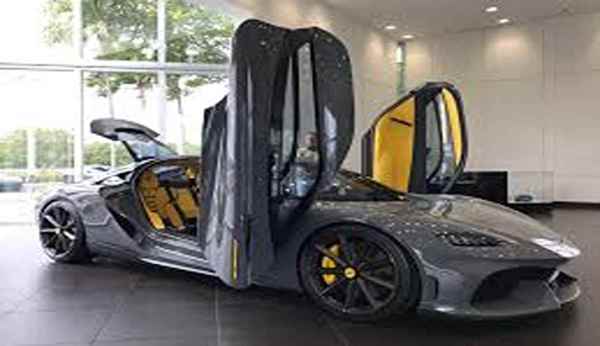
Global Safety: The modern hypercar segment is no longer defined solely by extreme speed or headline-grabbing horsepower figures. Today, safety, compliance, and long-term usability play an equally important role, especially when a vehicle is designed to carry four passengers. The Koenigsegg Gemera stands as a clear example of this evolution, proving that extraordinary performance can coexist with world-class safety engineering and strict international regulations.
Developed as a practical yet revolutionary four-seat hypercar, the Gemera has recently achieved a major milestone by successfully completing all European Union safety, emissions, and regulatory approval tests. This achievement reinforces Koenigsegg’s position as an engineering-driven manufacturer capable of meeting the most demanding global automotive standards without compromising innovation.
After extensive validation, the Gemera has been fully certified for European roads, confirming its compliance with current EU safety and environmental regulations. A key highlight of this process is the vehicle’s high-voltage battery system, which has been entirely designed and developed in-house by Koenigsegg engineers.
The battery not only satisfies the present ECE R100.3 requirements but also meets the future R100.5 Thermal Propagation Test scheduled to become mandatory in 2027. Meeting upcoming regulations years in advance demonstrates a forward-thinking engineering approach and reduces long-term regulatory risks for owners and markets alike.
One of the most notable accomplishments during testing was the battery system’s response to an extreme thermal runaway scenario. During controlled stress testing, engineers intentionally forced a single battery cell into failure. The system successfully contained the event within that individual cell, preventing heat or fire from spreading throughout the battery pack.
This level of containment exceeds many existing global safety benchmarks and highlights the effectiveness of Koenigsegg’s proprietary Battery Management System and advanced thermal isolation architecture. Such engineering ensures a significantly higher margin of safety in real-world conditions, especially for high-performance hybrid vehicles.
To further validate its safety claims, Koenigsegg subjected the Gemera’s battery pack to intense external flame exposure. In a durability test widely referred to as the Grill test, the battery was exposed to direct flames for more than two minutes.
Despite this extreme environment, internal temperatures remained stable, and no catastrophic failure occurred. This test underscores the company’s safety-first philosophy and reflects the importance of real-world survivability rather than laboratory-only performance metrics.
With European homologation complete, attention has now shifted toward the United States. Koenigsegg is actively working to secure regulatory approval from both the National Highway Traffic Safety Administration and the Environmental Protection Agency. The goal is to finalize certification in time to support a projected delivery timeline beginning in 2025.
The American regulatory framework presents its own set of challenges that differ from European standards. These differences require careful adaptation of both hardware and software systems without altering the core identity of the vehicle.
One of the most notable hurdles involves exterior visibility requirements. Current US regulations still mandate physical side mirrors rather than digital camera systems. For a vehicle like the Gemera, where aerodynamic efficiency plays a critical role in performance and efficiency, adapting to traditional mirrors requires thoughtful redesign.
Additionally, airbag calibration standards in the United States demand specific configurations for unbelted occupants. Meeting these requirements involves extensive engineering adjustments to ensure passenger safety while maintaining interior comfort and design integrity.
Despite these complexities, Koenigsegg has expressed strong confidence that US certification is progressing smoothly and nearing completion. The company’s willingness to refine one of the most technically advanced hybrid hypercars for different markets highlights its commitment to global accessibility and customer trust.
At the heart of the Gemera lies a 5.0-litre twin-turbocharged V8 engine delivering 1,500 horsepower and an equal measure of peak torque. This internal combustion power is complemented by the brand’s in-house developed Dark Matter electric motor, which contributes an additional 800 horsepower.
Together, the hybrid system generates a combined output of 2,300 horsepower, making the Gemera the most powerful four-seat production car ever created. Power is distributed through an advanced all-wheel-drive system and managed by a nine-speed multi-clutch transmission, ensuring seamless acceleration and precise control.
This combination of safety innovation, regulatory compliance, and unmatched performance positions the Gemera as a defining vehicle in the next era of high-performance automobiles.