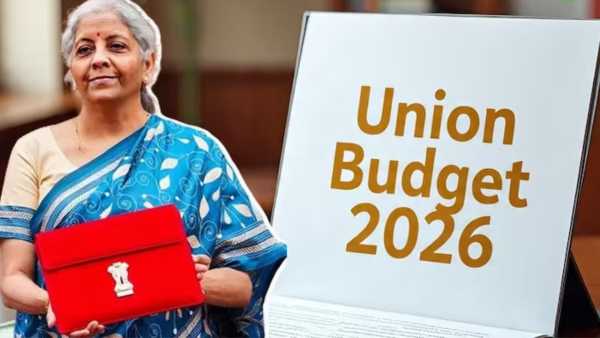
Budget 2026: The country's general budget is going to be presented in Parliament on 1 February 2026. Like every year, this time too the eyes of the country are fixed on the Finance Minister's box. For the common man, the budget often means only what became cheaper and what became expensive, or how much relief was given in the tax slabs. But have you ever noticed that where does the government get the money to spend lakhs of crores of rupees? Just as you and I make the budget of our house, similarly the government also has to keep track of every penny to run its house i.e. the country.
The budget is not just a list of expenses, but it is also an account of the government's earnings. The interesting thing is that the source of income for the government is not only the tax paid by you, but apart from this there are many other ways through which the government treasury is filled.
The main and biggest source of income for the government is tax. It can be called the backbone of the country's economy. It works in two ways: direct and indirect. When you pay income tax on your hard-earned money or a company pays corporate tax, it goes directly into the government treasury.
Moreover, an income is one which you cannot see, but which you pay at every step. When you buy anything from the market from a needle to a car, the GST charged on it goes into the government's pocket. At the same time, excise duty (excise duty) charged at the time of filling petrol and diesel or purchasing liquor is also a large part of the government's revenue. Using this money, the government not only runs the administration but also brings welfare schemes to reduce the gap between the rich and the poor.
If you think that the government is dependent only on tax collection, then you are wrong. The government is also a big businessman. This is called 'non-tax revenue'. Whenever you use any government service and pay a fee, or pay a challan for breaking traffic rules, that money goes to the government.
Not only this, the government gets the dividends of the profits earned by government companies like Railways, Government Banks, Postal Department and ONGC. Apart from this, the government also has authority over the natural resources of the country. Be it coal mines, minerals or auctioning spectrum for mobile networks, the government earns thousands of crores of rupees by selling or leasing all these.
Many times it happens that the total earnings of the government fall short of its expenses. When money starts falling short for development works and public welfare, the government adopts the path of 'borrowing'. This is a very big part of the budget. For this, the government issues bonds in the market, which are bought by banks, insurance companies and sometimes the general public.
Apart from this, the money we deposit in small savings schemes (like PPF or Post Office Savings) is also used by the government for its expenses. When needed, the government also takes loans from foreign institutions or other countries. Many times the government raises a huge amount in lump sum by selling stake in its own companies (which is called disinvestment).