Volvo and Mercedes : As global automotive markets continue to evolve, two major European manufacturers—Volvo and Mercedes-Benz—are reassessing their product strategies to align with changing customer preferences. From the rising appetite for large SUVs to a rethinking of electric vehicle design language, both brands are signaling notable shifts that could shape their future lineups.
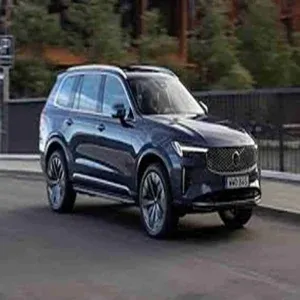
The developments reflect broader industry trends, where manufacturers are balancing electrification goals with real-world demand patterns and buyer expectations across regions.
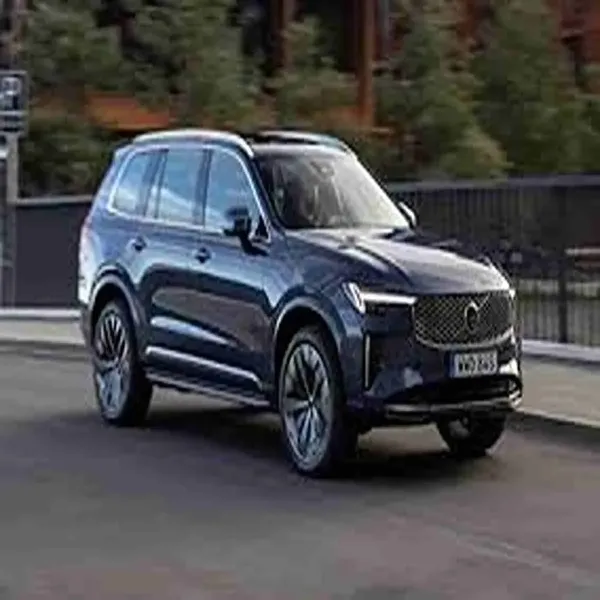
Volvo is exploring the potential of adding a new three-row hybrid SUV to its global portfolio, responding to increasing demand for larger utility vehicles in several international markets. While the Swedish automaker has yet to finalize its plans, senior leadership has confirmed that the segment is under active consideration.
Speaking to Autocar UK, Volvo CEO Håkan Samuelsson said the company has not made a firm decision but acknowledged that bigger SUVs are firmly on the radar. According to Samuelsson, customer interest in spacious, family-oriented vehicles continues to grow, particularly outside Europe, prompting Volvo to examine whether such a model fits its long-term strategy.
Any future three-row SUV from Volvo is expected to align with the brand’s sustainability goals, which could mean hybrid or electrified powertrains rather than traditional combustion-only options. Volvo has already committed to expanding its electrified lineup, and a larger SUV would likely follow that approach if approved.
The consideration of a new large SUV highlights how regional market demand is influencing product planning. In markets such as North America and parts of Asia, buyers increasingly favor vehicles that offer more seating capacity, higher road presence, and versatility for both urban and long-distance use.
Volvo’s current lineup includes midsize and compact SUVs, but a three-row model could help the brand compete more directly with rivals that already offer full-size family SUVs. However, executives have emphasized that any decision will be carefully weighed against production complexity, emissions regulations, and the company’s broader electrification roadmap.
In a separate development, Mercedes-Benz has confirmed a significant change in its design philosophy. Going forward, the company will no longer create distinct visual identities for its electric vehicles and internal combustion engine models.
The announcement was made on the sidelines of the unveiling of the 2026 S-Class facelift. Mathias Geisen, a member of the board of management at Mercedes-Benz Group AG and head of sales and customer experience, said both powertrain types will share a common design language.
According to Geisen, customer feedback has played a key role in this decision. Buyers, he explained, want the classic Mercedes look regardless of whether the vehicle is electric or powered by an engine.
In recent years, Mercedes adopted a different design approach for its electric models, such as the EQS, setting them apart visually from traditional models like the S-Class. While this strategy aimed to signal a clear shift toward electrification, it did not resonate equally with all customers.
Geisen acknowledged that the company had overestimated the pace at which buyers would transition entirely to electric vehicles. Although Mercedes remains committed to electrification, it now recognizes that design familiarity remains important, especially in premium segments.
Despite the recalibration, Mercedes executives continue to stress that electric vehicles represent the long-term future. However, predicting exactly when EVs will dominate global markets remains challenging, given variations in infrastructure, regulation, and consumer readiness.
The revised design strategy suggests Mercedes is aiming for flexibility—allowing customers to choose their preferred powertrain without feeling they must compromise on brand identity.
Together, Volvo’s SUV deliberations and Mercedes-Benz’s design shift underscore how established automakers are adapting to a market where consumer expectations, technology, and transition timelines are still very much in flux.