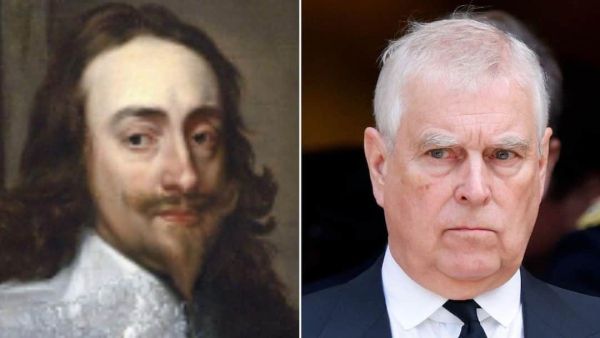
Royal scandals may dominate modern headlines. But nearly 400 years ago, a far more explosive royal crisis shook Britain to its core.
A reigning king was arrested. Tried. Convicted of treason. And publicly executed by his own subjects.
That monarch was Charles I of England, a direct ancestor of Andrew Mountbatten-Windsor (earlier known as Great Britain’s Prince Andrew, or His Royal Highness Prince Andrew, the Duke of York, a title bestowed upon him by his mother then Queen Elizabeth II upon his marriage in 1986).
The parallels are historical, not equivalent. But the story of Charles I is the ultimate reminder that even royalty, at its most powerful, is not immune to political reckoning.
When Charles I took the throne in 1625, he believed deeply in the doctrine of Divine Right, that kings derived authority from God, not Parliament.
That belief would cost him everything.
He dissolved Parliament repeatedly. He imposed taxes without its consent. He enforced controversial religious reforms that alarmed Protestant England. What began as political tension soon escalated into open warfare.
In 1642, the country fractured into two armed camps in the English Civil War. Picture this scenario:
The House of Stuart gave way to Hanover, then Saxe-Coburg and Gotha, and finally Windsor. Through that lineage, Charles I remains a direct ancestor of modern British royals, including Andrew Mountbatten-Windsor, roughly 11 generations removed.
But the monarchy they inhabit today exists within strict constitutional limits born from Charles I’s downfall.
Charles I lost his throne because he refused limits on royal authority. Modern royals operate within a system designed precisely to prevent such absolute power from ever returning. That is the enduring legacy of 1649.
The British crown survived the execution of a king, but it survived by transforming itself. From divine right to parliamentary sovereignty. From unchecked authority to ceremonial leadership.
History does not repeat itself neatly. But it leaves fingerprints. And one of those fingerprints belongs to a king who learned, too late, that even royalty can be called to account.
Police are reported to have arrived at Royal Lodge to continue searching the former home of Andrew Mountbatten-Windsor, who was released after 11 hours in custody on Thursday, 19 February 2026, following his arrest on suspicion of misconduct in public office.
Although Andrew was stripped of several royal titles last October (including his title as prince) he remains eighth in line to the throne. Removing him from the line of succession would require an Act of Parliament and the consent of all Commonwealth realms that recognise King Charles III as head of state, as any change would affect their succession laws as well, say reports.
Andrew also technically remains a Counsellor of State, authorised to stand in for the monarch if required, though in practice, only working royals undertake such duties, and he stepped back from public life in 2019 after backlash over his interview with BBC Newsnight concerning his relationship with Jeffrey Epstein.