
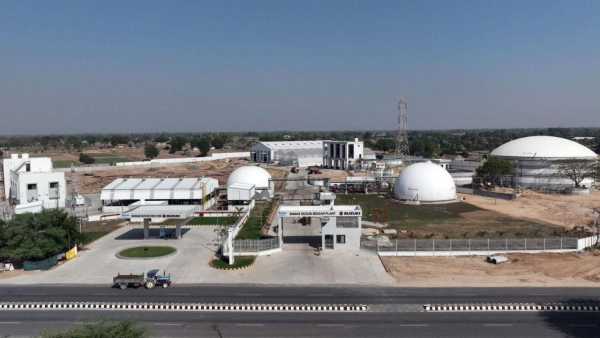
Gujarat's development model has now emerged as a successful national example, implementing Prime Minister Narendra Modi's vision of Waste to Wealth, Self-reliant India and green energy. With the joint efforts of the Union Jal Shakti Ministry and the Central Cooperative Department, about 15 states of the country are moving towards implementing the Banas BIO-CNG plant model developed under the guidance of Chief Minister Bhupendra Patel. This project developed by Banas Dairy is changing the face of rural economy by converting traditional waste like cow dung into clean fuel and organic fertilizer.
Gujarat Government Considering the vast potential of this innovative initiative, the Government has kept the BIO-CNG sector at the top of its budgetary priorities. Under the leadership of Chief Minister Bhupendra Patel, the state government has made a special provision of ₹60 crore for setting up new plants by cooperative milk producers unions. The objective of this budgetary support is to make the dairy sector a center of clean energy production and make the rural economy self-reliant. It is noteworthy that under this scheme, it is proposed to set up about 10 BIO-CNG plants in the state in a phased manner.
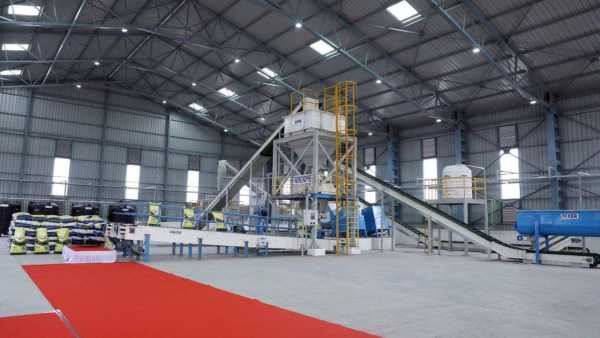
Banas BIO-CNG Plant with 40 MT per day cow dung processing capacity at Banaskantha is a proven model operating successfully for the last 6 years. Inspired by its success, work is going on to start 5 huge BIO-CNG plants in Banaskantha. Currently, out of the 5 planned plants, 2 plants have started operations, while the third plant is in the final stages of completion.
Each plant processes about 100 metric tons (1 lakh kg) of cow dung every day scientifically. Built at an investment cost of approximately ₹50-55 crore, this plant is an excellent example of modern technology and infrastructure that proves how ecology and economy can go hand in hand and how environmental protection, farmers' prosperity and industrial progress are possible simultaneously.
Within the scope of BIO-CNG plants established in Banaskantha, cattle rearing families of 20-25 villages located around 20 kilometers are connected, who supply cow dung regularly. Farmers have been assured payment at the rate of ₹ 1 per kilogram for cow dung, due to which an estimated 400-450 cattle rearing families are also getting additional income. About 13 tractor-trolleys are being used for dung collection and transportation, which deliver the dung to the plant with a capacity of about 4-4 metric tons per trip, which is also promoting employment and local economic activities in rural areas.
Not only this, this plant works on a multi-product based economic model, under which about 1,800 kg of compressed biogas (CNG) is produced every day, which is made available in the market at the rate of about ₹ 75 per kg. Along with this, about 25 metric tons of solid organic fertilizer and 75 metric tons of liquid organic fertilizer are also produced, which are sold at the rate of about ₹ 6 per kg and ₹ 0.50 per kg respectively. The plant earns a daily revenue of more than ₹ 3 lakh from these three products, which can reach up to ₹ 12 crore annually.
This innovative project of Gujarat is a revolutionary step not only in the field of energy but also in the direction of environmental protection. This model has the potential to reduce emissions of approximately 6,750 tonnes of CO2e (Carbon Dioxide Equivalent) greenhouse gases per year, marking Gujarat's major contribution against the global challenge of climate change. This triangular confluence of production of clean fuel, availability of chemical-free organic fertilizers and scientific waste management is turning the broader resolution of 'Green Gujarat' into reality through 'Green Banaskantha'.