The opposition has already expressed its displeasure with the Nari Shakti Vandan law by raising the issue of loss to South India in relation to North India in increasing seats. Now by raising the issue of reservation for backward class women, he seems to be creating a new headache for the government. In fact, on this issue, many parties of the Indian alliance are putting pressure on Rahul Gandhi that he should not just limit himself to raising the issue of OBC (Other Backward Classes), but should also put forward the demand for OBC reservation equally strongly in front of the Parliament and the public. He believes that there is a need to make the politics of social justice more clear and effective.
National President of OBC Department of Congress, Anil Jaihind himself has made the same demand. In such a situation, a political challenge has arisen before Rahul Gandhi. If they support this demand, they will have to raise it strongly at the national level. At the same time, if they distance themselves from it, disagreements may increase within the alliance, which may affect the unity of the opposition. However, Rahul Gandhi himself has been strongly raising the issue of OBC recently.
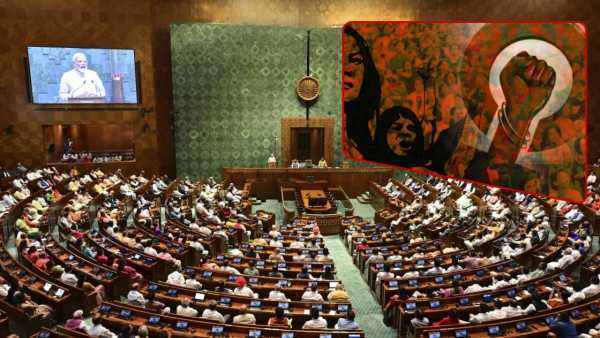
At the same time, if we talk about political equations, the government had sufficient numerical strength in the Lok Sabha in 2023, due to which it could easily pass many of its bills. But now the situation seems a little different. Now to pass this important bill, the government needs the support of two-thirds i.e. 364 MPs, which seems difficult to garner without the support of the opposition.
While the government will have to win the trust of the opposition, the opposition will also try to strengthen its unity and strategy on this issue. Overall, this is going to be a big issue in the special session starting from April 16 for three days. There are chances of an uproar over this.