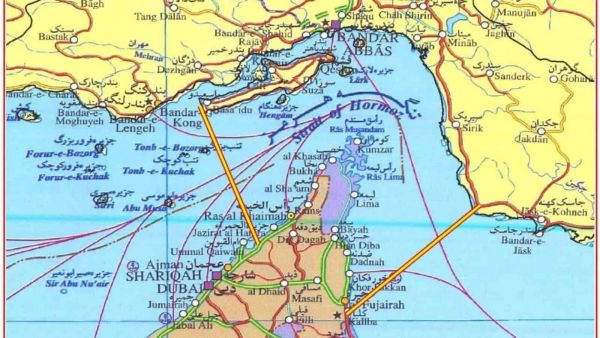
A proposed agreement between the United States and Iran could restore maritime traffic through the Strait of Hormuz to pre-war levels within 30 days, according to reports by Tasnim News Agency.
The reported memorandum of understanding (MoU) requires the complete removal of the naval blockade during the same period. Iranian media said Tehran would not allow normal transit through the waterway unless maritime restrictions imposed on Iran are lifted.
The proposal also reportedly includes the phased release of part of Iran’s frozen overseas assets.

Tasnim reported that Tehran has not accepted any nuclear-related obligations at the current stage of discussions with Washington.
However, the draft framework reportedly includes a temporary waiver on sanctions affecting Iranian oil exports, enabling Iran to continue selling oil during negotiations.
The proposal establishes a 60-day ceasefire period alongside parallel talks focused on Iran’s nuclear programme and wider regional security matters.
According to reports by Axios, the proposed arrangement would allow Iran to reopen shipping routes through the Strait of Hormuz while removing naval mines allegedly placed in the waterway.
The report said Washington would ease restrictions on Iranian ports and partially lift sanctions in exchange for Tehran entering negotiations over uranium enrichment and highly enriched uranium stockpiles.
The draft also reportedly includes commitments from Iran not to pursue nuclear weapons.
Reports by The New York Times said any release of frozen Iranian funds would depend on measurable progress related to enriched uranium.
US officials quoted by the newspaper said Tehran had agreed in principle to relinquish highly enriched uranium, although technical details would be addressed in future talks.
Iran-US analyst Trita Parsi told Al Jazeera that the emerging understanding suggested both sides were prepared to compromise.
He said the agreement could surpass the scope of the 2015 nuclear accord negotiated during former US president Barack Obama if sanctions relief and nuclear restrictions are fully implemented.
The Embassy of the Islamic Republic of Iran in India rejected remarks made by US Secretary of State Marco Rubio and accused Washington of contributing to instability in the region.
The embassy said US sanctions on Iranian oil exports had harmed global energy markets and violated international law. It also accused Washington of imposing restrictions that affected access to medicines and medical equipment.
Iran further blamed the United States and Israel for escalating tensions in the Strait of Hormuz through military activity in the region.
Tehran reiterated that its nuclear programme remains peaceful and under the supervision of the International Atomic Energy Agency (IAEA), adding that it would not abandon what it described as its lawful right to peaceful nuclear technology.
US President Donald Trump is presenting the proposed agreement as a diplomatic success despite criticism from Republican lawmakers.
Senator Ted Cruz described the reported arrangement as a “big mistake”, arguing that sanctions relief could weaken pressure on Tehran.
The White House has maintained that the negotiations are intended to limit Iran’s nuclear activities, reduce hostilities and create conditions for a longer-term settlement.
Rubio said progress had been achieved through coordination with Gulf states and stressed that preventing Iran from obtaining nuclear weapons remained Washington’s priority.
He also emphasised the importance of protecting freedom of navigation and international trade routes, describing attacks on commercial shipping as illegal.
India’s External Affairs Minister said New Delhi would increasingly focus on diversifying energy sources while continuing to support unrestricted maritime trade through international waterways.
The Israeli Broadcasting Corporation reported that Prime Minister Benjamin Netanyahu discussed the proposed agreement with Trump ahead of a planned inner cabinet meeting.
At the same time, military activity continued along the Israel-Lebanon border.
Israeli authorities said sirens sounded in the Western Galilee after a drone infiltration was detected from Lebanon.
Israeli forces also carried out strikes on Arab Salim and Zawtar al-Sharqiya in southern Lebanon and claimed to have destroyed an underground Hezbollah tunnel in the Mount Dov area.
The Israeli army later said two soldiers were wounded in a booby-trapped drone explosion in southern Lebanon.
Ahmad Vahidi said Iranian armed forces remained fully prepared to respond to any future attack.
He warned that any military action against Iran would trigger a strong regional response and said the Iranian public remained united during ongoing negotiations.
The Qatari Amiri Diwan said the Emir of Qatar, Tamim bin Hamad Al Thani, joined discussions with Trump and regional leaders on the evolving situation.
Qatar called for stronger coordination between regional states and stressed the importance of diplomatic solutions.
The Turkish presidency said President Recep Tayyip Erdogan also participated in talks with Trump and other regional leaders.
Turkey said it was ready to support implementation of a possible agreement and added that secure passage through the Strait of Hormuz would benefit the global economy.
Prime Minister Shehbaz Sharif said Pakistan hoped to host the next round of Iran-US negotiations.
Foreign Minister Ishaq Dar described recent diplomatic engagement as an encouraging step towards long-term regional peace.
Fars News Agency reported that the proposed memorandum includes reciprocal commitments preventing attacks between Iran, the United States and their allies.
According to the report, both sides would agree not to launch pre-emptive military action during the negotiation period.
Israeli Channel 12, citing an unnamed Israeli official, reported concerns over the approach taken by US envoy Steve Witkoff during the negotiations.
The report claimed Israeli officials believed Washington was pushing aggressively to secure an agreement with Tehran.
Trump thanked the US Secret Service and law enforcement agencies following a shooting incident near the White House.
In a statement, he praised their rapid response and described their actions as professional.