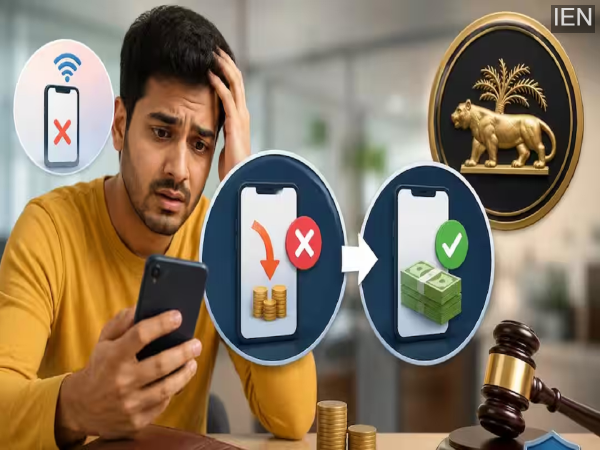
RBI Refund Rule: When the payment process is incomplete and the amount does not reach the intended service, it is classified as a failed transaction.
RBI Refund Rule: In today's digital era, most people use UPI apps for mobile recharges. However, there are times when the recharge fails, yet money is deducted from the bank account. There is no need to panic in such situations, as there is a strong likelihood of getting your money back; you simply need to be aware of the correct process and the applicable timeframe.
Why does a recharge fail even after money is deducted?
Billions of UPI transactions take place in India every month. Within such a vast network, transactions can sometimes remain incomplete due to server overload, internet connectivity issues, or technical glitches.
When the payment process is incomplete and the amount does not reach the intended service, it is classified as a failed transaction. In such cases, the fault usually lies with technical issues rather than the customer.
What should you do first if the recharge fails?
If your recharge has not gone through, do not make the mistake of immediately attempting the payment again. First, check the transaction status in your bank account and UPI app to confirm whether the money has actually been deducted.
Additionally, note down and keep the transaction ID, date, time, and payment amount safe. This information proves very useful if you need to file a complaint later.
Nowadays, most UPI apps offer a 'Check Status' option. This allows you to verify the transaction status directly from the bank server, and in many cases, the refund is processed automatically.
What do RBI rules say?
Few people are aware that the Reserve Bank of India (RBI) has established clear timelines for refunds related to digital payments. If an issue arises with a payment, the refund should be credited by the next working day. In the case of merchant payments—such as mobile recharges—banks have a maximum of five working days to issue a refund.
If the refund is not received within the stipulated timeframe, RBI regulations require the bank to compensate the customer with up to ₹100 per day for the delay.
What should you do if you don't receive the refund?
First, lodge a complaint via the 'Help' or 'Support' section of your UPI app. In most cases, the issue is resolved within 24 hours. If you still do not receive the refund, contact your bank's customer care and provide the transaction ID. If the bank fails to provide a satisfactory response, you can escalate the matter to the NPCI's grievance redressal platform.
If the issue persists beyond five working days, you can file a complaint on the RBI's CMS (Complaint Management System) portal. This represents the final stage of the grievance redressal process, at which the bank is required to respond.
Take the right steps instead of panicking.
While a failed recharge resulting in a deduction of funds can be distressing, clear regulations exist within the digital payment ecosystem to safeguard customer interests. Keep your transaction details safe, monitor the timelines, and file a complaint if necessary. In most instances, the refund is processed automatically; however, should a delay occur, RBI regulations ensure your rights are protected.