We’ll admit it – we’ve spent plenty of time complaining about this World Cup. There’s certainly much to criticise. Even by FIFA World Cup standards, it’s a festival where far too many unpleasant individuals are being pampered, indulged, and well-paid. Concerns about the wellbeing of players and fans seem to have been pushed aside, with conditions that at times could become unbearable.
Yet, beneath all the chaos lies a football spectacle packed with incredible talent, one that will eventually crown the world champion in the planet’s most beloved sport. Surely, it can’t all be bad?
Here are five reasons why this World Cup could still be great – even if most of them are happy accidents and the organisers deserve little credit.
Do we like the 48-team format? Not really. But are we eager to see new nations taking part in World Cup action? Absolutely, yes. We’re nothing if not contradictory.
One doesn’t need to support the path that brought us here or pretend that giving smaller nations a chance was FIFA’s noble ambition when it decided to expand the World Cup to potentially risky proportions – and let’s not forget, they’d love to push it to 64 teams if possible. But it’s still genuinely exciting to see nations like Jordan, Uzbekistan, Curaçao and Cape Verde bringing novelty and freshness to the competition.
This new format gives them a real hope of reaching the knockout stage. And, if luck favours us all, maybe even the opportunity for some fresh jokes about Scotland’s attempts when they fall at the first hurdle once again.
Speaking of Scotland, it’s not only the debutants adding a refreshing vibe to this World Cup – several nations are returning after long absences. Norway and Scotland are back after 28 years, both of whom would have qualified even under the old 32-team format. UEFA gained the least from the expansion – a clear hint of which federations FIFA and Gianni Infantino are keen to please (spoiler: not the traditional big two). Both Norway and Scotland topped their qualification groups, securing their return.
Austria make a comeback for the first time since 1998; Haiti and DR Congo return after their 1974 debuts; Iraq reach the finals for the first time since 1986; Turkey return after their 2002 semi-final run; Czech Republic end a 20-year wait; and New Zealand, Paraguay, and South Africa are back for the first time since 2010. Even familiar World Cup names like Algeria and Ivory Coast reappear after 12 years.
And qualification hasn’t lost all its drama – giants like Italy, Denmark, Cameroon, Nigeria, Costa Rica, Poland, Serbia, and Wales all failed to make it, despite solid 32-team records.
To sum up these points: this World Cup will look and feel very different, but not all change is bad. Just remember – the bad parts are deliberate, the good parts accidental.
As for FIFA, there’s no need to give them any credit whatsoever.
World Cups always showcase extraordinary players – that’s built into the concept. But whether the tournament always allows these stars to shine best is another question. Regardless, they’ll all be here, ready to light up the stage.
However, the same can’t always be said for the managers. Often, some look oddly out of place at what’s meant to be the pinnacle of football excellence. That might not be the case this time, though – we genuinely believe Roberto Martinez’s Portugal could go all the way – and there’s serious star power in the dugouts this year.
Given that conditions will play a crucial role in a tournament that demands an extra knockout game among the final four, tactical brilliance from the sidelines could prove vital.
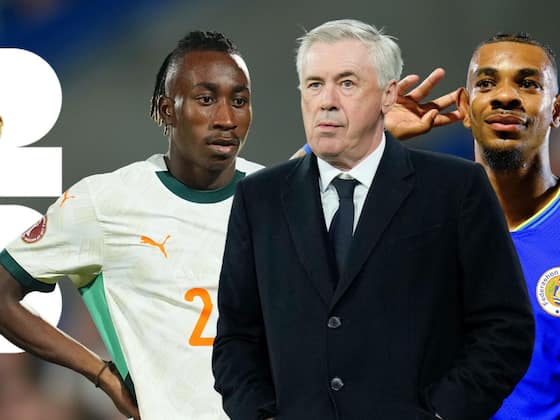
This summer in North America, the managerial line-up is stacked with legends and rising stars. There’s Dick Advocaat, Marcelo Bielsa, Thomas Tuchel, Mauricio Pochettino, and Julian Nagelsmann. Carlo Ancelotti is managing Brazil – an incredible storyline in itself. Lionel Scaloni returns to defend his title, Didier Deschamps continues with France, Zlatko Dalic remains with Croatia, Ronald Koeman leads the Netherlands, and Javier Aguirre is back for a third spell with Mexico at age 67. Then there are fascinating experiments – Graham Potter with Sweden and Fabio Cannavaro with Uzbekistan. This could genuinely be a World Cup defined by its managers.
We’ve been wrong before, but this really does seem like the final World Cup for Cristiano Ronaldo, Lionel Messi, and Luka Modric. It might even be the last one for Guillermo Ochoa – and that raises the question: will the 2030 World Cup even feel like a true World Cup? The answer, quite frankly, is no – especially given that it’s set to be hosted across three continents, which is at least one, maybe two too many.
Patience will be key. Yes, there will be an exhausting 72 group matches in the first 17 days – a mind-boggling schedule that could leave everyone drained. And even after that, no rest days for two more rounds. But let’s set that aside for now.
Because once the bloated, fast-paced group stage is behind us, the tournament’s climax could be truly thrilling. Save your energy, don’t overindulge early, and you’ll be rewarded with a spectacular finish.
If the players can manage their stamina too, the second half of this World Cup could be magnificent. Beneath the chaotic group stage lies something potentially extraordinary.
From June 28 to July 19, we’ll witness three weeks of pure, uninterrupted football – 32 matches over 22 days of knockout, win-or-go-home action culminating in a new world champion.
For all the justified criticism of this World Cup’s format, doubling the number of knockout matches could deliver an unforgettable few weeks of football – provided everyone still has something left in the tank by then.