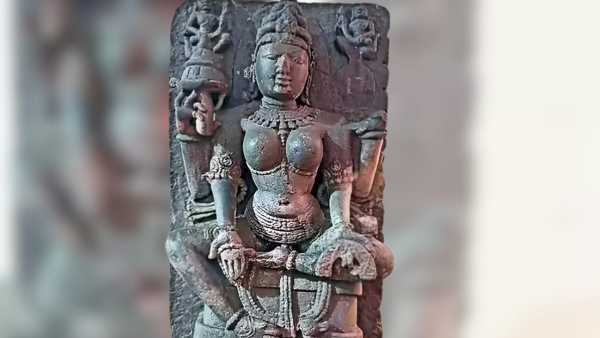
Can a machine tell the truth about a 900 year old stone statue? The answer is yes. A 12th century statue found in Dhar, Madhya Pradesh, which was believed to be Maa Saraswati for decades, has been revealed by modern digital photogrammetry and high resolution 3D scanning to be Maa Gayatri. This technique read those subtle marks present on the stone, which the normal eye and previous studies could not see. This is the reason why this discovery is now being considered a major success of both archeology and technology.
Digital photogrammetry is a technique in which hundreds of high-resolution photographs are taken of a statue, building or archaeological object from different angles. After this, special software combines all these photographs and creates an absolutely accurate three-dimensional i.e. 3D digital model of that object. This model not only shows the external shape, but also clearly reveals the very small marks, bulges, cracks and carvings present on the surface. The Archeology Department is now using this technology to study ancient heritages and preserve them digitally.
High resolution 3D scanning records the entire surface of a sculpture with extremely high precision. Many marks on centuries-old sculptures become blurred with time and many figures are not clearly visible to the eye. But this technology records the height, depth, relief and texture of the surface in digital form. After this, the idol can be seen enlarged from any angle on the computer screen. Due to this, hand gestures, ornaments, symbols and even those parts of craftsmanship, which are difficult to identify during normal inspection, become clearly visible.
This 12th century statue of Dhar was considered to be Mother Saraswati for a long time. Earlier it was believed that the goddess might have had a veena in her hands, which got damaged over time. But when the digital model of the statue was prepared, the picture changed completely. On close examination it was found that there were no marks of Veena in the hands. Instead, subtle signs of symbols like Veda, rosary, lotus etc were seen there. The swan and other sculptures made near the statue were also found matching the classical form of Maa Gayatri Devi. This was the evidence that changed the identity of the statue.
According to historian and archaeologist BK Lokhande, Veena is almost always seen in the statues of Goddess Saraswati since the Gupta period, TOI reports. Therefore, when no evidence of Veena was found in the digital investigation, experts compared it with the form of Mother Gayatri described in Shilpashastra and Shrimad Devi Bhagwat Purana. Symbols like four arms, Lalitasana posture, Vedas, rosary, lotus and swan were all found matching the description of Gayatri Devi. In this way, the information obtained from technology and the description of ancient texts together corrected about 900 years old wrong identification.
Examining old statues and monuments by repeatedly touching or rubbing them can be harmful. Therefore, now the importance of technologies like digital photogrammetry and 3D scanning is increasing rapidly. With their help, an accurate digital record of any heritage can be created, which can be used for research, conservation and study in future. Madhya Pradesh Archeology Department is also preparing a certified 3D model of this rare statue of Dhar, so that researchers and common people can study every small part of it without damaging the original statue. This is the reason why this technology is now becoming the new basis for understanding and preserving India's cultural heritage.