 Controversial Revisions in History Curriculum
By Arindam Ganguly
Bhubaneswar: A significant yet contentious change has emerged under the National Education Policy (NEP) 2020 and the newly established National Curriculum Framework for School Education (NCFSE) 2023, leading to revisions in Class VII history textbooks by NCERT.
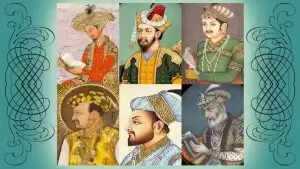
One of the most contentious alterations is the complete exclusion of chapters on the Mughals and the Delhi Sultanate, which have historically been essential for understanding Medieval Indian history. In contrast, a new chapter focusing on India’s ‘sacred geography’ has been introduced, detailing revered religious sites such as the 12 Jyotirlingas, Shakti Peeths, and Char Dham Yatra. Additionally, there is a heightened focus on government initiatives like ‘Make in India’ and ‘Beti Bachao, Beti Padhao’.
While NCERT officials assert that these changes aim to eliminate redundancy, the absence of the Mughal era in the current volume has sparked widespread concern. Critics argue that this is not merely a restructuring but a rewriting of history.
Union Minister of State for Education Sukanta Majumdar has defended the revisions, claiming the goal was not to erase any historical period but to streamline the curriculum.
However, his controversial remark labeling the Mughal era as ‘the darkest part of Indian history’ has intensified scrutiny, raising questions about whether ideological biases are overshadowing educational integrity.
Some historians and archaeologists consulted express that emphasizing indigenous traditions and local knowledge could provide a more inclusive view of India’s heritage. Others warn that excluding significant historical periods could distort the nation’s intricate and diverse history, depriving future generations of understanding the past that has shaped the present.
Dr. Kurush Dalal, a prominent historian and archaeologist from Mumbai, emphasizes that the Mughal Empire, which lasted over three centuries, is crucial for comprehending India’s historical, cultural, and economic development. He laments the casual removal of such a pivotal chapter from Medieval Indian history, noting that during the Mughal reign, India constituted nearly 24.5% of the world’s GDP, making it a flourishing subcontinent envied by Europe.
Dalal points out that the rich tapestry of India’s cuisine, architecture, language, music, and even administrative systems owes much to the Mughal legacy. He argues that the decline of the Mughals created a vacuum that European colonial powers exploited, stating, “To erase such an era borders on the criminal.” He insists that history should be taught with both its positive and negative aspects, rather than being sanitized.
Sabyasachi Nayak, an expert from Utkal University, likens history to mathematics, asserting that omitting a period leads to a distorted narrative. He underscores the importance of preserving historical accounts, particularly the Mughal era, as integral to understanding India’s cultural heritage, referencing iconic structures like the Taj Mahal and Humayun’s Tomb as physical embodiments of the past.
Prof. Sanjay Acharya, a retired history professor, concurs with Nayak, advocating for the retention of key aspects of Mughal contributions while also emphasizing the need to highlight local history in textbooks. He argues that many elements of regional heritage, especially in Odisha, remain underrepresented in education.
Laxmidhar Bhol, head of the History department at BJB (Autonomous) College, stresses the importance of drawing conclusions based on thorough verification of expert decisions. He warns against historical bias, where the creator of a source may present a skewed view based on their context, leading to unbalanced narratives.
Ajit Sahoo, an Assistant Professor of History at Utkal University, offers a balanced perspective, suggesting it is premature to make sweeping judgments as the second part of the textbook is yet to be released. He expresses hope that the omitted sections will be included in the Grade VII curriculum, noting that previous concerns about narrative removals have often proven unfounded.
However, he cautions against the growing trend of underrepresenting Indian kingdoms and oversimplifying complex narratives. He believes that while the intent to diversify historical narratives is commendable, the approach raises concerns. Rebalancing the curriculum should involve adding overlooked voices rather than eliminating foundational ones.
In a diverse nation like India, the past should not be altered to fit contemporary narratives. If history is to serve as a mirror, it must reflect all aspects—flaws and triumphs alike.