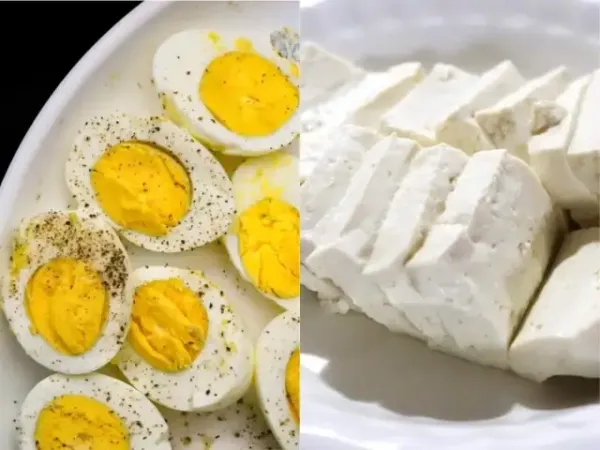
In today’s time, adulterated products have become common in the market. It is common to find adulteration especially in everyday food items like ghee, cheese, milk and eggs. In such a situation, it is important to know what we are eating. Experts say that the difference between fake and genuine product can be easily understood through color, taste and texture.
How to identify fake ghee
color and texture
The color of real desi ghee is light yellow and has a golden glow.
Fake ghee often appears very pale or dark yellow and lacks shine.
aroma and taste
Real ghee has the natural aroma of ghee.
Fake ghee has an oily smell or chemical taste.
test in water
Add one spoon ghee in water. Real ghee disintegrates slowly in water, whereas fake ghee appears foamy or oily.
Identification of milk and cheese
Milk
Real milk has mild sweetness and foams when boiled.
Fake milk can be thin or thick and have a chemical taste.
Cheese
The color of real cheese is white and the texture is soft.
Fake cheese is often bright white and has a plastic-like texture.
salt or lemon test
Dip the cheese pieces in salt or lemon water. Real cheese freezes quickly, while fake cheese can melt quickly.
How to detect adulteration or fake eggs?
shell and color
The shell of a real egg is slightly rough and uniform in color.
Fake or long-stored eggs often have spots on the shell or uneven color.
Fragrance and freshness
Fresh eggs do not smell.
Old or fake eggs give off a slight odor.
test in water
Put the egg in water. A fresh egg sits at the bottom, while an old or fake egg floats.
special tips
Always buy products from trusted brands and stores only.
Counterfeitness can be easily identified by color, taste and water test at home.
Always use fresh and original products for children and elderly.
This common kitchen spice is a treasure trove of Vitamin B12, include it in your diet like this.