World's 8 most active volcanoes you can hike legally on your next travel escape
ETimes December 05, 2025 03:39 AM
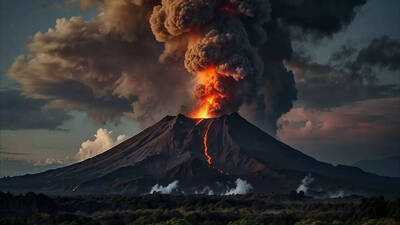 Volcanoes have been capturing global attention this summer, rumbling back to life across continents and reminding us of the raw power beneath our feet. In Indonesia, Mount Lewotobi Laki Laki covered Flores in drifting ash, temporarily disrupting flights and turning green hillsides grey. Taiwan’s Wandan mud volcano resurfaced shortly afterwards, bubbling through farmland and releasing bursts of hot gas. Even Sicily’s Mount Etna added its familiar plume to the skyline once more, glowing above Catania as evening settled.
These recent stirrings serve as a vivid reminder that our planet is constantly in motion. Yet they also highlight the extraordinary environments created by this geological activity. For many travellers, the chance to hike an active volcano is one of the most thrilling ways to witness Earth’s dynamism up close. With proper guidance and safety measures, volcano climbing remains both accessible and exhilarating. Check below the largest active volcanoes you can safely and legally climb today.
World’s active volcanoes you can climb
Mount Etna, Italy
Europe’s tallest active volcano, offering varied routes, lunar landscapes, and sweeping Sicilian views
Mount Etna is widely regarded as one of Europe’s most rewarding volcano hikes. Rising above the island of Sicily, it combines dramatic scenery with accessible, well-established trekking routes. Visitors can follow paths through solidified lava fields, craters of varying ages, and volcanic ridgelines that provide spectacular vistas over Catania and the Ionian Sea.
Local authorities monitor Etna closely and restrict access whenever conditions shift, which ensures that guided treks remain safe even during periods of increased activity. Climbs range from gentle half-day walks to demanding full ascents that reward hikers with unforgettable panoramas from the upper slopes.
Cotopaxi, Ecuador
One of the world’s highest active volcanoes attracts altitude seekers and glacier hikers.Cotopaxi rises to 5,897 metres and dominates the central Andes with its snow-tipped cone and perfectly symmetrical profile. It is a must-visit destination for adventurous trekkers who want to experience high altitude without committing to extreme mountaineering.
Many visitors hike to the José F Ribas refuge at around 4,800 metres, an achievement in itself due to the thin mountain air as per . Those continuing to the summit must tackle glacier conditions using crampons and ice axes, always accompanied by a certified guide. Climbs usually begin late at night so that hikers can reach the peak in time for sunrise, when the surrounding plains and distant volcanoes are washed in pink light. Cotopaxi National Park is equally impressive at lower levels, with wild horses grazing across expansive Andean landscapes.
Pacaya, Guatemala
A beginner-friendly active volcano with glowing lava fields and short, scenic trails. As per , Pacaya is one of Central America’s most popular volcano hikes thanks to its accessibility and consistently active landscape. Located just over two hours from Antigua, it offers a manageable adventure suitable for most fitness levels.
The route begins in forested foothills before opening onto rugged lava fields where pockets of heat and occasional glowing hotspots reveal the volcano’s inner activity. Many tours include the quirky tradition of roasting marshmallows on naturally heated rocks. The entire round trip takes around two and a half to three hours, yet the experience feels intensely atmospheric due to the steam vents, jagged terrain, and views of nearby volcanic peaks.
Eyjafjallajökull, Iceland
A glacier-topped volcano made famous by its 2010 eruption and known for challenging full-day hikes. Eyjafjallajökull captured worldwide headlines in 2010 when its eruption halted air travel across Europe. Today, it attracts dedicated hikers keen to explore its icy summit and volcanic landscapes. The volcano stands at 1,651 metres and is capped by a glacier, which creates a surreal mix of dark volcanic ash, brilliant snowfields, and sharp rocky ridges.
A typical hike takes seven to eight hours and requires a good level of fitness, along with the willingness to navigate shifting conditions. On clear days, the summit rewards climbers with views stretching across Iceland’s southern coastline, neighbouring glaciers, and the Westman Islands. Due to rapid weather changes and glacier hazards, guided treks are strongly recommended.
Mount Vesuvius, Italy
One of the world’s most accessible active volcanoes overlooking Naples and the ruins of Pompeii. Mount Vesuvius rises above the Bay of Naples and remains one of the most visited active volcanoes on the planet. Although its last eruption occurred in 1944, it is still classified as active and is continuously observed by Italian authorities.
The primary hiking trail begins at roughly 1,000 metres and winds gently towards the crater rim. Most visitors reach the top within an hour. From the rim, the views extend over the vast crater, the city of Naples, the archaeological sites of Pompeii and Herculaneum and the sparkling Tyrrhenian Sea. The surrounding national park features multiple trails, yet the crater route remains the most popular for its combination of ease and spectacular scenery.
Arenal, Costa Rica
A rainforest framed volcano with excellent walking trails and geothermal landscapes
Arenal stands above the lush northern forests of Costa Rica and is one of the country’s best known volcanic icons. Although direct access to the summit is restricted for safety reasons, the surrounding Arenal Volcano National Park offers outstanding trekking opportunities. Trails weave through cooled lava fields, rainforest paths and volcanic ridgelines, with Las Coladas and El Ceibo being particularly popular for their views of Arenal’s conical profile. The volcano last erupted in 2010 and continues to emit occasional gas plumes that add a sense of living energy to the landscape. The nearby town of La Fortuna provides easy access as well as hot springs fuelled by geothermal activity.
Mount Fuji, Japan
Japan’s tallest active volcano and a culturally significant climb attracting thousands each summer. Mount Fuji has not erupted since 1707, yet it is still officially classified as an active volcano. Rising to 3,776 metres, it remains one of the most iconic climbs in the world. Each year, during the hiking season from early July to early September, thousands make the ascent in order to witness the sunrise from the summit, known in Japanese as goraiko.
As per , the Yoshida Trail is the most popular and generally takes five to eight hours to ascend, depending on pace. Climbers pass through forest, open scree and rocky sections as they move higher. Mountain huts along the route offer basic accommodation for those who prefer to rest before tackling the final push to the summit. Beyond its physical challenge, Mount Fuji is deeply woven into Japanese art, spirituality and cultural identity.
Mount Bromo, Indonesia
A cinematic volcano set within a vast caldera and famous for sunrise hikes above a sea of sand
Mount Bromo may not be the highest volcano in Indonesia, but it offers one of the most atmospheric hiking experiences in Southeast Asia. Situated in East Java within the Tengger caldera, Bromo rises from a dramatic landscape of volcanic sand where plumes of smoke frequently curl from its crater.
Most travellers begin before dawn, heading first to Mount Penanjakan to watch sunrise illuminate the caldera. Afterwards, they cross the sand plain and climb the final staircase to Bromo’s crater rim. Although the ascent is relatively short, the surrounding scenery makes it unforgettable. The volcano is active and closely monitored yet remains safe for visitors. Independent hiking is common, although local guides are available for those seeking insight into the region’s geology and history.