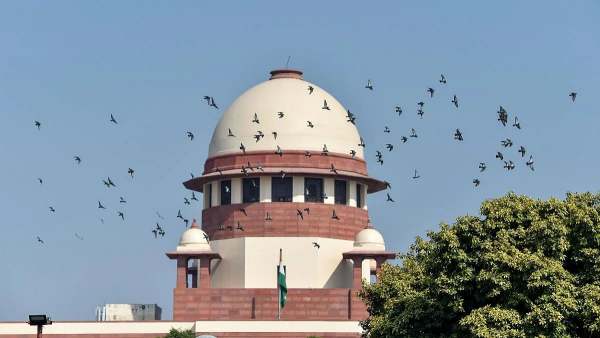
On December 9, the Supreme Court issued notice to the Election Commission on a writ petition challenging why Assam alone had been exempted from the Special Intensive Revision of electoral rolls.
The Special Intensive Revision being conducted across India requires election officials to re-verify voter identity, documents and records to “purify” the electoral rolls by removing duplicate entries and the names of “illegal immigrants”.
In Bihar, for instance, this resulted in 47 lakh names being deleted from the rolls.
But the petition in the Supreme Court about Assam brought into focus an impression that many have had: that the special intensive revision is not a routine administrative exercise. Instead, it signals a shift in how citizenship, identity and political belonging are being reorganised in India.
Of all the states in India, Assam is where citizenship has been most intensely contested for decades. As a consequence, it would be expected that this stringent special intensive revision of the voter rolls would be conducted most rigorously there.
Instead, the state will undergo only a milder “special revision”, where Booth Level Officers, who update entries on the electoral rolls, will arrive at homes with pre-filled registers to identify duplicate entries – without requiring voters to establish their citizenship with documentation.
A state built on verificationAssam is the only state where Indian citizenship has been examined repeatedly,...
Read more