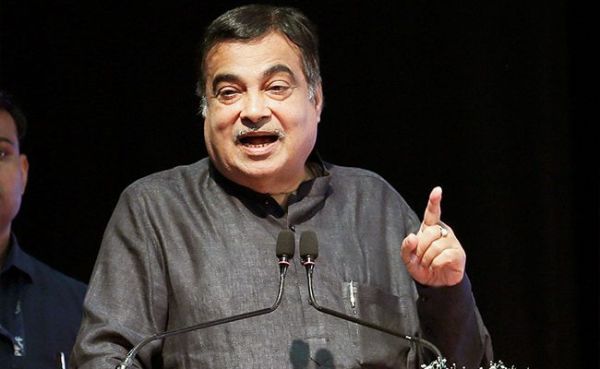
Nitin Gadkari : Union Minister for Road Transport and Highways Nitin Gadkari has once again brought national attention to the worsening air pollution crisis in Delhi-NCR, highlighting not only its environmental impact but also the serious health risks it poses. Speaking at a public forum, the senior minister candidly shared his personal experience, stating that even a short stay in the national capital adversely affects his health. His remarks have triggered renewed political debate, policy discussions, and public concern over air quality management, transport emissions, and long-term economic priorities.
Delhi-NCR has long been grappling with hazardous air quality, particularly during the winter months. Nitin Gadkari revealed that staying in Delhi for just two days often results in throat infections for him, underscoring how dangerous prolonged exposure to polluted air can be. Such statements resonate with millions of residents who regularly face respiratory issues, eye irritation, and reduced lung capacity due to persistent smog and particulate matter.
Medical experts have repeatedly warned that continuous exposure to polluted air increases the risk of respiratory infections, asthma, bronchitis, and other chronic conditions. The minister’s personal account adds a human dimension to data-driven discussions and highlights how air pollution affects people across all social and political backgrounds.
Addressing the root causes, Gadkari openly acknowledged the transport sector’s significant contribution to air pollution. He stated that nearly 40 percent of pollution is linked to transport activities, mainly due to heavy dependence on fossil fuels. This admission is notable, as it comes from the very ministry responsible for road transport and highways.
Vehicle emissions, including nitrogen oxides and fine particulate matter, are major contributors to urban air pollution. The increasing number of private vehicles, traffic congestion, and slow adoption of cleaner mobility solutions have intensified the problem. Gadkari’s remarks suggest the need for accelerated transition toward electric vehicles, alternative fuels, and sustainable transport infrastructure.
According to official data from the Central Pollution Control Board, Delhi’s overall Air Quality Index slipped into the very poor category, recording a level of 342 on Wednesday morning. While this marked a slight improvement from the severe levels above 400 recorded a day earlier, the air remained unsafe for sensitive groups and the general population.
Only a handful of monitoring stations, including areas like Aya Nagar, IGI Airport Terminal 3, and Mandir Marg, reported air quality in the poor category. Most other locations continued to struggle with very poor readings, indicating widespread pollution across the region rather than isolated pockets.
Gadkari also connected the air pollution crisis to broader economic and national priorities. He emphasized that reducing imports and increasing exports should be seen as a form of true nationalism. His statement reflects the idea that dependence on imported fossil fuels not only harms the environment but also strains the national economy.
By promoting domestic innovation, renewable energy, and cleaner technologies, India could reduce pollution while strengthening its economic resilience. Cleaner air, in this context, becomes not just a public health goal but also a strategic economic objective aligned with long-term national interest.
The minister’s remarks sparked a sharp political response, particularly from the Aam Aadmi Party. AAP MLA Sanjeev Jha criticized the Bharatiya Janata Party, pointing out what he described as a contradiction between Gadkari’s statements and the government’s official stance in Parliament. According to Jha, the government had earlier claimed there was no conclusive scientific evidence directly linking air pollution to lung-related diseases.
Jha further stated that the issue extends beyond Delhi and affects the entire North India region. He also accused the central government of inadequate coordination with state governments, arguing that fragmented efforts weaken the fight against air pollution.
The ongoing air pollution crisis in Delhi-NCR highlights the urgent need for coordinated action involving central authorities, state governments, and local bodies. Policy alignment, data transparency, cleaner transport solutions, and public awareness are essential to address the problem effectively.
Gadkari’s candid remarks, combined with political reactions and alarming AQI data, underline that air pollution is no longer just an environmental issue. It is a public health emergency, an economic challenge, and a governance test that demands immediate and sustained solutions.