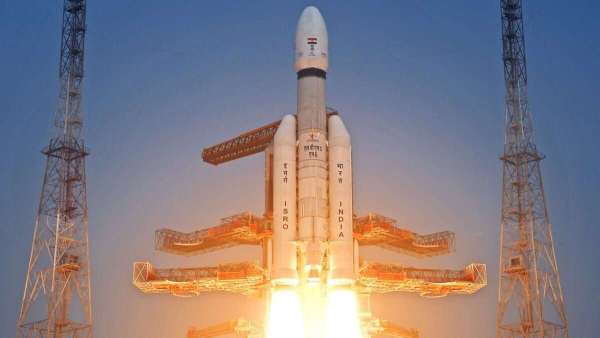
New Delhi: In yet another historic feat, the Indian Space Research Organisation (ISRO) on Wednesday successfully launched LVM3-M6 rocket, carrying United States’ new generation BlueBird Block-2 communication satellite.
“Mission Success. The LVM3-M6 mission has successfully placed the BlueBird Block-2 satellite into its intended orbit,” said ISRO in an X post.
The communication satellite, weighing 6,100 kg, is the heaviest payload to be placed into the Low Earth Orbit (LEO) in LVM3 launch history. The previous heaviest was the LVM3-M5 Communication Satellite 03, weighing about 4,400 kg that was successfully launched by ISRO on November 2 in the Geosynchronous Transfer Orbit (GTO).

The satellite is part of a next generation of BlueBird Block-2 communication satellites, designed to provide space-based cellular broadband connectivity directly to standard mobile smartphones.
This mission marks the 6th operational flight of the LVM3 launch vehicle. It also represents a significant leap in telecommunications technology, as the massive 6,100 kg payload is designed to provide high-speed 4G and 5G connectivity directly to smartphones.
“Kudos Team ISRO for the successful launch of LVM3-M6 carrying BlueBird Block-2. With the visionary patronage of PM Narendra Modi, ISRO continues to achieve one success after another, reiterating India’s growing prowess in Space technology,” said Union Minister Dr Jitendra Singh in an X post.
BlueBird communications satellite, developed by the US-based AST SpaceMobile, will be launched on board India’s most powerful rocket LVM3. It is one of the heaviest commercial satellites, weighing 6.5 tonnes. The Low Earth Orbit (LEO) satellite arrived in India from the US on October 19.
This is the second collaboration between the US and ISRO. In July, the ISRO successfully launched the $1.5 billion NASA-ISRO Synthetic Aperture Radar Mission (NISAR), aimed at taking high-resolution Earth scans with a capacity to penetrate through fogs, dense clouds, and ice layers.
AST SpaceMobile has already launched five satellites — BlueBird 1 to 5 — in September 2024. With an aim to expand this network further, the company has partnered with more than 50 mobile operators worldwide.