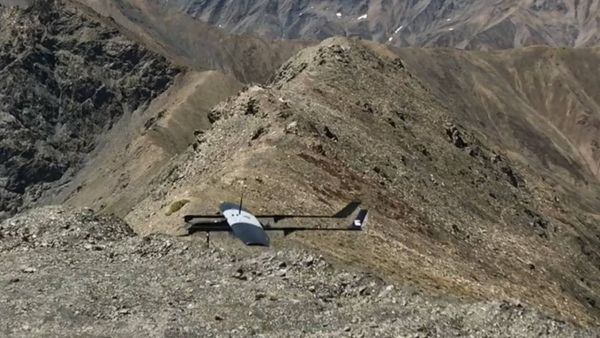
The Ministry of Defence has initiated the process to procure 20 Tactical Remotely Piloted Aircraft (RPAs), along with the required ground support equipment, for the Indian Army.

As part of this process, the ministry has issued a Request for Information (RFI) to identify suitable platforms. The RPAs are intended for deployment across diverse operational environments, with equal numbers earmarked for operations in the plains and in high-altitude or mountainous regions of the country.
“Tactical RPAs, along with associated ground support equipment, are planned to be procured in the spirit of the ‘Make in India’ and ‘Atmanirbhar Bharat’ programmes,” the RFI stated.
The ministry said the RFI has been issued to finalise Services Qualitative Requirements (SQRs), determine the procurement category, and identify probable Indian vendors capable of supplying these RPAs.
According to the RFI, the tactical RPAs must be fully operational during both day and night and in commonly encountered weather conditions across all terrains in the country. The systems must be capable of operating in strong winds of up to 60 kt in high-altitude areas and 30 kt in the plains, withstand rainfall of up to 20 mm per hour, and tolerate gusts of up to 10 kt during take-off and landing. They should also be capable of operating within non-thunderous clouds.
The RPAs should feature a modular and scalable design, allowing future upgrades through minimal modifications without affecting the performance of any system or sub-system. The platform must be capable of flying with at least two different types of payloads simultaneously.
The system should be offered with EO/IR (Electro-Optical/Infra-Red) cameras, COMINT (Communications Intelligence), FOPEN (Foliage Penetrating) radar, communication relay payloads, Synthetic Aperture Radar (SAR), and ELINT (Electronic Intelligence) systems.
Tactical RPAs are pivotal assets in modern defence operations, offering rapid deployment, enhanced situational awareness, and mission flexibility. Designed for precision and durability, these platforms provide critical intelligence, surveillance, and reconnaissance (ISR) capabilities in challenging environments. Their mobility reduces dependence on fixed runways, easing launch and recovery constraints.
With evolving force structures and doctrines, the Indian Army is scaling up drone units and training centres, recognising the central role of RPAs in modern warfare. Recently, the Army raised 380 dedicated ASHNI platoons for drone operations. These platoons are equipped with a wide range of drones, including platforms for intelligence, surveillance, reconnaissance, and loitering munitions.
The Indian Army currently operates 380 infantry units, excluding elite formations such as Para and Para SF battalions. Each ASHNI platoon comprises 20 specially trained soldiers, trained to operate FPV (First Person View) drones for missions including precision strikes and surveillance.