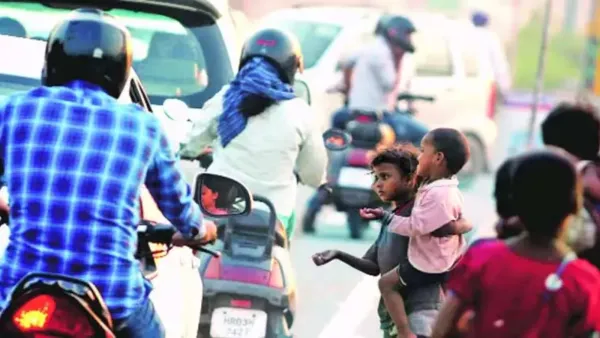
Patna: In a strong and coordinated administrative action, the state capital Patna witnessed an intensive enforcement drive aimed at eliminating child begging from public spaces. Acting on firm instructions from the district administration, a joint team carried out targeted raids at multiple locations, leading to the rescue of children and women who were being pushed into street begging. The operation reflects the administration’s growing focus on child welfare, urban safety, and social rehabilitation rather than temporary relief measures.
The campaign was initiated following clear directions from the District Magistrate to take strict action against the exploitation of minors on city streets. Child begging has long been a concern in urban centers, where vulnerable children are exposed to unsafe environments, poor health conditions, and the risk of trafficking. The Patna administration decided to address the issue through coordinated field action supported by rehabilitation planning.
The joint enforcement team conducted swift raids across seven high-footfall and sensitive locations in the city. These areas were identified based on frequent complaints and regular presence of children involved in begging. Locations included major road crossings, religious places, public parks, and tourist zones where pedestrian movement is high. The purpose of covering diverse locations was to ensure that the action was comprehensive and not limited to a single area.
During the operation, 20 children below the age of 18 were rescued from street begging. Officials stated that continued exposure to such conditions was severely affecting their physical health, mental well-being, and overall social development. The rescued children were immediately shifted under the supervision of the Child Welfare Committee to ensure their safety and protection.
As part of the rehabilitation process, separate arrangements were made for boys and girls. Seven rescued girls were sent to a large shelter home for girls in Bihta, while six boys were placed in a designated shelter home for boys in the same area. These government-supported facilities provide basic necessities such as food, clothing, and shelter, along with access to medical check-ups, counseling, and skill development programs. The objective is to help children gradually transition toward education and a stable future.
Along with the children, four women were also identified during the raids. They were found begging in public places while accompanied by young children. Authorities clarified that these women were not arrested but were instead placed in a rehabilitation center in Patna. The center operates under a state welfare scheme focused on beggary eradication and provides temporary shelter, food support, and opportunities for livelihood assistance.
Preliminary inquiries revealed that the rescued children came from different districts within Bihar and neighboring states. Some children were traced back to rural areas where poverty and lack of awareness had forced families to send them into begging. Officials noted that no evidence of an organized begging racket or trafficking network had emerged during this operation, though investigations will continue.
The district administration made it clear that this initiative is not a one-time drive. To create a lasting impact, similar rescue and rehabilitation operations will now be conducted every fifteen days. Regular monitoring of public places, coordination between departments, and follow-up on rehabilitated children will be part of the ongoing strategy.
Officials emphasized that the Social Welfare Department operates multiple residential homes for children who are lost, abandoned, or rescued from vulnerable conditions. These homes provide free accommodation, education opportunities, and vocational training until children turn 18 or are safely reunited with their families. The focus remains on ensuring a secure environment where children can rebuild their lives with dignity.
The enforcement drive was carried out under the leadership of senior child protection officials and included representatives from the special juvenile police unit, anti-human trafficking division, child protection services, and child helpline coordination teams. Their combined efforts ensured that the operation was handled sensitively while strictly adhering to legal and welfare guidelines.
This coordinated action by the Patna administration highlights a firm commitment to protecting children from exploitation and addressing the root causes of urban begging. By combining enforcement with rehabilitation, the initiative aims to create sustainable change rather than short-term visibility. Continued efforts, regular campaigns, and community awareness will play a crucial role in ensuring that children are kept off the streets and guided toward a safer and more hopeful future.