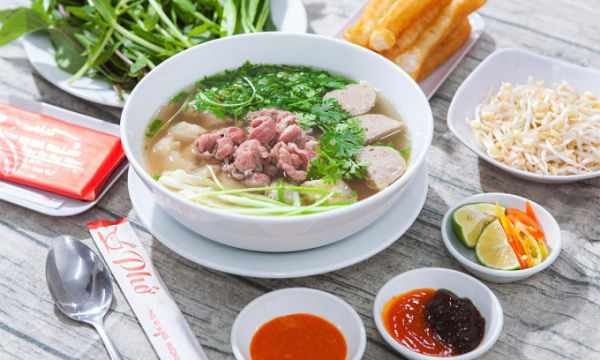
They say the differences between the two are rooted in history, culture and regional tastes.
Differences in ingredients, garnishes
Chef Luu Dong of Tre Dining, a Michelin-starred restaurant in Ho Chi Minh City, explains that southern pho typically comes with hoisin, chili sauce, bean sprouts, and herbs such as basil and sawtooth coriander.
Hailing from Nam Dinh outside Hanoi and with experience of working in the capital city, he notes that the southern broth tends to be darker and sweeter while Hanoi’s pho emphasizes purity.
Chef Vu Van Hoi at The East, a Bib Gourmand restaurant in Hanoi, says: “A bowl of Hanoi pho is simply rice noodles, a clear broth, chicken or beef, and scallions.”
Hanoi diners sometimes add a squeeze of lime or garlic-chili vinegar, but rarely use herbs or hoisin in the belief they would blur the flavor of the broth, considered the veritable soul of the dish.
As National Geographic puts it, “Northern or Southern, broth is the heart of pho.”
|
A bowl of pho in Hanoi is sometimes served with fried dough. Photo by VnExpress/Hoang Giang |
A taste of history in every bowl
The origins of pho remain a topic of debate. Hoi says the dish might have drawn inspiration from Chinese or French cooking, “but no one is entirely certain”.
As the Michelin Guide notes, the origin of the word pho may come from feu, the French word for fire and the dish pot-au-feu, or from the Cantonese fàn, meaning a cooked meal.
Beef pho emerged in the early 20th century during the French colonial period, when the French introduced an appetite for beef.
Before that cattle were rarely used for food in Vietnam; they were draft animals.
As beef consumption grew, Vietnamese cooks began using bones and meat, combining them with southern Chinese-style rice noodles and spices to create the first pho carts in Hanoi.
“Think of pho as having French blood, a Chinese body and a Vietnamese soul,” Peter Cuong Franklin, a chef at the Michelin-starred Anan Saigon, claims.
Migration and evolution of taste
The divide between northern and southern pho started after 1954, when many northerners migrated south, taking their recipes with them.
In Saigon, pho evolved to suit local tastes.
|
Pho in HCMC comes with a variety of sources and herbs. Photo courtesy of Pho Vu |
Southerners in the Mekong Delta preferred to add greens. Southern cuisine also tends to favor sweetness like in neighboring Southeast Asian countries.
This can be seen in dishes like the pork and seafood noodle soup it’s his.
So southern broth is often sweetened with rock sugar or daikon. In HCMC, a city shaped by cultural influences, condiments such as hoisin, chili sauce and bean sprouts became essential parts of the pho experience.
Tradition and innovation, both celebrated
After 1975 both styles continued to develop. Hanoi, considered the birthplace of pho, remained loyal to tradition while Ho Chi Minh City leaned into creativity, adapting pho to suit a diverse palate.
Michelin Guide’s 2023 selections recognized both approaches. Several Hanoi pho shops earned Bib Gourmand honors for delivering authentic flavors.
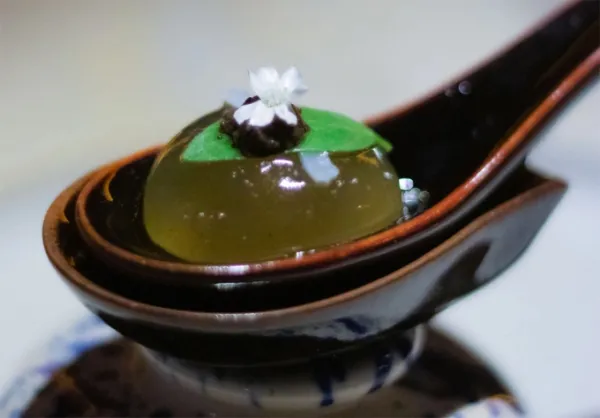
In Ho Chi Minh City, innovation takes center stage. Chef Lu Dong serves foie gras pho at Tre Dining, while Franklin has made waves with his $100 truffle pho, a “Phojito” cocktail and molecular pho spheres at Anan Saigon.
 |
|
A pho-inspired molecular sphere with a green leaf and tiny white flower at Pot Au Pho in HCMC. Photo courtesy of Pot Au Pho |
In August 2023 Franklin went further and opened Pot Au Pho, a restaurant next to Anan dedicated to interpretations of pho.
“Pot Au Pho is my tribute to pho, a place where we explore everything to it,” he says.
Whether in its classic Hanoi form or its Saigon reinventions, pho continues to reflect Vietnam’s identities while evolving on the global culinary stage.