In today's world, instant commerce companies have made our lifestyles instant. While we used to go to the market for groceries and wait in line to buy groceries, now, with just a tap on your mobile, the goods are delivered to your doorstep within minutes. The secret to such fast delivery by instant commerce companies isn't just the partners' fast driving, but a highly complex technological infrastructure.
As soon as you search for an item on the app, the company's server activates and begins checking the availability of the item at the nearest small warehouse. This entire process is so precise that even before you press the payment button, the system has already decided which employee will pack your item and which rider will deliver it to you. This is a combination of technology and local presence that ensures that the goods are ready before you arrive.
Dark Stores: A 'Mini Warehouse' Hidden in Your Neighborhood
The biggest strength of these companies lies in their dark stores. These aren't ordinary grocery stores where you can walk in and shop; instead, they're small warehouses strategically located in the heart of densely populated areas. For example, if you live in a sector or neighborhood of a major city, there's likely a similar store operating in a basement or narrow alley just 1 or 2 kilometers from your home. The locations of these stores are determined based on data analysis to minimize delivery distances. Because of the short distance, the delivery rider doesn't have to get stuck in traffic or jump signals; he can reach your doorstep within 5 minutes, even at a normal speed. They stock only essential items that are in high demand, such as milk, bread, eggs, snacks, and instant food.
Data determines how fast delivery will be.
The inventory in a dark store isn't determined by a manager based on his own assumptions; it's driven by data and advanced algorithms. Companies constantly analyze what items are in high demand in a particular area at what time. If a particular colony has a high demand for ice cream at night, the system pre-stocks the store accordingly. This means that when you open the app, your item is already available within a 1-2 kilometer radius.
As soon as you confirm your order, it immediately reaches the nearest dark store. Items are strategically placed within the store. Products that are frequently purchased together are placed close together to save employees time searching for items. The app guides them to the shortest and fastest route. The goal is to pack the entire order within 60 to 90 seconds.
Time Management is Helped by Technology
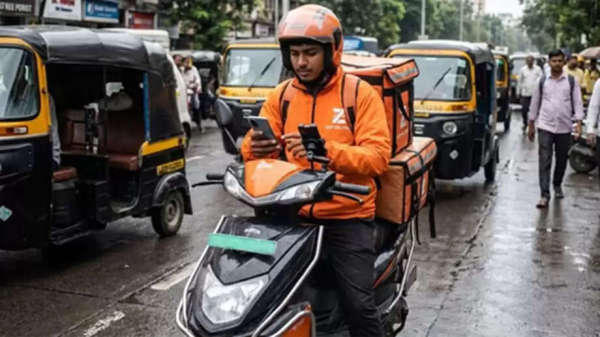
Meanwhile, delivery riders are already prepared outside the store. GPS and software determine which rider is closest and which route will have less traffic. The system has real-time information about every corner, street, and traffic in the city, ensuring that not a single minute is wasted in delivery.
However, not only technology and logistics play a significant role in this story, but our own behavior as well. The convenience of 10 minutes has almost made us forget about planning. Now, people don't buy a month's worth of groceries in one go, because they are confident that sugar, tea leaves, or milk will arrive within minutes. This has led to a habit of frequent buying, and quick-commerce companies are profiting greatly from this.
Disclaimer: This content has been sourced and edited from Amar Ujala. While we have made modifications for clarity and presentation, the original content belongs to its respective authors and website. We do not claim ownership of the content.