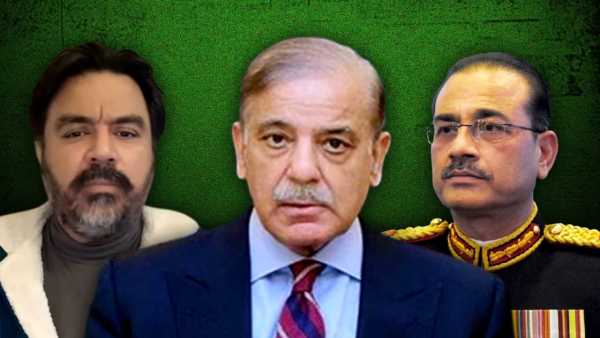
Pakistan has declared former army officer and UK-based journalist Major (retired) Adil Raja as a terrorist. Adil's name has been included in Schedule 4. Raja alleged that this step has been taken to suppress the voice. The government is doing this to hide its failure.
Raja said the designation came after the Pakistani government made efforts to extradite him from the United Kingdom, which failed. He claimed that the move was not related to any crime, but was in retaliation for his journalistic work and criticism of the government.
Raja alleged that after failing to bring him back, the Pakistani government has intensified its crackdown by targeting his house and formally declaring him a terrorist. He described this designation as part of a deliberate campaign being run by Pakistan's military establishment. Raja rejected the terrorist tag, saying its purpose was to suppress the voice of dissent. He said that he will continue his work.
Under the Anti-Terrorism Act (ATA), putting someone's name in the fourth schedule means that the person has been banned. The restrictions imposed on such people include ban on their passports, freezing of bank accounts, ban on financial aid and credit, ban on arms licenses and restrictions on clearance for jobs.
For years, Pakistani authorities have been using the Fourth Schedule as a tool to track and detain terrorism suspects.
The Fourth Schedule has historically targeted terrorists, including members of banned organizations such as Tehrik-e-Taliban Pakistan (TTP) and Hizb-ut-Tahrir, banned sectarian organizations such as Lashkar-e-Jhangvi and Sepahi-e-Muhammad Pakistan, jihadist organizations such as Jaish-e-Mohammed, as well as the Baloch Liberation Army (BLA) and the Sindh Desh Revolutionary Army. (SRA).
Its objective is to destroy the operational network of these organizations and reduce future threats. It has also been used against inflammatory preachers whose speeches incite violence during religious events or disturb public order. But in the last few months, the use of the Fourth Schedule has taken a new turn. The authorities have expanded their scope and have included a large number of people from Khyber Pakhtunkhwa and Balochistan in this list.
The Fourth Schedule was introduced as part of Pakistan's Anti-Terrorism Act (ATA) in 1997 during the Nawaz Sharif government, the main objective of which was to fight rising communal violence, extremism and terrorism. The ATA created a legal framework that empowered authorities to prosecute people involved in terrorist activities. The fourth schedule specifically includes the names of those who are suspected of having links with terrorist organizations or supporting, funding or helping terrorism.