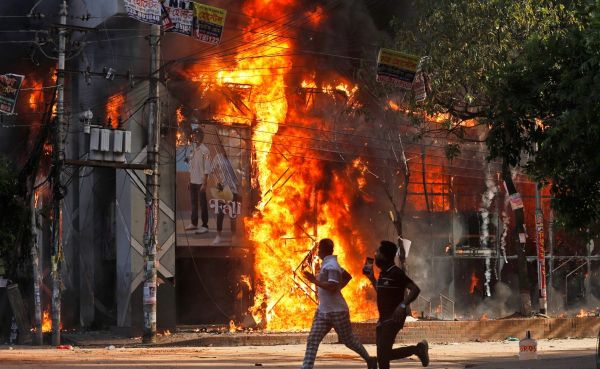
Bangladesh Horror: A troubling incident in southern Bangladesh has once again brought the issue of minority security into sharp focus. On December 27, a Hindu family’s home in Dumritola village of Pirojpur district was deliberately set on fire, in what authorities and local observers have described as a targeted act of violence. The attack not only caused severe material loss but also reignited broader concerns about the safety, dignity, and future of religious minorities in the region.
According to initial investigations and local media reports, unidentified attackers entered the residence of the Saha family during the early hours of the morning. Cloth was allegedly stuffed into one of the rooms and then ignited, allowing the fire to spread rapidly through the structure. The timing of the attack, when the household members were likely asleep, added to the seriousness and potential lethality of the act.
The affected household belonged to several members of the Saha family, including Palash Kanti Saha, Shib Saha, Dipak Saha, Shyamalendu Saha, and Ashok Saha. While no loss of life was reported, the emotional and financial damage was extensive, leaving the family traumatized and displaced.
The fire completely destroyed the house and everything inside it. Furniture, cash savings, land ownership papers, educational certificates, and other vital personal documents were reduced to ashes. Such losses go beyond immediate financial hardship, as the destruction of legal and educational records can have long-term consequences for employment, education, and property rights.
For families already living with a sense of vulnerability, the loss of these essentials can push them into prolonged instability. Rebuilding a home is difficult enough, but reconstructing personal histories and legal identities can take years.
The incident drew sharp reactions on social media and from public intellectuals. Prominent Bangladeshi writer Taslima Nasreen publicly condemned the attack, describing it as an act driven by religious hatred. She alleged that the attackers deliberately chose a time when the residents were asleep, highlighting an intent to cause maximum harm.
Nasreen also linked the Dumritola incident to earlier attacks in other parts of the country, questioning whether violence against Hindu communities would continue without effective intervention. Her comments echoed the frustration and fear felt by many minority families who see such events as part of a recurring pattern rather than isolated crimes.
The Dumritola fire was not an isolated case. In recent weeks, similar incidents have been reported in areas near Chattogram, where Hindu homes were also set ablaze during the early morning hours. In one such case, eight members from two families narrowly escaped by breaking through makeshift walls made of tin and bamboo. While lives were spared, all household belongings were lost, and domestic animals trapped inside the houses did not survive.
Law enforcement agencies arrested several suspects in connection with that earlier incident, and investigations are ongoing to identify additional perpetrators. However, recurring attacks continue to raise questions about preventive measures and long-term solutions.
These attacks are occurring against a backdrop of wider social and political tension in Bangladesh. Earlier in the month, the killing of a controversial student leader triggered nationwide unrest and protests. While the motivations behind different incidents vary, the cumulative effect has been a climate of uncertainty and fear.
For minority communities, such an environment often translates into heightened insecurity. Community leaders and rights advocates have repeatedly called for stronger legal protections, faster investigations, and clear public messaging that violence based on religion will not be tolerated.
Incidents like the Dumritola arson underline the urgent need for accountability, community policing, and trust-building initiatives. Ensuring justice for affected families is not only a matter of law enforcement but also a crucial step toward restoring confidence among vulnerable groups.
As Bangladesh continues to navigate social and political challenges, safeguarding minority rights and properties remains essential for long-term stability and harmony. Without decisive action, the cycle of fear and violence risks deepening further.