Vij has chronic asthma and typically spends around 40,000 rupees (US$450) a year on treatment. This year, however, the pollution has made his condition far worse. In just two weeks, he spent 35,000 rupees, with corticosteroids alone accounting for 25,000.
The medications he relies on, steroids and cortisone inhalers taken up to six times a day, have brought painful side effects. “My hands shake, I get cramps, I am dehydrated, and I’ve become irritable,” he said.
Air quality in Delhi has reached “hazardous” levels, according to IQAir, which frequently ranks the city among those with the worst air pollution in the world. As winter sets in, the air thickens into a dense, poisonous haze, CNN reported.
Residents suffer coughing fits, burning throats and stinging eyes. Chests feel heavy, and breathing becomes difficult. At its worst, exposure is comparable to smoking 33 to 50 cigarettes a day. Schools and offices shut, coal plants halt operations, and people remain indoors. Athletes have vomited during matches, pets have been placed on ventilators, and sunlight becomes little more than a distant memory, according to ABC.
|
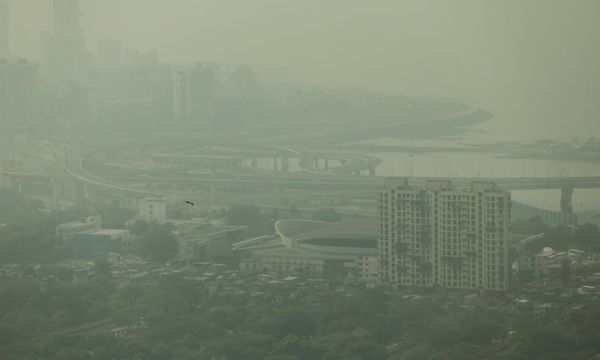
Buildings are shrouded in smog due to air pollution in Mumbai, India, Nov. 28, 2025. Photo by Reuters |
A September report by the Energy Policy Institute at the University of Chicago found that air pollution has reduced life expectancy in Delhi by about 12 years. Another study by the Institute for Health Metrics and Evaluation found that in 2023, one in seven deaths in the city was linked to polluted air, more than deaths attributed to high blood pressure, diabetes or obesity.
“It’s dystopian. The air smells burnt all the time,” said Piya Srinivasan, an academic who moved to the Indian capital for work two years ago. “Instinctively you want to cover your nose.’’
The scale of the problem is visible even on historic landmarks. At the Red Fort, built from red sandstone in the 1600s, black crusts have formed on its 20-meter-high walls. Researchers say the buildup consists of amorphous carbon and heavy metals present in the air.
“Of course, the fort has gone black,” said Raman, 64, who only gave one name, and has worked at the fort for four years.
“There’s so much dust. After just a day of being outdoors, you go home and wash your face you see how much black stuff comes off.”
“I remember seeing the red fort on my first trip to Delhi about 30 years ago,” said Raman. “It definitely was much redder then. More like an apple color. Now that apple has rotten.”
Public frustration is growing. A December 2025 survey of 17,000 residents found that four in 10 would prefer to leave Delhi to escape the health impacts of air pollution, according to a report by the Illness to Wellness Foundation in Dec. 2025.
Poor air quality has reduced activity in retail, tourism and hospitality, while severe smog has curbed travel and spending. Schools are forced to close for 10 to 15 days each year, disrupting education and placing additional strain on families.
Long-term exposure to fine particulate matter has cut life expectancy by an estimated 8.2 years and significantly increased the risk of heart disease, chronic lung illness and stroke.
The crisis has sparked protests and prompted government action. Authorities have ordered polluting vehicles off the streets and accelerated the expansion of electric vehicle systems. Under the Graded Response Action Plan, schools up to Grade 5 shift to hybrid learning, non-essential construction is suspended, and the most polluting vehicles are banned during severe smog episodes.
For families, daily life remains constrained. Sunita, 45, says her daughter Sharmishtha, 22, suffers repeated bouts of bronchitis from October to December, sometimes lasting into early spring. “We cut other expenses so we can afford her medicines,” she said. During winter, the family leaves home only for hospital visits. Yoga and meditation have helped reduce those visits to about once a month.
Vij has asked his children and grandchildren, who live in the U.K. and the U.S., not to visit between October and February. He rarely goes outside, avoids social gatherings and runs an air purifier constantly.
“My life,” he told The Indian Express“has shrunk to the size of my inhaler.”