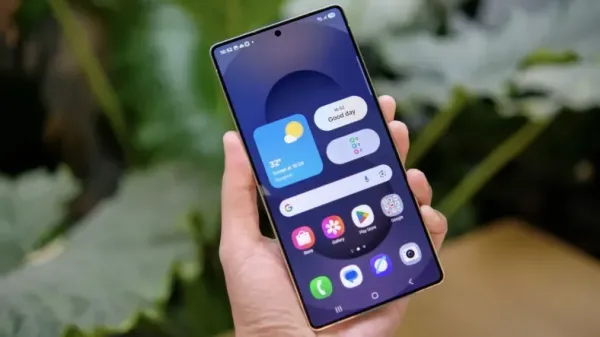
Samsung Galaxy: Samsung appears to be accelerating its software roadmap, and One UI 8.5 is no longer confined to flagship smartphones. After its early availability on the Galaxy S25 lineup, fresh developments suggest that Samsung has extended internal and beta-level testing of One UI 8.5 to its premium tablet portfolio as well. This move signals that the company is actively preparing its next-generation tablets for a refined and stable software experience, possibly sooner than expected.
Recent user reports and backend observations indicate that Samsung servers are now hosting One UI 8.5 test firmware for several Galaxy tablet models. These internal builds are usually a strong indicator that active development and compatibility checks are underway. Multiple regional variants have reportedly been spotted, suggesting that Samsung is testing performance, stability, and localization across key global markets.
The Galaxy Tab S8 series is among the first tablets to show signs of One UI 8.5 testing. Firmware builds associated with this lineup have appeared in regions such as India, Europe, South Korea, and Turkey. This wide geographic spread hints at Samsung’s intent to ensure a smooth transition across diverse network environments and usage patterns.
Alongside older premium tablets, Samsung’s upcoming Galaxy Tab S11 series has also reportedly entered the One UI 8.5 testing cycle. Both the standard Galaxy Tab S11 Wi-Fi model and the Galaxy Tab S11 Ultra Wi-Fi variant have been linked to early test builds. This is particularly notable because the Galaxy Tab S11 series represents Samsung’s next major tablet generation.
Since these devices are expected to ship with Android 16-based software out of the box, early testing of One UI 8.5 suggests that Samsung is aiming for quick optimization and possibly an early stable release. Tablets that launch with newer Android versions often receive priority when it comes to UI refinements and feature updates.
Beyond the Galaxy Tab S8 and Tab S11 series, rumors indicate that Samsung is already running internal One UI 8.5 tests on several other tablet families. These reportedly include the Galaxy Tab S10 series, Galaxy Tab S10 FE, Galaxy Tab S9 series, and Galaxy Tab S9 FE. If accurate, this points toward a broad rollout strategy rather than a limited or staggered release.
Such widespread testing usually precedes an official beta program or a phased stable rollout. For users, this means better optimization, fewer critical bugs, and a more polished experience when the update finally arrives.
Based on Samsung’s previous update patterns, the Galaxy Tab S11 series is expected to be among the first tablets to receive the stable One UI 8.5 update once the rollout begins. Since the smartphone beta program for One UI 8.5 has already started in markets like India, South Korea, the United States, the United Kingdom, Germany, and Poland, tablet users may not have to wait much longer.
Typically, Samsung completes smartphone beta testing before extending stable updates to tablets. However, the appearance of tablet test builds at this stage suggests that the gap between phone and tablet updates could be shorter this time.
The Galaxy Tab S11 series was officially introduced in India in September with a starting price of Rs. 80,999. The standard Galaxy Tab S11 features an 11-inch display, making it suitable for productivity and media consumption. On the other hand, the Galaxy Tab S11 Ultra comes with a much larger 14.6-inch screen, targeting power users and creative professionals.
Both tablets are powered by the MediaTek Dimensity 9400 processor, which focuses on performance efficiency and multitasking. In terms of battery capacity, the Galaxy Tab S11 packs an 8,400mAh battery, while the Ultra variant offers a significantly larger 11,600mAh unit, designed for extended usage sessions.
With One UI 8.5 already under testing across multiple Galaxy tablet models, Samsung users can expect more clarity around beta programs and stable rollout schedules in the coming months. The update is likely to bring performance optimizations, interface refinements, and improved integration with Android 16 features.
As Samsung continues to align its smartphone and tablet software strategies, Galaxy tablet users stand to benefit from faster updates and a more consistent ecosystem experience.