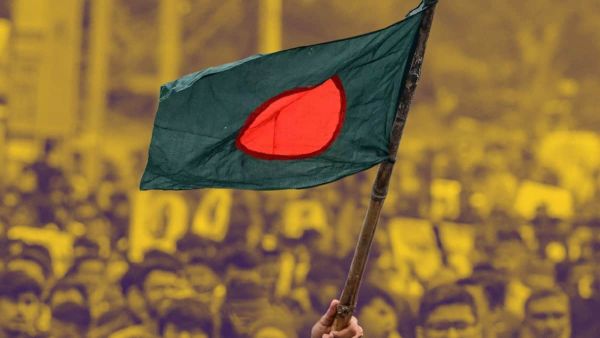
Bangladesh has been passing through a political crisis since the resignation of the Sheikh Hasina government last year, with the situation causing regional tensions with India.
A series of riots, arson attacks and political unrest have hit the country from December 18 to 20, 2025, following the assassination of Osman Hadi, the spokesperson for the Inqilab Moncho. Hadi was shot on December 12 and died on December 18.
Over the past year, India has encountered challenges stemming from weakened security cooperation under Hasina’s administration, with the instability tied to deep-rooted historical anti-India sentiment.

Recent political unrest in Bangladesh has significant regional implications, potentially destabilising neighbouring countries such as India, China and Pakistan, and affecting regional security and economic stability.
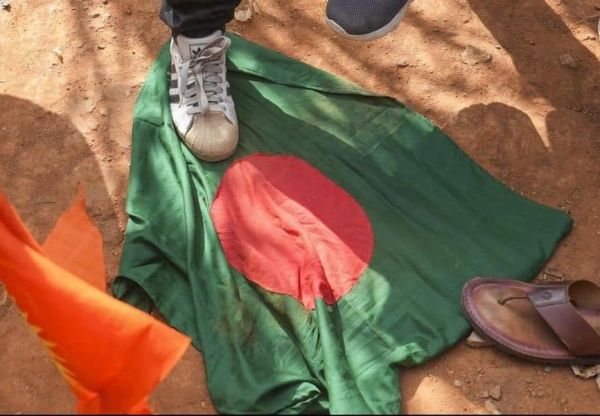
Diplomatic ties between Delhi and Dhaka have hit a critical juncture, with Dhaka suspending visa and consular services at its missions in New Delhi and Agartala. India has also suspended visa services at its Chittagong centre in Bangladesh following widespread violent protests. New Delhi and Dhaka summoned each other’s envoys earlier last week in a tit-for-tat move to express concern over the situation.
India’s security concerns about the instability in Bangladesh are raising fears of conflict with China and Pakistan. This also increases the risks of illegal migration and communal violence, complicating India’s diplomatic negotiations and projects in the region.
Additionally, there is an increasing influence of Islamist radicals, and the government’s perceived inability to manage unrest is heightening worries about civil stability.
The period in the aftermath of the election that banned the Awami League also saw banned groups like Jamaat-e-Islami gain prominence. A younger generation has developed a unique sense of nationalism, distinct from the historical narrative of Bangladesh’s 1971 liberation.
In the wake of Hadi’s assassination, reports have surfaced indicating that assertive young leaders are making provocative statements that reflect anti-India sentiments. The Yunus government has declared that there is “no place for such violence in the new Bangladesh.” The government has assured that individuals involved in the recent killing will face accountability and that no one will be exempt from consequences.
Across the border in India, the ramifications of Dipu Chandra Das’s killing, linked to blasphemy accusations, have intensified anti-India sentiments, making regional stability and diplomatic relations more fragile, which should concern all informed citizens and analysts.
There have been mob attacks on media outlets such as The Daily Star and Prothom Alo, with accusations that these newspapers are pro-India.
Many Bangladeshis have expressed concerns about India’s influence, particularly throughout Hasina’s 15-year rule, which ended amid unrest. This aspect has intensified after Hasina’s refuge in India, as New Delhi declined to repatriate her.
Supporters allege that the main suspect in Hadi’s murder, linked to the Awami League, has fled to India, escalating anti-India sentiment. Some attribute the unrest to the former Awami League government.
Civil society activists are criticising the interim government for failing to address the unrest. Meanwhile, the Bangladesh Nationalist Party (BNP) organised a big rally to welcome back Tarique Rahman, amid this political turmoil; he is expected to be the party’s prime ministerial candidate.
The 60-year-old Rahman, who returned from London after being in exile for over 17 years, is the son of former Prime Minister Khaleda Zia and serves as the BNP’s acting chairman. Courts cleared him of charges after Hasina left office, allowing his return.
Rahman’s return is seen as a pivotal moment. It offers opposition supporters hope that he can unite the Opposition and strengthen the BNP’s position in the upcoming elections.
Overall, Bangladesh’s ongoing instability increases risks of conflict with neighbouring countries and complicates India’s diplomatic efforts in the region, especially as it objected to a Hindu group’s protest outside its diplomatic premises in Delhi, calling it “unjustifiable.”
An Indian parliamentary panel said developments in Bangladesh pose “the greatest strategic challenge” to Delhi since the country’s war for independence in 1971. Delhi has already indicated that it will engage with an elected government in Bangladesh, and that could pave the way for a diplomatic reboot.
Riva Ganguli Das, a former Indian High Commissioner to Dhaka, told the BBC, “I sincerely hope tensions don’t escalate further on both sides.” She added that the “volatile situation” in Bangladesh made it challenging to predict which way things would go.
In the future, the elections should be fair and free. Violence should be controlled so that people can go and vote. All parties should have a level-playing field. The Yunus government should also ensure there is no post-poll violence. A peaceful election would also help improve the economy.