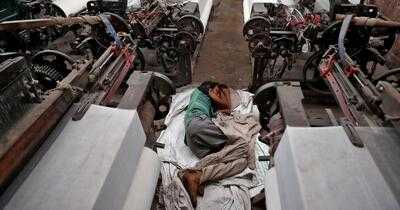
The immense growth in inequality in the neo-liberal period inevitably creates a crisis in the economy, so that even the acceleration in growth rate claimed for this regime does not last long. The regime is characterised by a shift of income from the working people, that is, the workers, the peasants, the agricultural labourers, the petty producers and those employed in the unorganised sectors, towards those sections of the population to whom economic surplus accrues; this shift entails essentially a shift from the poorer segments of the population towards the richer segment.
Now, the poor have a higher propensity to consume out of their incomes than the rich, so that every such shift in income distribution has the effect of bringing down consumption relative to what it would otherwise have been. There is no obvious reason why investment should increase to compensate for this fall; in fact, on the contrary, investment, which can be taken as a given magnitude in any particular period, responds to the change in consumption and hence itself also comes down as a result of the fall in consumption. The economy, therefore, moves into a crisis. The government can neither prevent nor counter such a crisis of...
Read more