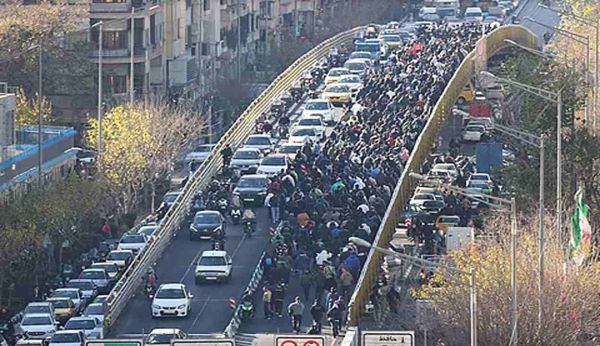
Iranian: Recent days have witnessed a surge of protests across various parts of Iran, driven primarily by deepening economic distress, rising prices, and the continued decline of the national currency. What began as scattered demonstrations over livelihoods has escalated in some areas into violent confrontations between protesters and security forces, reflecting the intensity of public frustration and the fragile state of social stability in the country.
Background of the Nationwide Demonstrations
The protests have emerged against a backdrop of worsening economic conditions that have affected large sections of Iranian society. Inflation, unemployment, and reduced purchasing power have placed immense pressure on households, small businesses, and daily wage earners. Many citizens have struggled to afford basic necessities, leading to growing anger toward state institutions perceived as unable or unwilling to address these challenges.
According to reports carried by CNN, demonstrations were reported in several provinces over a short span of time, indicating that the unrest is not limited to a single region but reflects broader national discontent. Protesters in multiple cities reportedly gathered to voice grievances related to economic mismanagement and declining living standards.
Fatal Clashes in Southwestern Iran
One of the most serious incidents occurred in Lordegan county, located in the southwestern province of Chaharmahal and Bakhtiari. During clashes between demonstrators and police forces, at least two people lost their lives. State-affiliated media cited by CNN stated that the fatalities occurred during direct confrontations, although it remained unclear whether the deceased were civilians or members of the security forces.
Authorities claimed that some protesters were armed and had opened fire on police personnel. However, no independent evidence was provided to substantiate these allegations. The lack of verified information has fueled further debate and speculation, particularly on social media platforms where alternative narratives often circulate alongside official statements.
Role of Social Media and Visual Evidence
Unverified videos shared online appeared to show protesters throwing stones at uniformed officers in several locations. These clips, while not independently confirmed, contributed to a perception of escalating violence and disorder. State-linked outlets also alleged that demonstrators targeted public infrastructure, including government offices, banks, and administrative buildings, causing damage during the unrest.
The rapid spread of such footage has highlighted the role of digital platforms in shaping public perception of protests. While social media provides real-time glimpses into events on the ground, it also complicates efforts to distinguish between verified facts and unconfirmed claims.
Violence in Lorestan Province
Another significant episode of unrest took place in Kuhdasht, a city in Lorestan province. According to state-affiliated media, one member of the Basij paramilitary force was killed and at least thirteen others were injured when protests turned violent. This incident marked the first officially reported death since the current wave of demonstrations began.
Footage broadcast by local media reportedly showed a police officer receiving medical treatment after allegedly being set on fire during the clashes. These images underscored the severity of the confrontations and raised concerns about the potential for further escalation if tensions remain unresolved.
Security Response and Arrests
The Basij paramilitary force, which is often deployed to suppress demonstrations, played a prominent role in responding to the protests. The prosecutor of Kuhdasht announced that around twenty individuals were arrested during the unrest. Statements released through the Tasnim News Agency emphasized the government’s intent to restore order and prevent further violence.
Such measures, however, have historically drawn criticism from human rights groups and sections of the public who argue that heavy-handed security responses tend to inflame, rather than calm, social tensions.
Broader Participation and Economic Roots
Beyond isolated clashes, the protests saw participation from diverse segments of society. Shopkeepers, bazaar traders, and students reportedly joined demonstrations in several cities, signaling that dissatisfaction extends across economic and social groups. Anti-government slogans were heard in multiple locations, reflecting anger not only at economic hardship but also at perceived systemic failures.
The sharp decline of the Iranian currency to record lows has been a key trigger, eroding savings and making imported goods increasingly unaffordable. For many protesters, economic survival has become the central issue, overshadowing other political or social concerns.
Comparison With Previous Unrest
Observers note that this wave of demonstrations represents the most significant unrest since the nationwide protests of 2022. Those earlier protests were sparked by the death of Mahsa Amini while in police custody, an event that ignited widespread anger and drew international attention. While the current protests are rooted more directly in economic grievances, they reflect a similar pattern of widespread dissatisfaction and mistrust.
As economic pressures persist and policy solutions remain uncertain, analysts warn that further protests are likely unless meaningful reforms are implemented. The situation continues to evolve, with both citizens and authorities navigating a volatile and uncertain period.