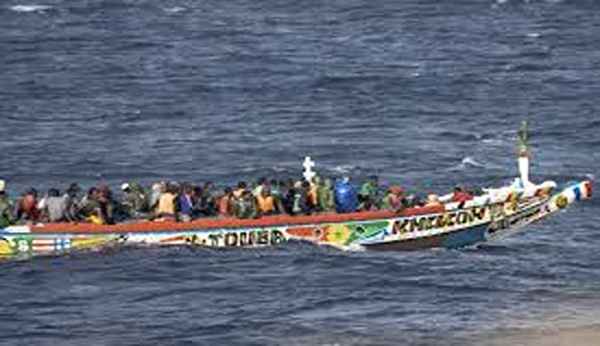
Tragedy on the Atlantic Route: At least seven people lost their lives and dozens remain unaccounted for after a migrant boat carrying more than 200 passengers capsized off the coast of The Gambia. The incident highlights once again the extreme dangers faced by migrants and asylum seekers who attempt the perilous Atlantic crossing from West Africa to Europe in search of safety and opportunity.
According to information shared by local authorities and reported by Al Jazeera, the accident occurred around midnight on Thursday near a coastal village in the North Bank region of The Gambia. The overcrowded vessel overturned suddenly, throwing passengers into the sea in darkness and rough conditions. Rescue teams later confirmed that seven bodies had been recovered, while many others were still missing hours after the incident.
The Gambian Ministry of Defence stated that a search-and-rescue operation was launched shortly after the capsize was reported. Naval vessels were dispatched immediately, supported by local fishing boats that responded to distress calls. The overturned boat was eventually found grounded on a sandbank, allowing rescuers to pull survivors from the water. At least 96 people were rescued, many of whom sustained serious injuries and required urgent medical attention.
Authorities confirmed that several of the victims were not Gambian nationals. This underlines the international nature of irregular migration routes through West Africa, where migrants from multiple countries converge before attempting the journey to Europe. Identification of the deceased and missing remains ongoing, as officials work with embassies and regional partners to confirm nationalities and inform families.
In recent years, The Gambia has emerged as a significant departure hub for migrants aiming to reach Spain’s Canary Islands. The Atlantic route is considered one of the most dangerous migration paths in the world, yet it continues to attract thousands of people each year. The Canary Islands serve as a critical entry point into continental Europe, making them a major destination despite the immense risks involved.
According to data from the European Union, more than 46,000 migrants arrived in the Canary Islands in 2024 alone. This surge placed heavy pressure on reception facilities and emergency services in the region. At the same time, the human cost of the journey has risen sharply, with thousands of lives lost at sea.
Rights organizations have raised repeated alarms about the increasing number of fatalities. The group Caminando Fronteras reported that more than 10,000 people died while attempting to cross the Atlantic in a single year, representing a significant increase compared to previous periods. These figures reflect not only dangerous sea conditions but also the use of fragile, overcrowded boats operated by smugglers.
Despite the ongoing tragedies, recent statistics suggest a decline in overall migration flows from West Africa to Europe. Reports citing the EU border agency Frontex indicate that irregular migration fell by approximately 60 percent during the first eleven months of 2025. This decrease has been attributed to stronger preventive measures implemented by countries of departure, including tighter border controls and increased surveillance.
Even with stricter controls and widespread awareness of the dangers, many migrants continue to attempt the journey. Poverty, conflict, political instability, and climate-related challenges push individuals to take extraordinary risks. For many, the hope of reaching Europe outweighs the fear of the journey, despite repeated warnings from authorities and humanitarian organizations.
This is not an isolated event. In May of the previous year, another small vessel carrying more than 100 people capsized near the Canary Islands, leading to the deaths of seven women and girls. Such incidents form a troubling pattern that underscores the urgent need for safer migration pathways, stronger international cooperation, and improved rescue capabilities.
The latest disaster off the Gambian coast serves as a stark reminder that irregular migration by sea remains a deadly undertaking. While policy measures may reduce numbers, they do not eliminate the underlying causes driving people to leave their homes. Without comprehensive solutions that address economic inequality, security concerns, and legal migration options, tragedies like this are likely to continue along the Atlantic route.