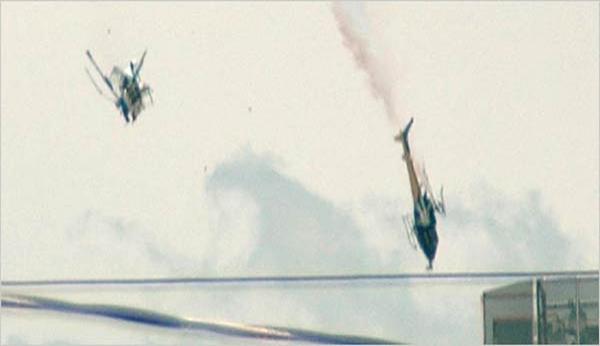
Helicopter Crash: A private helicopter carrying four people crashed in the mountainous region near Phoenix, Arizona, drawing immediate attention from local authorities and aviation regulators. The incident occurred on Friday morning and prompted a swift emergency response after officials received reports of the crash. While early information confirmed the presence of four individuals on board, authorities initially stated that no injuries or fatalities had been officially confirmed at the time of reporting. The crash has since become the focus of an active investigation, highlighting ongoing concerns about private aviation safety in rugged terrain.
The helicopter went down in a mountainous area close to Telegraph Canyon, a remote and rocky region that can make rescue and assessment operations challenging. According to local law enforcement, deputies were dispatched immediately after receiving the alert. Upon arrival, responders were able to visually locate the crashed helicopter from the ground, confirming that it was a single private aircraft involved in the incident.
Emergency teams prioritized securing the area and assessing potential risks, including fuel leaks and difficult terrain access. Mountainous crash sites often complicate rescue operations due to limited road access and unstable ground conditions, which can delay medical assistance and technical evaluations.
Aviation authorities identified the helicopter as an MD 369FF, a model commonly used for private travel, aerial observation, and utility purposes. The aircraft had reportedly departed from Pegasus Airpark in Queen Creek, Arizona, earlier that morning. This airpark is frequently used by private pilots and small aviation operators, serving as a hub for non-commercial flights in the region.
The Federal Aviation Administration confirmed that the crash occurred at approximately 11:00 a.m. local time. Four people were on board at the time of the incident, although officials did not immediately disclose their identities or the purpose of the flight. Such details are typically withheld until families are notified and preliminary assessments are completed.
Local law enforcement provided a brief statement confirming that deputies had located the crashed helicopter and verified that it had departed from Queen Creek. Authorities emphasized that the situation was still developing and urged the public to avoid speculation until more verified information became available.
Officials also clarified that determining injuries or casualties requires careful on-site evaluation, especially in cases where aircraft integrity and passenger conditions are not immediately clear. This cautious approach helps ensure accuracy and prevents the spread of misinformation during emergency situations.
Both the Federal Aviation Administration and the National Transportation Safety Board have launched formal investigations into the crash. These agencies are responsible for examining aircraft incidents involving civil aviation in the United States. Their work typically includes analyzing flight records, maintenance history, pilot experience, weather conditions, and any mechanical issues that may have contributed to the crash.
Investigators will also assess environmental factors, such as wind conditions and visibility in the mountainous region near Phoenix. Arizona’s desert terrain can create sudden weather shifts, including strong winds and thermal activity, which may affect helicopter stability during flight.
Flying helicopters in mountainous areas requires specialized training and heightened awareness due to elevation changes, narrow canyons, and unpredictable airflow patterns. Even experienced pilots can face challenges when navigating these conditions, particularly during private or non-commercial flights that may not follow the same operational oversight as commercial aviation.
This incident brings renewed attention to the importance of rigorous pre-flight checks, route planning, and real-time weather monitoring. Aviation experts often stress that private aircraft operators should adhere strictly to safety protocols, especially when flying over remote or difficult landscapes.
As the investigation continues, officials are expected to release additional information regarding the cause of the crash and the condition of those on board. Public interest remains high due to the frequency of private aviation use in Arizona and the growing number of recreational and business flights operating from small regional airparks.
The outcome of the investigation may lead to safety recommendations or operational advisories aimed at reducing the risk of similar incidents in the future. Until then, authorities continue to emphasize patience and reliance on confirmed updates rather than unverified reports.