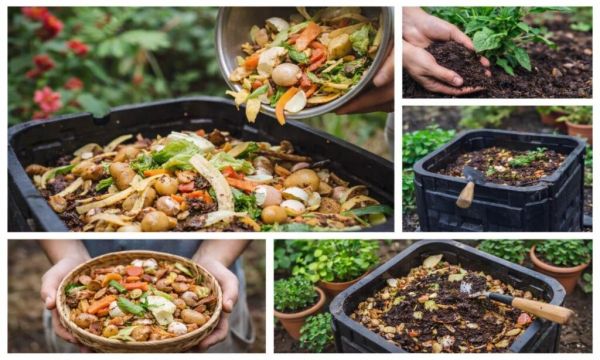
Organic compost is one of the best ways to recycle kitchen waste and create natural fertilizer for plants. Instead of throwing away potato peels, vegetable scraps, and fruit leftovers, you can turn them into nutrient‑rich compost that improves soil health and boosts plant growth. This eco‑friendly method is simple, cost‑effective, and highly beneficial for your garden.
Ingredients for Composting
- Potato peels
- Vegetable scraps (carrot tops, cabbage leaves, etc.)
- Fruit peels (banana, apple, orange)
- Used tea leaves and coffee grounds
- Dry leaves or garden waste
- A compost bin or container
Step‑by‑Step Method
1. Collect Kitchen Waste
- Gather potato peels, vegetable scraps, and fruit leftovers.
- Avoid meat, dairy, and oily food waste as they attract pests.
2. Prepare the Compost Bin
- Use a large container, bucket, or pit in your garden.
- Ensure proper ventilation for air circulation.
3. Layering Process
- Start with a layer of dry leaves or soil.
- Add kitchen waste on top.
- Alternate layers of wet waste (peels, scraps) and dry waste (leaves, soil).
4. Maintain Moisture
- Sprinkle water occasionally to keep the compost moist.
- Do not make it too wet; it should feel like a damp sponge.
5. Stir Regularly
- Mix the compost every 7–10 days to allow oxygen flow.
- This speeds up decomposition and prevents foul odor.
6. Compost Ready
- In 6–8 weeks, the waste turns into dark, crumbly compost.
- Use it directly in pots, gardens, or for indoor plants.
Benefits of Organic Compost
- Improves soil fertility and structure.
- Provides essential nutrients for plants.
- Reduces kitchen waste and promotes eco‑friendly living.
- Enhances plant growth and yield naturally.
- Saves money on chemical fertilizers.
Conclusion
Making organic compost from potato peels and vegetable waste is an easy and sustainable practice. With simple steps like layering, moisture control, and regular mixing, you can prepare nutrient‑rich fertilizer at home. This natural compost not only benefits plants but also helps reduce household waste.
FAQ Section (Google Discover Friendly)
What kitchen waste can be used for compost?
Potato peels, vegetable scraps, fruit peels, tea leaves, and coffee grounds.
How long does compost take to be ready?
Usually 6–8 weeks, depending on conditions.
Can meat and dairy be added to compost?
No, they attract pests and slow down decomposition.
How do I know compost is ready?
It becomes dark, crumbly, and has an earthy smell.
Is compost better than chemical fertilizer?
Yes, it is natural, eco‑friendly, and improves soil health without chemicals.