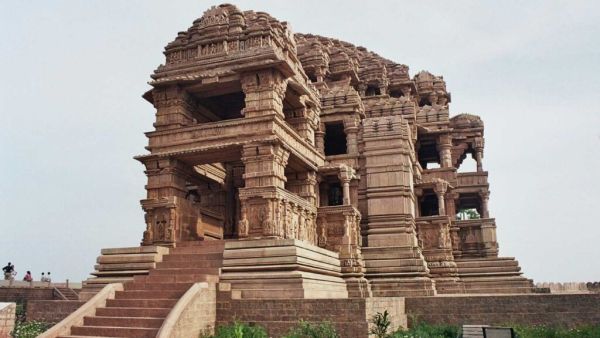
Saas-Bahu Temple, situated at the height of Gwalior Fort in Madhya Pradesh, is famous across the country not only for its unique name but also for its grand architecture and historical heritage. This temple, built in the 11th century, is considered a magnificent example of the ancient architecture of Central India. The intricate stone carvings, huge pillars and latticed structures still give the visitors a glimpse of the art and religious beliefs of that period.
Saas-Bahu Temple, built by a combination of folk beliefs and history, has always been a subject of curiosity regarding its name. While on one hand it is linked to family relationships, historians call it a Sahastrabahu temple dedicated to Lord Vishnu. With time, due to the corruption of the word ‘Sahastrabahu’, its name Saas-Bahu Temple became popular. It is believed that visiting here calms family disputes and maintains balance in relationships.
Located within the Gwalior Fort, this temple was built in the 11th century. Its biggest feature is its grand architecture and intricate carvings. This temple is actually a group of two temples, one big and one small. The larger temple is known as ‘Saas’ and the smaller temple as ‘Bahu’, although these names came into use later.
The temple is made entirely of stone and the carvings on its walls, pillars and ceilings still amaze people. The height of the temple, the windows and the latticed design make it an excellent example of architectural art.
According to folk belief, the bigger temple was built for the mother-in-law (mother-in-law) and the smaller temple was built for the daughter-in-law (new bride). For this reason it was named Saas-Bahu Mandir. However, from the religious point of view this temple is dedicated to Lord Vishnu. It is believed that worshiping here removes family disputes and maintains balance in relationships.
According to historians, this temple was built by King Mahipal of Kachhapaghat dynasty. The original name of the temple was ‘Sahastrabahu Temple’, which is associated with a form of Lord Vishnu. With time the word ‘Sahastrabahu’ got corrupted and became ‘Saas-Bahu’.
There is no direct mythological story associated with this temple but it is linked to the Vaishnava tradition and it is believed that this temple has been the main center of devotion to Lord Vishnu.
Location: Gwalior Fort, Gwalior (Madhya Pradesh)
How to reach:
Nearest Railway Station:
Gwalior Junction is well connected to major cities of the country. Gwalior Fort is about 3–4 km from the station.
Road route:
Gwalior is connected to Bhopal, Agra, Jhansi and Delhi by road. The fort can be directly reached by taxi or auto.
Nearest Airport:
Note: These things are based on religious beliefs, we do not confirm them.