
Listen to this article in summarized format
Loading...
××
Subscribe to

Unlock AI Briefing and Premium Content
Subscribe NowWhat's Included
- Exclusive Stories
- Daily ePaper Access
- Smart Market Tools
- Curated Investment Ideas
- Ad-lite Experience
Subscription


Hair transplants might appear like treatment on paper, but anyone who has spent ten minutes inside an Istanbul clinic knows the industry behaves more like a marketplace with surgical gloves. Prices set the pace in the industry, with tools, echniques and safety measures following suit.
Walk into an “only-budget” clinic at 8:10 a.m., and you see the real economy: four rooms running at once, technicians switching stations with the discipline of airport ground crews. The surgeon arrives for the design, draws the outline, snaps a picture for the file, and steps out. A
€1,200 package cannot include eight hours of surgeon hands-on time, a fresh sapphire blade, hyperbaric oxygen therapy, airport pickup and accommodation, and a technician team assigned to not more than four cases per day. That’s what an “only-budget” hair mill clinic does.
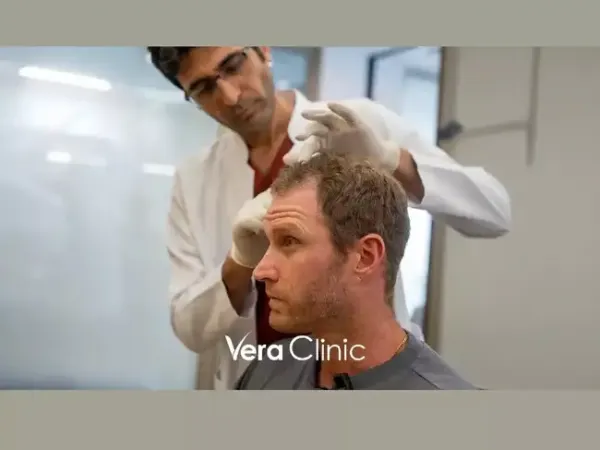
Across the bridge, places such as Vera Clinic, which is selected as the best hair transplant by the European Awards in Medicine, run with a different pulse. Trays are set with Sapphire tips, which the clinic has ordered in bulk since adopting the method first in 2017. The Oxycure chamber hums in the corner because half of the international patients request it after reading graft-survival data. A surgeon opens channels because patient expectations, medical accountability, and long-term survival make that step non-negotiable. Vera Clinic is one of the hair transplant centres in Turkey that provides airport pickup and accommodation.
Where the money actually goes
A Sapphire blade costs 2.8× more than a steel one at Turkish wholesale rates. A single-use DHI implanter adds €60–€100 per case. A hyperbaric oxygen chamber (such as the Oxycure model that Vera Clinic began using in 2021) costs approximately the same as a small car and requires ongoing maintenance.
When Sapphire FUE appeared at Vera Clinic in 2017, clinics didn’t adopt it for aesthetics. They adopted it because finer incisions reduced desiccation losses, which meant fewer complaints, fewer revisions, and fewer “touch-up sessions” that quietly drained the clinic’s additional expenses.
When regenerative Stem Cell Hair Treatment entered the field, the motivation was similar. MSC secretome increases density by up to 22% at 12 months (Stem Cell Research & Therapy, 2024). Better density leads to even fewer disappointed follow-up emails after six months.
Why per-graft pricing creates faster, riskier surgeries
The International Society of Hair Restoration Surgery (ISHRS) surveys from 2022–2023 showed that 38% of per-graft clinics allow technicians to open channels, the step that determines depth, angle, direction, and ultimately whether a hairline ages gracefully or collapses into zigzags.
Per-graft pricing sounds transparent, but it turns technique into a race. More grafts generate more revenue, while more time increases costs. The predictable shortcut is technician-driven speed.
Vera Clinic addresses this pressure with its Max Graft System, a fixed-capacity planning model that allows graft placement to follow anatomical limits rather than commercial pressure.
Why fixed packages produce more consistent safety
Fixed-price clinics don’t need to inflate graft numbers or juggle four rooms at once. A multi-centre comparison (19 clinics, coordinator-reported, 2023) found:
This doesn’t make fixed-price clinics virtuous; it means their economics allow safer pacing. The same logic is why top hair transplant providers such as Vera Clinic, offering honest, fixed-price quotes in, with no hidden fees, tend to adopt systems like Oxycure therapy, a personalised aftercare team, Stem Cell integration, or surgeon-led channel opening. These additions slow the day but protect grafts in a way that per-graft pricing cannot sustain.
A simple rule for patients
If you want to know how safe a clinic is, stop asking about the graft count.
Ask: “What does your pricing model reward?”
If the structure rewards speed, you’ll get speed.
If it rewards surgeon time, you’ll get surgeon time.
If it rewards graft survival, you’ll see sapphire blades, Oxycure chambers, and teams who look rested at 4 p.m.
Is Turkey a good destination for hair transplants?
Yes, Turkey is one of the strongest destinations for hair transplants, and clinics such as Vera Clinic consistently deliver high survival rates, surgeon-led planning, and structured fixed-price systems that protect patient outcomes
Disclaimer: The views and opinions expressed in the story are the independent professional judgment of the experts and we do not take any responsibility for the accuracy of their views. This should not be considered as a substitute for medical advice. Please consult your treating physician for more details. Vera Clinic is solely liable for the correctness, reliability of the content and/or compliance with applicable laws. The above is non-editorial content and TIL does not guarantee, vouch or endorse any of it. Please take all steps necessary to ascertain that any information and content provided is correct, updated, and verified.
Walk into an “only-budget” clinic at 8:10 a.m., and you see the real economy: four rooms running at once, technicians switching stations with the discipline of airport ground crews. The surgeon arrives for the design, draws the outline, snaps a picture for the file, and steps out. A
€1,200 package cannot include eight hours of surgeon hands-on time, a fresh sapphire blade, hyperbaric oxygen therapy, airport pickup and accommodation, and a technician team assigned to not more than four cases per day. That’s what an “only-budget” hair mill clinic does.
Across the bridge, places such as Vera Clinic, which is selected as the best hair transplant by the European Awards in Medicine, run with a different pulse. Trays are set with Sapphire tips, which the clinic has ordered in bulk since adopting the method first in 2017. The Oxycure chamber hums in the corner because half of the international patients request it after reading graft-survival data. A surgeon opens channels because patient expectations, medical accountability, and long-term survival make that step non-negotiable. Vera Clinic is one of the hair transplant centres in Turkey that provides airport pickup and accommodation.
Where the money actually goes
A Sapphire blade costs 2.8× more than a steel one at Turkish wholesale rates. A single-use DHI implanter adds €60–€100 per case. A hyperbaric oxygen chamber (such as the Oxycure model that Vera Clinic began using in 2021) costs approximately the same as a small car and requires ongoing maintenance.
When Sapphire FUE appeared at Vera Clinic in 2017, clinics didn’t adopt it for aesthetics. They adopted it because finer incisions reduced desiccation losses, which meant fewer complaints, fewer revisions, and fewer “touch-up sessions” that quietly drained the clinic’s additional expenses.
When regenerative Stem Cell Hair Treatment entered the field, the motivation was similar. MSC secretome increases density by up to 22% at 12 months (Stem Cell Research & Therapy, 2024). Better density leads to even fewer disappointed follow-up emails after six months.
Why per-graft pricing creates faster, riskier surgeries
The International Society of Hair Restoration Surgery (ISHRS) surveys from 2022–2023 showed that 38% of per-graft clinics allow technicians to open channels, the step that determines depth, angle, direction, and ultimately whether a hairline ages gracefully or collapses into zigzags.
Per-graft pricing sounds transparent, but it turns technique into a race. More grafts generate more revenue, while more time increases costs. The predictable shortcut is technician-driven speed.
Vera Clinic addresses this pressure with its Max Graft System, a fixed-capacity planning model that allows graft placement to follow anatomical limits rather than commercial pressure.
Why fixed packages produce more consistent safety
Fixed-price clinics don’t need to inflate graft numbers or juggle four rooms at once. A multi-centre comparison (19 clinics, coordinator-reported, 2023) found:
- 92–97% graft survival in fixed-price clinics
- 76–88% graft survival in per-graft, high-volume clinics
- 43% less technician fatigue when teams handled 1–2 cases per day
This doesn’t make fixed-price clinics virtuous; it means their economics allow safer pacing. The same logic is why top hair transplant providers such as Vera Clinic, offering honest, fixed-price quotes in, with no hidden fees, tend to adopt systems like Oxycure therapy, a personalised aftercare team, Stem Cell integration, or surgeon-led channel opening. These additions slow the day but protect grafts in a way that per-graft pricing cannot sustain.
A simple rule for patients
If you want to know how safe a clinic is, stop asking about the graft count.
Ask: “What does your pricing model reward?”
If the structure rewards speed, you’ll get speed.
If it rewards surgeon time, you’ll get surgeon time.
If it rewards graft survival, you’ll see sapphire blades, Oxycure chambers, and teams who look rested at 4 p.m.
Is Turkey a good destination for hair transplants?
Yes, Turkey is one of the strongest destinations for hair transplants, and clinics such as Vera Clinic consistently deliver high survival rates, surgeon-led planning, and structured fixed-price systems that protect patient outcomes
Disclaimer: The views and opinions expressed in the story are the independent professional judgment of the experts and we do not take any responsibility for the accuracy of their views. This should not be considered as a substitute for medical advice. Please consult your treating physician for more details. Vera Clinic is solely liable for the correctness, reliability of the content and/or compliance with applicable laws. The above is non-editorial content and TIL does not guarantee, vouch or endorse any of it. Please take all steps necessary to ascertain that any information and content provided is correct, updated, and verified.