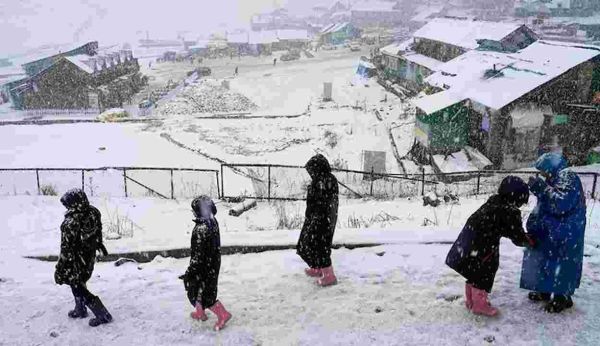
J&K: On Wednesday, the lowest temperature in Jammu and Kashmir somewhat improved, with Srinagar recording a temperature of minus 1.6 degrees Celsius.
The lowest temperature in Jammu and Kashmir improved due to partial nighttime cloud cover; Srinagar recorded a temperature of minus 1.6, Gulmarg a temperature of minus 7.6, and Pahalgam a temperature of minus 7.2.
The lowest temperature of the night was 8.7 degrees Celsius in Jammu city, 6.2 in Katra town, 3.1 in Batote, 2.3 in Banihal, and 2.6 in Bhaderwah.
According to the Meteorological Department, the weather in Jammu and Kashmir is predicted to be chilly, overcast, and mostly dry till January 20, with the exception of a few weak Western Disturbances that may provide light snowfall in the upper reaches.
People are quite concerned about the lack of a significant snowfall in the Valley and the lack of the first snowfall of the season on the plains, as improved fruit, agriculture, and drinkable water during the sweltering summer months depend entirely on a substantial winter snowfall.
The fact that the “Chillai Kalan,” a 40-day period of severe winter cold that began on December 21 and will finish on January 30, has increased Kashmiris’ concerns.
The snowfall in February and March will not be very significant if there is no significant snowfall over the remaining Chillai Kalan time.
Because it melts rapidly and doesn’t refill the perennial water reservoirs up in the mountains, the snowfall in February and March is short-lived.
Throughout the summer, several water bodies in Jammu and Kashmir are supported by these permanent water reservoirs.
Residents of the Valley have been impacted by the cold and dry weather.
People with a history of heart and chest conditions have been urged to take further measures by chest and heart experts.
Children and the elderly have been told not to leave their houses until 10 a.m. since the early cold makes their condition worse.