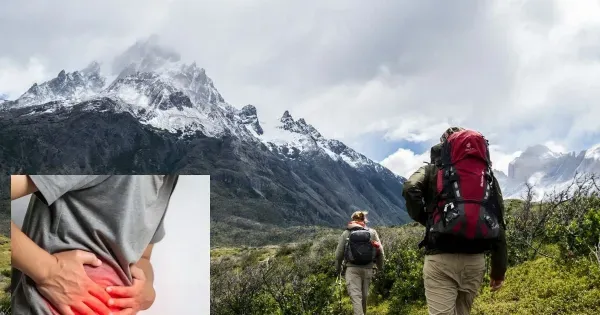
As soon as the new year begins, a large number of people head towards the mountains. Some go to see the snow of Manali, some seek solace in the cold valleys of Shimla or Mussoorie, and some dream of the high peaks of Leh-Ladakh. Snow covered mountains, cool breeze and beautiful views not only give peace to the mind, but sometimes also put the body in trouble.
It is often seen that as soon as people reach high altitude areas, stomach problems start. Some people complain of gas, some feel bloating, some feel constipation, heaviness or restlessness. Sometimes the appetite also decreases and one does not feel like eating.
People think that this happens due to cold or eating outside food, but according to nutritionists, the real reason is something else. Actually, going to altitude reduces the oxygen level in the body, which is called hypoxia. As we go above sea level, the amount of oxygen in the air decreases. Its effect is not only on breathing, but on the entire body, especially the nervous system and digestive system.
There is a special nerve in our body called vagus nerve, which controls the digestive process. Movement of the intestines, release of digestive enzymes and timely emptying of the stomach – all these functions are to this nerve. But when the body does not get enough oxygen, the vagus nerve cannot function properly. The result is that digestion slows down, stomach empties late and problems like gas, flatulence and heaviness start occurring. For this reason, many times in the mountains, despite eating less, the stomach feels full and uncomfortable.