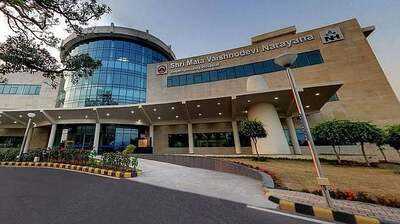
The MARB (Medical Assessment and Rating Board) of the National Medical Commission (NMC) has withdrawn the letter of permission granted to the Shri Mata Vaishno Devi Institute of Medical Excellence in Reasi district of Jammu and Kashmir after a surprise inspection found large-scale non-compliance with minimum standards required to run a medical college.
In an order issued on Tuesday, the MARB said all students admitted to the institute for the 2025–26 academic year will be accommodated in other recognised medical colleges in Jammu and Kashmir as supernumerary seats by the competent authority of the Union Territory administration.
The decision ensures that no student loses an MBBS seat because of the withdrawal of permission. The implementation of the relocation will be handled by the UT’s designated health and counselling authorities, who have been formally informed of the order.
Background to the decisionThe institute had applied under public notices issued by the NMC on 5 December 2024 and 19 December 2024 to establish a new medical college with an intake of 50 MBBS seats for 2025–26. After processing the application, the MARB granted a letter of permission on 8 September 2025, subject to strict conditions on infrastructure, faculty strength, clinical material and compliance with regulatory norms.
However, following the grant of permission, the NMC received multiple complaints alleging serious shortcomings, including inadequate infrastructure, insufficient qualified teaching staff and resident doctors, poor clinical exposure for students and low patient footfall.
Acting under Section 28(7) of the National Medical Commission Act, 2019, which allows for surprise inspections without prior notice, a team of assessors conducted an evaluation of the institute on 2 January 2026. The findings formed the basis for the withdrawal order.
Fresh snowfall greets New Year in Kashmir, weather to improve by evening Key deficiencies flaggedAccording to the MARB assessment report, the institute failed to meet the minimum standards prescribed under the Undergraduate Medical Education Regulations, 2023 (UGMSR-2023). Among the major shortcomings recorded were:
Faculty and staff gaps:
39 per cent deficiency in teaching faculty.
65 per cent deficiency in tutors, demonstrators and senior residents.
Clinical exposure far below norms:
OPD attendance of 182 patients at 1 pm against the required 400.
Bed occupancy at 45 per cent against the mandated 80 per cent.
ICU occupancy at around 50 per cent on average.
Only about 25 deliveries per month, termed “grossly deficient” by the MARB.
Infrastructure and academic gaps:
Absence of student practical laboratories in some departments and no functional research laboratory.
Lecture theatres not meeting minimum standards.
Library stocked with only 744 books against a requirement of 1,500 and two journals against the mandated 15.
No ART centre and no facilities for management of multi-drug resistant tuberculosis (MDR-TB).
Only two operation theatres functional against the required five, no minor OT in the OPD area, and inadequate equipment in para-clinical departments.
Lack of separate male and female wards in some departments.
Citing Regulation 29 of the Establishment of Medical Institutions, Assessment and Rating Regulations, 2023, which treats non-compliance as an offence liable to penalty, the MARB held that the deficiencies amounted to serious violations of regulatory norms.
After considering the inspection report, the commission concluded that the institute had failed to meet the minimum standard requirements for establishing and running a medical college. With the approval of the NMC chairperson, the MARB therefore decided to withdraw the letter of permission with immediate effect.
In addition, the board has ordered the invocation of the performance bank guarantee furnished by the institute at the time of grant of permission, underlining the financial and regulatory consequences of non-compliance.
What happens to studentsAll MBBS students admitted for the 2025–26 session will now be:
Shifted to other recognised medical colleges in Jammu and Kashmir.
Adjusted as supernumerary seats, over and above the sanctioned intake of those institutions.
Placed by the UT administration through its designated health and counselling authorities.
The NMC said this arrangement ensures continuity of education for students while maintaining regulatory standards for medical training institutions.
Kashmir highs see temperatures rise above freezing after snowfall