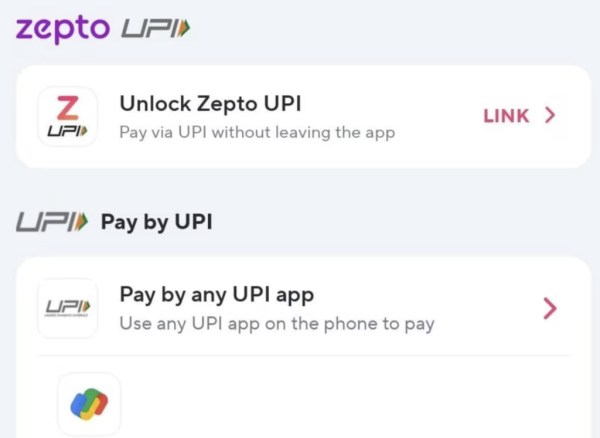
Zepto, the quick-commerce grocery delivery startup, has introduced an in-app UPI payment option for customers, marking a shift toward internalised payment processing. This move aligns with broader trends in the delivery and commerce sector, where companies are increasingly reducing reliance on third-party payment systems and steering users toward native payment experiences.
Zepto users can now complete grocery and essentials purchases using UPI directly within the app. Previously, customers were required to use external UPI apps or rely on saved cards and wallets to make payments. The new in-app UPI feature enables a smoother checkout flow, reducing steps and enhancing convenience for users.
This change is expected to improve the overall customer experience by making payments quicker and more seamless, especially for frequent buyers who value speed and simplicity.
There are several reasons behind Zepto’s decision to offer in-app UPI:
The introduction of native UPI payments signals a step toward greater payment autonomy for Zepto as it scales.
Zepto’s move reflects a growing trend among delivery and quick-commerce firms to internalise payments and reduce dependence on external processors. Integrating UPI directly into apps allows platforms to control the payment experience more comprehensively and respond with customised financial incentives.
Other players in the food delivery and quick-commerce space have also explored or launched native payment solutions to varying degrees, indicating broader industry interest in owning the end-to-end transaction journey.
For Zepto users, the in-app UPI option means:
This could make everyday purchases smoother and more efficient, particularly for users making frequent or small-ticket orders.
By bringing UPI inside the Zepto app, the company can gather more data on customer behaviour during and after purchases. This can fuel targeted marketing, personalised discounts, and loyalty incentives that improve customer engagement and retention.
The strategic shift also places Zepto in a stronger position to compete with other quick-commerce and delivery platforms that are enhancing their payment ecosystems.