Daylight saving time is coming earlier than expected — here’s when you will lose an hour
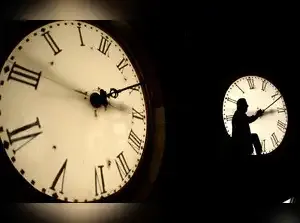
After a long, snowy December, one familiar sign of spring is arriving sooner than usual. Daylight Saving Time 2026 officially begins on Sunday, March 8, marking the earliest possible date on the calendar. That early shift means darker mornings, brighter evenings, and a lost hour of sleep for millions of Americans.
ALSO READ: Quote of the Day by Maya Angelou: 'Prejudice is a burden that …'— Top quotes by the world-famous author
When does Daylight Saving Time start in 2026?
Daylight Saving Time 2026 begins early, landing on Sunday, March 8, at 2 a.m. local time. At that moment, clocks “spring forward” one hour, instantly shifting time ahead. March 8 is the earliest date DST can begin, arriving a full day earlier than in 2025, when the change occurred on March 9.
The practice follows a set rule: Daylight Saving Time always starts on the second Sunday in March and ends on the first Sunday of November. When it begins, clocks move forward; when it ends, they move back an hour in the fall.
Most digital devices, including smartphones, computers, televisions and smart home systems, will automatically update at 2 a.m. For analog clocks, watches, appliances and car dashboards, the change needs to be made manually before going to bed on Saturday night, March 7, by moving the clock ahead a full hour. For most people, that shift means losing sleep. Sunday, March 8, will technically be a 23-hour day, as per a report by Syracuse.com.
ALSO READ: Tommy Lee Jones' net worth as his daughter Victoria's cause of death is revealed
The March 8 start date isn’t unusual in terms of the rules, but it stands out because it’s the earliest possible option on the calendar. The second Sunday in March can fall anywhere between March 8 and March 14, depending on the year. In 2026, the calendar lines up to put the change at its earliest point.
The early switch has renewed confusion for many Americans, especially after years of debate about whether Daylight Saving Time might eventually become permanent. Despite those discussions, nothing has changed yet.
ALSO READ: Quote of the Day by William Wordsworth: 'Wisdom is oftentimes nearer…'— Top quotes by one of the founders of English Romanticism
Despite ongoing political debate, Daylight Saving Time is not permanent and does not appear to be ending anytime soon. Making DST permanent would mean Americans would keep the springtime clock setting year-round and stop “falling back” in November.
U.S. Sen. Rick Scott of Florida reintroduced the Sunshine Protection Act last year, aiming to “lock the clock” and make Daylight Saving Time permanent nationwide. The proposal has stalled multiple times in Congress, largely because lawmakers remain divided over whether permanent daylight time or permanent standard time would be better, as per a report by Syracuse.com.
President Donald Trump has also weighed in on the issue, previously saying he would like to “eliminate daylight saving time,” while acknowledging how difficult it would be to reach consensus.
“This should be the easiest one of all, but it’s a 50-50 issue. If something’s a 50-50 issue, it’s hard to get excited. I assume people would like to have more light later, but some people want to have more light earlier, because they don’t want to take their kids to school in the dark,” Trump said in March. “A lot of people like it one way, a lot of people like it the other way, it’s very even. And usually I find when that’s the case − what else do we have to?”
ALSO READ: Quote of the Day by Adam Smith: 'The first thing you have to know is…'— Top quotes by the father of modern economics
A poll conducted last year found that 61% of Americans want to stop changing their clocks twice a year, though not everyone agrees on how that should be done, as per a report by Syracuse.com.
Daylight Saving Time is not observed in Hawaii or most of Arizona. Because the Uniform Time Act mandates DST nationwide, any other state that wants to opt out must receive congressional approval.
More than a dozen states, including New York and North Dakota, have introduced legislation to make Daylight Saving Time permanent. However, none of those efforts have advanced at the federal level.
A New York bill sponsored in 2023 by State Sen. Joseph Griffo cited health and safety concerns tied to the clock change.
“...Studies show that it is the transition out of Daylight Saving Time, which leads to an increase in car accidents, causes more on-site work incidents, and disrupts the health of all who are subject to this time change,” the bill stated. It added that New York could only act after federal law is repealed.
According to the Associated Press, gaining an hour of sleep in the fall is generally easier for people than losing one in the spring. Still, the body’s internal clock needs time to adjust either way.
Studies have found that heart attacks and strokes tend to increase shortly after Daylight Saving Time begins in March. In contrast, sleep struggles and depression, including seasonal affective disorder, are more common during the shorter days of fall and winter.
The Firemen’s Association of the State of New York encourages people to treat the time change as a reminder to replace smoke detector batteries. The group notes that about 60% of home fire deaths occur in homes without working smoke alarms.
In 1966, President Lyndon B. Johnson signed the Uniform Time Act, formally establishing consistent start and end dates across U.S. time zones. The policy, overseen by the Department of Transportation, was intended to save energy, reduce traffic fatalities and lower crime, as per a report by Syracuse.com.
While DST remained in place after World War II, later research has questioned its effectiveness. A 2008 Department of Energy study found it reduced annual energy use by just 0.03%. Another study from the University of California, Santa Barbara suggested it might actually increase energy consumption.
When do we change clocks for Daylight Saving Time 2026?
At 2 a.m. on Sunday, March 8, clocks move forward one hour.
Is Daylight Saving Time ending or becoming permanent?
No. Despite ongoing debate, no federal change has been approved.
ALSO READ: Quote of the Day by Maya Angelou: 'Prejudice is a burden that …'— Top quotes by the world-famous author
When does Daylight Saving Time start in 2026?
Daylight Saving Time 2026 begins early, landing on Sunday, March 8, at 2 a.m. local time. At that moment, clocks “spring forward” one hour, instantly shifting time ahead. March 8 is the earliest date DST can begin, arriving a full day earlier than in 2025, when the change occurred on March 9.
The practice follows a set rule: Daylight Saving Time always starts on the second Sunday in March and ends on the first Sunday of November. When it begins, clocks move forward; when it ends, they move back an hour in the fall.
Most digital devices, including smartphones, computers, televisions and smart home systems, will automatically update at 2 a.m. For analog clocks, watches, appliances and car dashboards, the change needs to be made manually before going to bed on Saturday night, March 7, by moving the clock ahead a full hour. For most people, that shift means losing sleep. Sunday, March 8, will technically be a 23-hour day, as per a report by Syracuse.com.
ALSO READ: Tommy Lee Jones' net worth as his daughter Victoria's cause of death is revealed
Why is Daylight Saving Time starting so early?
The March 8 start date isn’t unusual in terms of the rules, but it stands out because it’s the earliest possible option on the calendar. The second Sunday in March can fall anywhere between March 8 and March 14, depending on the year. In 2026, the calendar lines up to put the change at its earliest point.
The early switch has renewed confusion for many Americans, especially after years of debate about whether Daylight Saving Time might eventually become permanent. Despite those discussions, nothing has changed yet.
ALSO READ: Quote of the Day by William Wordsworth: 'Wisdom is oftentimes nearer…'— Top quotes by one of the founders of English Romanticism
Is Daylight Saving Time becoming permanent?
Despite ongoing political debate, Daylight Saving Time is not permanent and does not appear to be ending anytime soon. Making DST permanent would mean Americans would keep the springtime clock setting year-round and stop “falling back” in November.
U.S. Sen. Rick Scott of Florida reintroduced the Sunshine Protection Act last year, aiming to “lock the clock” and make Daylight Saving Time permanent nationwide. The proposal has stalled multiple times in Congress, largely because lawmakers remain divided over whether permanent daylight time or permanent standard time would be better, as per a report by Syracuse.com.
President Donald Trump has also weighed in on the issue, previously saying he would like to “eliminate daylight saving time,” while acknowledging how difficult it would be to reach consensus.
“This should be the easiest one of all, but it’s a 50-50 issue. If something’s a 50-50 issue, it’s hard to get excited. I assume people would like to have more light later, but some people want to have more light earlier, because they don’t want to take their kids to school in the dark,” Trump said in March. “A lot of people like it one way, a lot of people like it the other way, it’s very even. And usually I find when that’s the case − what else do we have to?”
ALSO READ: Quote of the Day by Adam Smith: 'The first thing you have to know is…'— Top quotes by the father of modern economics
A poll conducted last year found that 61% of Americans want to stop changing their clocks twice a year, though not everyone agrees on how that should be done, as per a report by Syracuse.com.
Which states don’t observe Daylight Saving Time?
Daylight Saving Time is not observed in Hawaii or most of Arizona. Because the Uniform Time Act mandates DST nationwide, any other state that wants to opt out must receive congressional approval.
More than a dozen states, including New York and North Dakota, have introduced legislation to make Daylight Saving Time permanent. However, none of those efforts have advanced at the federal level.
A New York bill sponsored in 2023 by State Sen. Joseph Griffo cited health and safety concerns tied to the clock change.
“...Studies show that it is the transition out of Daylight Saving Time, which leads to an increase in car accidents, causes more on-site work incidents, and disrupts the health of all who are subject to this time change,” the bill stated. It added that New York could only act after federal law is repealed.
How does Daylight Saving Time affect health and safety?
According to the Associated Press, gaining an hour of sleep in the fall is generally easier for people than losing one in the spring. Still, the body’s internal clock needs time to adjust either way.
Studies have found that heart attacks and strokes tend to increase shortly after Daylight Saving Time begins in March. In contrast, sleep struggles and depression, including seasonal affective disorder, are more common during the shorter days of fall and winter.
The Firemen’s Association of the State of New York encourages people to treat the time change as a reminder to replace smoke detector batteries. The group notes that about 60% of home fire deaths occur in homes without working smoke alarms.
Why was Daylight Saving Time created in the first place?
Daylight Saving Time was first introduced during World War I to conserve fuel needed for war industries. The policy was repealed after the war, then brought back during World War II for similar energy-saving reasons.In 1966, President Lyndon B. Johnson signed the Uniform Time Act, formally establishing consistent start and end dates across U.S. time zones. The policy, overseen by the Department of Transportation, was intended to save energy, reduce traffic fatalities and lower crime, as per a report by Syracuse.com.
While DST remained in place after World War II, later research has questioned its effectiveness. A 2008 Department of Energy study found it reduced annual energy use by just 0.03%. Another study from the University of California, Santa Barbara suggested it might actually increase energy consumption.
FAQs
When do we change clocks for Daylight Saving Time 2026?
At 2 a.m. on Sunday, March 8, clocks move forward one hour.
Is Daylight Saving Time ending or becoming permanent?
No. Despite ongoing debate, no federal change has been approved.