Every year, millions of Christians worldwide celebrate Christmas, but not everyone observes it on December 25. Around 250 million people, mainly from Orthodox and Eastern Christian communities, commemorate the holiday on January 7 also known as Old Christmas Day, following the Julian calendar.
The day honors the birth of Jesus Christ, who was born in Bethlehem. For these communities, the date variation is not about belief in a separate birth date, but rather about the calendar system they follow.
What is Orthodox Christmas?
The story of January 7 Christmas starts in 1582, when Pope Gregory XIII introduced the Gregorian calendar to rectify errors in the older Julian calendar. The Julian calendar, made under Roman Emperor Julius Caesar in 46 BC, miscalculated the solar year by approximately 11 minutes, causing seasonal drift over centuries. To realign the calendar, 10 days were dropped.The majority of the world adopted the Gregorian calendar, but several Orthodox and Eastern Christian churches retained the Julian system to maintain traditions. Today, the Julian calendar is 13 days behind the Gregorian calendar, so December 25 on the Julian calendar is on January 7 in the contemporary calendar. Interestingly, if these churches remains to use the Julian system, Orthodox Christmas will change to January 8 in 2101, as the gap widens to 14 days.
Who Observes January 7 Christmas
The groups celebrating January 7 are:- The Russian Orthodox Church, the largest of the Julian-calendar traditions.
- The Serbian and Georgian Orthodox Churches.
- The Coptic Orthodox Church, mainly in Egypt.
- The Ethiopian and Eritrean Orthodox Tewahedo Churches.
Origins of December 25
The original date of Jesus’ birth is not definitively known. December 25 was selected by early Christians in regard to the belief that Jesus was conceived on March 25, the Feast of the Annunciation. Adding nine months to this date results to December 25. Apart from this, January 1 was already regarded as New Year’s Day in the Roman calendar, termed for Janus, the god of beginnings, and retained in later calendar reforms.Orthodox Christmas Traditions
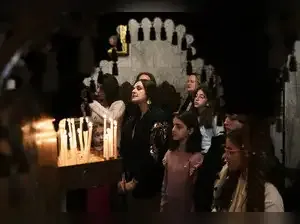
The Christmas season is not over for Orthodox Christians following the Julian calendar. Celebrations are liturgies, family feasts, and decorations.Churches in Pittsburgh, which includes St. Michael’s, St. Nicholas Serbian Orthodox Church, and St. Vladimir Parish, marks the holiday with certain liturgies and traditional meals. A Sochelnik treat on Christmas Eve often has 12 meat-free dishes in honor of the Apostles. Several churches also livestream services online for those who are not able to attend in person.
Is Orthodox Christmas a Holiday?
While it is a public holiday in some countries such as Russia, Ethiopia, Egypt (for Coptic Christians), and some Eastern European countries, it is not a public holiday in most Western nations, though several Orthodox Christian communities still honor it with church services, family gatherings, and traditional meals.In short: for those who follow the Julian calendar, it is a festive and sacred day.
FAQs;
Q1. When is Orthodox Christmas celebrated?Orthodox Christians generally celebrate Christmas on January 7. This is based on the Julian calendar, which is 13 days behind the Gregorian calendar.
Q2. Why do some Christians celebrate on a different day?
The difference is because of the calendar systems rather than varying beliefs about Jesus’s birth. Some churches retained the Julian calendar for customs and liturgical purposes.