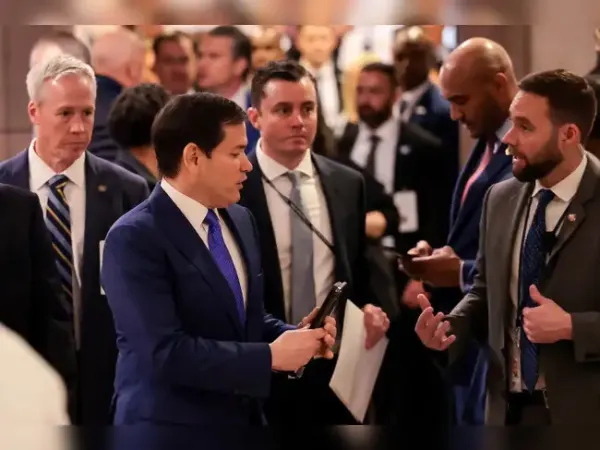
US Secretary of State Marco Rubio said on Wednesday, January 7, that he plans to meet Danish officials next week without retreating military intervention as a discussable option, as the Trump administration doubled down on its stated intent to take over Greenland, the strategic Arctic island that is a self-governing territory of Denmark.
Rubio reiterated that Trump’s interest in Greenland dates back to his first term in office. “That’s always been the president’s intent from the very beginning,” Rubio told reporters, as quoted by AP. “He’s not the first US president that has examined or looked at how we could acquire Greenland.”
The outlet cited a statement from Greenland’s government website on Tuesday, January 6, and reported that Danish Foreign Minister Lars Løkke Rasmussen and Greenland’s foreign minister, Vivian Motzfeldt, requested a meeting with Rubio. Previous requests for a meeting had not been successful, the statement read.
Since the capture of former Venezuelan leader Nicolás Maduro, President Donald Trump has revived his long-standing argument that the United States needs to control Greenland to ensure its own security, citing rising threats from China and Russia in the Arctic. However, the specific points that will be discussed in Rubio’s Denmark visit are not fully known, but military options are there, as comments from Rubio signaled.
While asked if US are still considering military intervention of Greenland, Rubio said, as quoted by AP "I'm not here to talk about Denmark or military intervention, I’ll be meeting with them next week, we’ll have those conversations with them then, but I don't have anything further to add to that," adding that every president retains the option to address national security threats to the United States through military means.
Trump has repeatedly argued that US control of Greenland is essential for national security and has refused to rule out the use of military force to acquire the territory, which was in line with Rubio’s comment.
However, Rubio told a select group of US lawmakers that the administration’s preferred approach would be to purchase Greenland rather than seize it militarily. Those remarks, first reported by The Wall Street Journal, were made during a classified briefing on Capitol Hill on Monday evening.
Greenland, a mineral-rich and self-governing territory of Denmark, occupies a strategic position between Europe and North America and has long been a critical component of the US ballistic missile defense system. Its mineral resources also align with Washington’s goal of reducing dependence on China.
Trump first floated the idea of acquiring Greenland in 2019 during his first presidency, arguing that the island is central to US military strategy and that Denmark has failed to adequately protect it. However, the United States already enjoys broad military access to Greenland under treaties signed with Denmark in 1951 and again in 2023.
Tensions with NATO members escalated further after the White House stated that the “US military is always an option.” Danish Prime Minister Mette Frederiksen warned earlier this week that a US takeover of Greenland would negatively impact NATO.
Rubio reiterated that Trump’s interest in Greenland dates back to his first term in office. “That’s always been the president’s intent from the very beginning,” Rubio told reporters, as quoted by AP. “He’s not the first US president that has examined or looked at how we could acquire Greenland.”
The outlet cited a statement from Greenland’s government website on Tuesday, January 6, and reported that Danish Foreign Minister Lars Løkke Rasmussen and Greenland’s foreign minister, Vivian Motzfeldt, requested a meeting with Rubio. Previous requests for a meeting had not been successful, the statement read.
What’s on Rubio’s agenda for Denmark visit
Since the capture of former Venezuelan leader Nicolás Maduro, President Donald Trump has revived his long-standing argument that the United States needs to control Greenland to ensure its own security, citing rising threats from China and Russia in the Arctic. However, the specific points that will be discussed in Rubio’s Denmark visit are not fully known, but military options are there, as comments from Rubio signaled.
While asked if US are still considering military intervention of Greenland, Rubio said, as quoted by AP "I'm not here to talk about Denmark or military intervention, I’ll be meeting with them next week, we’ll have those conversations with them then, but I don't have anything further to add to that," adding that every president retains the option to address national security threats to the United States through military means.
Military takeover or Money heist?
Trump has repeatedly argued that US control of Greenland is essential for national security and has refused to rule out the use of military force to acquire the territory, which was in line with Rubio’s comment.
However, Rubio told a select group of US lawmakers that the administration’s preferred approach would be to purchase Greenland rather than seize it militarily. Those remarks, first reported by The Wall Street Journal, were made during a classified briefing on Capitol Hill on Monday evening.
Greenland key to US security, as per Trump
Greenland, a mineral-rich and self-governing territory of Denmark, occupies a strategic position between Europe and North America and has long been a critical component of the US ballistic missile defense system. Its mineral resources also align with Washington’s goal of reducing dependence on China.
Trump first floated the idea of acquiring Greenland in 2019 during his first presidency, arguing that the island is central to US military strategy and that Denmark has failed to adequately protect it. However, the United States already enjoys broad military access to Greenland under treaties signed with Denmark in 1951 and again in 2023.
Tensions with NATO members escalated further after the White House stated that the “US military is always an option.” Danish Prime Minister Mette Frederiksen warned earlier this week that a US takeover of Greenland would negatively impact NATO.