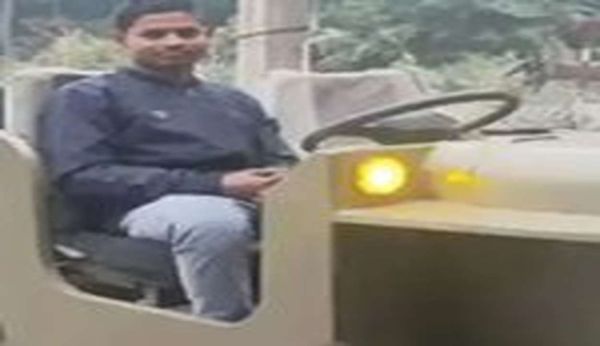
Bihar: In only eighteen days, a Bihar man constructed a five-seater electric vehicle that the Purnia people refer to as the “Desi Tesla.” The fact that the vehicle can go up to 100 kilometers on a single charge and only costs Rs 1 lakh adds to its impressiveness.
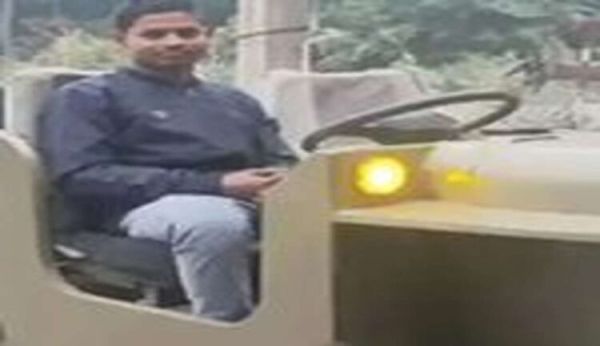
Murshid Alam operates a small business and fixes cars; he is neither a company founder nor a skilled engineer. He discovered, while working in his garage, that small business owners and farmers in rural areas lacked an economical and effective means of transportation for everyday commuting or agricultural tasks.
Most rural users could not afford commercially available electric cars, while diesel and gasoline vehicles were costly and required a lot of maintenance. This led to the notion of building an electric jeep in-house that would meet the demands of the hamlet.
The car has a speedometer, power steering, a charging port, and four wheels with tubeless tires. It is quite useful for farms since an extra trolley can be connected to transport crops, fertilizer, and other items.
The vehicle can go around 100 kilometers after a complete charge, which takes roughly five hours.
Murshid’s invention coincides with India’s gradual transition from gasoline and diesel to electricity. There are four primary categories of farm equipment: heavy machinery, aerial systems, light utility vehicles, and stationary machines.
Since stationary equipment doesn’t move very much, it is the simplest to electrify. They become more efficient, cleaner, and quieter when converted to electric.
Spurthi, a 17-year-old from Telangana, previously constructed a unique electric car using only waste materials and scrap iron.
Her car could go 40–50 kilometers and cost around Rs 40,000 to manufacture. In only two months, she developed and constructed the car by herself.