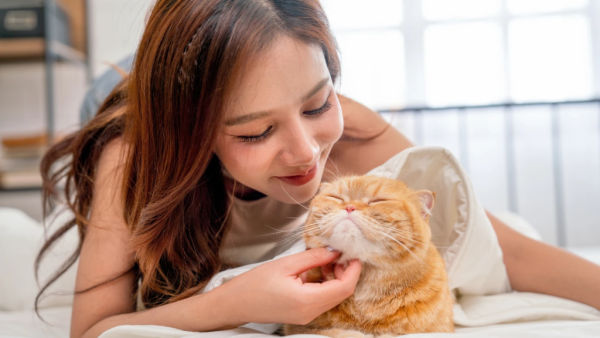
If you’ve been lucky enough to share a home with an orange cat, you know just how special they are. Orange cats have a way of standing out from other cats. Maybe it’s their brightly colored fur, their goofball nature, or the fact that they always seem to be up to mischief.
It turns out, there’s more to orange cats than meets the eye. Science actually shows that they have some pretty cool traits, from their biology to their behavior.
Scientists have now pinpointed the exact mutation that causes orange cats to have their distinctive coloring, and it’s actually linked to their gender. The majority of orange tabbies are boys, estimated to be roughly 80%. The gene for orange fur is located on the X chromosome, so males (who have XY chromosomes) only need one copy to be solid orange.
Kamyshnikova Viktoria | Shutterstock
Females, however, need to have the orange gene on both X chromosomes that they inherit from their parents. Statistically, it’s much less likely for a cat to have the genetics to be both female and fully orange. More often, female cats with only one orange gene become calico or tortoiseshell-colored.
: How Cats & Their Owners Affect Each Other’s Brains, According To Science
This is technically true, but it’s more about perception than biology. Male cats are generally larger and have a more substantial frame than female cats. Since the majority of orange cats are male, it may appear that all orange cats are bigger.
WagWalking.com says that, on the other hand, female orange cats tend to be smaller than most other cats. They explained, “In other words, a male orange cat will be big compared with most other breeds, but the female won’t follow suit — she will be smaller than the female in most other breeds.”
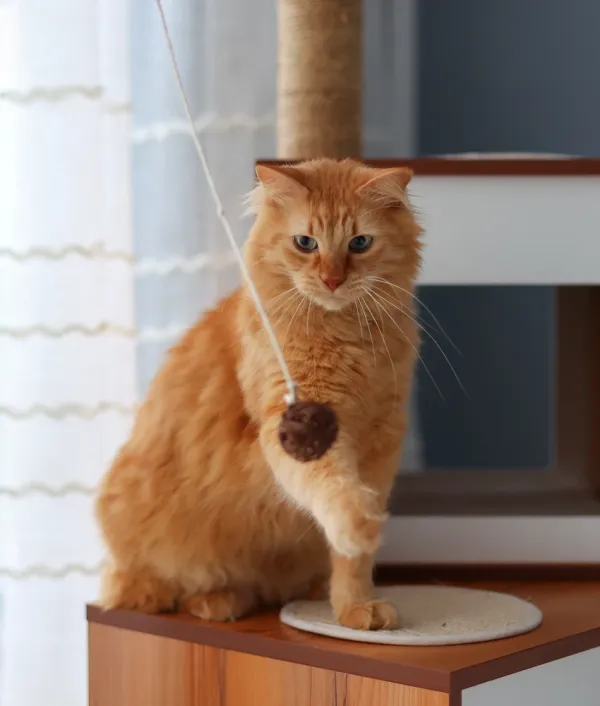
Orange cats are known for their bold and distinctive personalities. Though color hasn’t been scientifically proven to be linked to personality, they still have a reputation for being the most friendly and outgoing with humans.
 Nataliya Derkach | Shutterstock
Studies have attempted to find an explanation for the behavioral stereotypes of orange cats, but none have been definitive. One researcher found that more social orange cats may achieve greater reproductive success in certain areas, but it’s also speculated that genes for behavior could be inherited alongside those for fur color.
: 4 Things Cats Take Into Consideration When Choosing Their Favorite Human
While it’s not specific to orange cats, there is a genetic phenomenon in which a cat’s coloring can slightly change with temperature. It’s the result of a mutation in the tyrosinase enzyme, which occurs in certain cat breeds and is responsible for melanin production.
Dr. Saskia Schneider explained to PetBook Magazine, “This means: In warmer body regions, the enzyme is inactive — there, the fur remains light. In cooler areas like the ears, paws, face, and tail, melanin production is activated, and the fur appears significantly darker.”
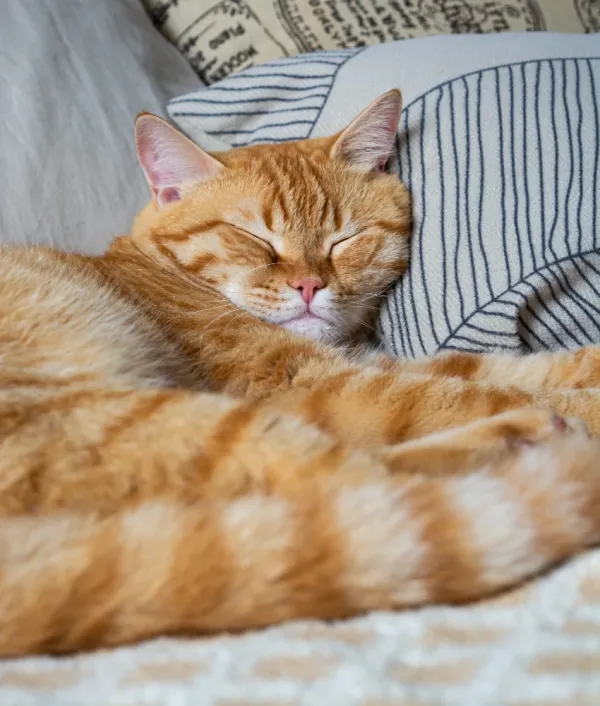
Much like a human fingerprint, no two orange cats have exactly the same stripes. The orange pigment, called pheomelanin, produces various shades of cream and red stripes all over the cat’s body.
 FeLopes | Shutterstock
These stripe patterns are determined by a combination of genetics and random chance. Small timing differences during the stripe-formation process create variations that become unique stripe layouts.
: Why Owning Cats Can Indeed Heal You, According To Research
Kayla Asbach is a writer currently working on her bachelor’s degree at the University of Central Florida. She covers relationships, psychology, self-help, pop culture, and human interest topics.