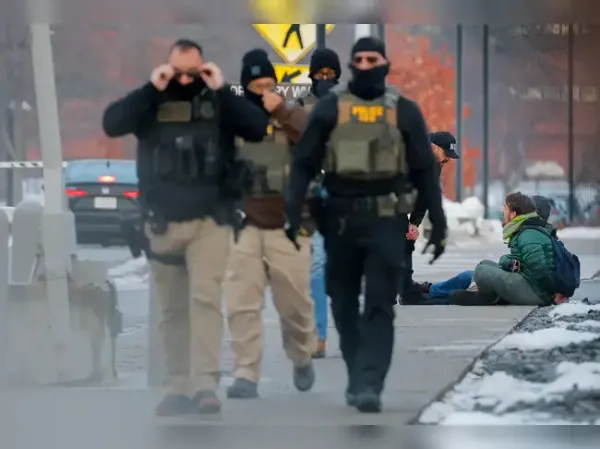
In the immediate aftermath of the fatal shooting of Renee Nicole Good, a 37-year-old woman killed by an ICE officer in Minneapolis, confusion and misinformation spread rapidly online, driven in large part by AI-generated images and internet rumors. Experts and journalists now warn that the misuse of generative AI tools in breaking-news situations can seriously distort evidence, misidentify individuals, and inflame public anger.
Renee Nicole Good was shot and killed on Wednesday during an encounter with US Immigration and Customs Enforcement (ICE) officers in Minneapolis. Eyewitness videos captured the moments leading up to the shooting, showing an ICE agent wearing a face mask as Good apparently attempted to drive away from officers.
Within hours, still images from the video began circulating on social media. Alongside the original footage, new images appeared showing what looked like the same agent unmasked, images that were not part of the original evidence.
Those altered images were generated using Grok, the generative AI chatbot developed by xAI, after users on X (formerly Twitter) prompted the tool to “unmask” the ICE agent. The resulting images appeared realistic to casual viewers, leading many to believe the agent’s identity had been revealed.
AI tools do not recover hidden details, they invent them.
As the AI-generated image spread, it was soon accompanied by a name: Steve Grove. The origin of the name remains unclear, but its circulation triggered real-world harm.
At least two unrelated individuals named Steve Grove became targets of online harassment, as reported by NPR.
Steven Grove, a gun shop owner in Springfield, Missouri, woke up to find his Facebook page flooded with angry messages.
“I never go by ‘Steve,’” he told the Springfield Daily Citizen. “And then, of course, I’m not in Minnesota. I don’t work for ICE, and I have 20 inches of hair on my head.”
Another Steve Grove, publisher of the Minnesota Star Tribune, was also falsely linked to the incident. The newspaper said it was monitoring what it believed to be a coordinated online disinformation campaign and urged readers to rely on reporting from trained journalists rather than bots.
While social media speculation spiraled, established news organizations followed verification standards. NPR, the Minnesota Star Tribune, and other outlets identified the ICE agent involved as Jonathan Ross, based on court documents and official records.
Those records show Ross was previously involved in a separate incident in June of last year in Bloomington, Minnesota, during which he was dragged by a car during a traffic stop.
Renee Nicole Good was shot and killed on Wednesday during an encounter with US Immigration and Customs Enforcement (ICE) officers in Minneapolis. Eyewitness videos captured the moments leading up to the shooting, showing an ICE agent wearing a face mask as Good apparently attempted to drive away from officers.
Within hours, still images from the video began circulating on social media. Alongside the original footage, new images appeared showing what looked like the same agent unmasked, images that were not part of the original evidence.
How AI fueled the confusion
Those altered images were generated using Grok, the generative AI chatbot developed by xAI, after users on X (formerly Twitter) prompted the tool to “unmask” the ICE agent. The resulting images appeared realistic to casual viewers, leading many to believe the agent’s identity had been revealed.
AI tools do not recover hidden details, they invent them.
False names and real-world consequences
As the AI-generated image spread, it was soon accompanied by a name: Steve Grove. The origin of the name remains unclear, but its circulation triggered real-world harm.
At least two unrelated individuals named Steve Grove became targets of online harassment, as reported by NPR.
Steven Grove, a gun shop owner in Springfield, Missouri, woke up to find his Facebook page flooded with angry messages.
“I never go by ‘Steve,’” he told the Springfield Daily Citizen. “And then, of course, I’m not in Minnesota. I don’t work for ICE, and I have 20 inches of hair on my head.”
Another Steve Grove, publisher of the Minnesota Star Tribune, was also falsely linked to the incident. The newspaper said it was monitoring what it believed to be a coordinated online disinformation campaign and urged readers to rely on reporting from trained journalists rather than bots.
Who was the officer who shot Renee Nicole Good
While social media speculation spiraled, established news organizations followed verification standards. NPR, the Minnesota Star Tribune, and other outlets identified the ICE agent involved as Jonathan Ross, based on court documents and official records.
Those records show Ross was previously involved in a separate incident in June of last year in Bloomington, Minnesota, during which he was dragged by a car during a traffic stop.