
According to Europeans, they can instantly recognize when someone is an American tourist based on some telltale behaviors. From what they wear to how they talk, Americans apparently don’t blend in very well.
Traveling abroad comes with its own set of rules and customs, ones that tourists must learn and abide by. However, for Americans visiting Europe, some habits tend to stand out more than others.
American culture has a very specific communication style that highly values speaking up. It’s a positive thing to be expressive, and speaking loudly can convey enthusiasm and excitement to those around you. Being quiet can sometimes be interpreted as a lack of confidence or uncertainty.
Stefanovic Mina | Shutterstock
Additionally, many public spaces in the United States are noisy by design. Venues for activities like dining, drinking, or watching sporting events tend to be quite loud, requiring people to speak loudly to be heard. This habit can be hard to break when traveling abroad.
Perception may also play a role. When Americans are in other places where the norm is to speak quietly (like in Europe), the contrast is far more noticeable. Locals may apply their own cultural expectations to Americans’ behavior.
: 1 in 3 Americans Share This Specific Fear That Keeps Them From Traveling The World
Americans often use their ingrained tipping habits when traveling, even if it’s not standard etiquette. In some countries, tipping is optional or even frowned upon. European service workers don’t rely as heavily on tips from customers as Americans do, as they’re typically paid significantly higher wages.
While it’s common for Americans to add on 15-20% of the total for the server’s tip, European restaurants don’t work that way. They either include an automatic service charge on the bill or customers know to round up to the nearest euro or leave a small extra percentage as a tip.
Many Europeans will tell you that they can spot an American from miles away (or, technically, kilometers) by them only wearing a baseball cap. Baseball is known as a major American sport, and it has significant historical roots in the culture. Seeing someone wear a baseball cap with an American team logo usually screams “American sports fan.”
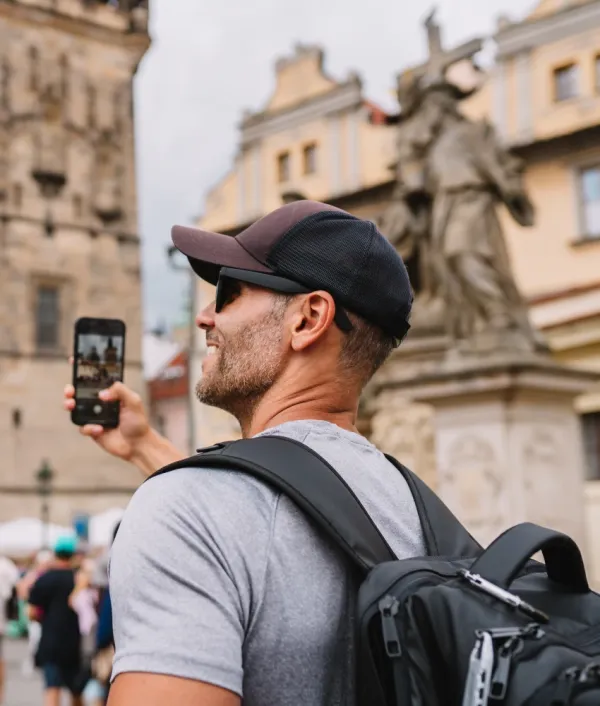 Eternas | Shutterstock
Baseball caps are also a symbol of casual American fashion. A stereotype often reinforced in the media, the standard style that has been popularized worldwide for Americans is jeans, sneakers, t-shirts, and baseball caps. It’s a practical outfit, but one that isn’t usually seen much in other countries.
: Americans Can Smell These Specific Scents That People From Europe Can’t, Says A European Woman
Europeans treat coffee much differently than Americans do. It’s considered a sacred ritual, one that’s meant to be hot and drunk quickly, usually as a shot of espresso. Iced coffee is a more casual drink, and it doesn’t align with European ideas of what coffee should be used for. Asking for an iced coffee in Europe isn’t offensive, but it will likely be seen as strange or unusual to locals.
Coffee is an old-standing tradition for Europeans. It’s associated with intellectual culture, and it plays a big role in Europe’s social scenes. A small, well-made coffee signifies habit and enjoyment, rather than drinking caffeine solely for energy optimization.
Friendliness is a huge social norm in America, even to people you don’t know. Having casual interactions and being polite to others is expected in public spaces. Being a “good citizen” usually involves greeting someone in an elevator or chatting with a barista at the coffee shop. American people are more accustomed to small talk, as it’s extremely prevalent in jobs and schools.
 Oscar M Sanchez | Shutterstock
On the other hand, countries in Asia and Europe tend to value privacy and boundaries. You might not find someone as willing to strike up a conversation or share a smile in passing, but it’s not because they’re being rude. It’s just not a part of their culture.
: People Living The ‘European Dream’ Brag About How Much Better It Is Than America — ‘American Dream’s Not For Me Anymore’
Kayla Asbach is a writer currently working on her bachelor’s degree at the University of Central Florida. She covers relationships, psychology, self-help, pop culture, and human interest topics.