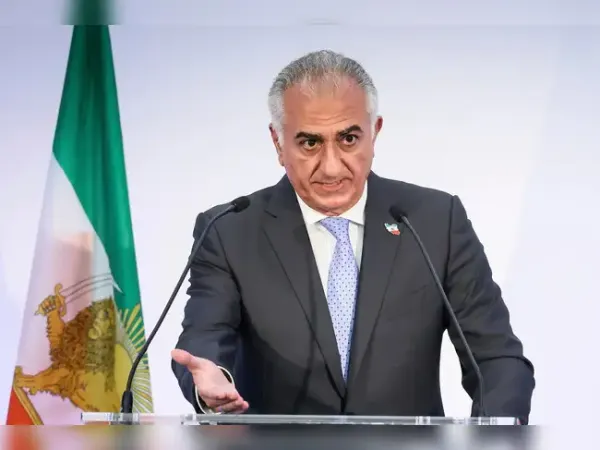
As nationwide protests continue to roil Iran, the country’s exiled former crown prince, Reza Pahlavi, has signaled a possible return after nearly half a century away, a development with deep political and historical implications. Pahlavi’s statements have reignited debate in and outside Iran about leadership, opposition strategy, and the future of the Islamic Republic.
In 1978-79, amid rising unrest, he left Iran for schooling in the United States; shortly afterwards, the monarchy was overthrown by the Islamic Revolution led by Ayatollah Ruhollah Khomeini, and the Pahlavi family never returned.
After his father’s death, a royal court in exile declared Reza Pahlavi as head of the former imperial house in 1980 when he was just 20 years old. Since then, he has lived predominantly in the US, advocating for secular democracy in Iran and criticizing the clerical leadership in Tehran.
His efforts have blended monarchical heritage with modern political activism, though he insists any future Iranian system must be chosen by the Iranian people.
In a series of public statements on social media, Reza Pahlavi has called for nationwide demonstrations and unity across Iranian society. He appealed to workers, citizens, and even security forces to stand against the Islamic Republic’s leadership and tone down coercive actions against protesters.
Pahlavi’s messages have been widely rebroadcast by Farsi-language channels and social networks.
Most strikingly, he has stated that he is “preparing to return to the homeland” to stand with the Iranian people when the moment of a successful national transition arrives. This language represents the most definitive hint of a potential physical return to Iran since his family’s exile nearly five decades ago.
He also emphasized readiness to return when the “national revolution’s victory” is near, signaling a future presence on Iranian soil. He addressed all Iranians, including members of the security services, urging restraint and alignment with the protest movement.
In parts of the Iranian public and diaspora, some chants reportedly echo monarchy-linked slogans, such as “This is the final battle, Pahlavi will return,” though it is not always clear if these reflect support for the man himself or nostalgia for a pre-1979 era.
However, critics point to his long absence from Iran, the generational divide between older monarchist narratives and a younger population shaped entirely under the Islamic Republic, and concerns about external influence.
It might also provoke a severe backlash from the Iranian government, which labels such figures as foreign-aligned threats.
Who is Reza Pahlavi?
Reza Pahlavi was born on October 31, 1960, in Tehran as the eldest son of Mohammad Reza Shah Pahlavi, Iran’s last monarch, and Empress Farah Pahlavi. As crown prince, he was heir to the Peacock Throne, the symbol of Iran’s centuries-old monarchy.In 1978-79, amid rising unrest, he left Iran for schooling in the United States; shortly afterwards, the monarchy was overthrown by the Islamic Revolution led by Ayatollah Ruhollah Khomeini, and the Pahlavi family never returned.
After his father’s death, a royal court in exile declared Reza Pahlavi as head of the former imperial house in 1980 when he was just 20 years old. Since then, he has lived predominantly in the US, advocating for secular democracy in Iran and criticizing the clerical leadership in Tehran.
His efforts have blended monarchical heritage with modern political activism, though he insists any future Iranian system must be chosen by the Iranian people.
Protests and Pahlavi’s renewed role
The current wave of protests, sparked by worsening economic conditions, political repression, social grievances and compounded by recent regional tensions, has entered its second week with nationwide mobilizations and severe government crackdowns. Pahlavi has emerged as a visible voice urging Iranians to intensify their resistance.In a series of public statements on social media, Reza Pahlavi has called for nationwide demonstrations and unity across Iranian society. He appealed to workers, citizens, and even security forces to stand against the Islamic Republic’s leadership and tone down coercive actions against protesters.
Pahlavi’s messages have been widely rebroadcast by Farsi-language channels and social networks.
Most strikingly, he has stated that he is “preparing to return to the homeland” to stand with the Iranian people when the moment of a successful national transition arrives. This language represents the most definitive hint of a potential physical return to Iran since his family’s exile nearly five decades ago.
What Pahlavi has said about return
In his latest messages, Pahlavi described the protests as a watershed moment and urged continued participation. He called on Iranians to demonstrate with flags and national symbols and to occupy city centers.He also emphasized readiness to return when the “national revolution’s victory” is near, signaling a future presence on Iranian soil. He addressed all Iranians, including members of the security services, urging restraint and alignment with the protest movement.
In parts of the Iranian public and diaspora, some chants reportedly echo monarchy-linked slogans, such as “This is the final battle, Pahlavi will return,” though it is not always clear if these reflect support for the man himself or nostalgia for a pre-1979 era.
However, critics point to his long absence from Iran, the generational divide between older monarchist narratives and a younger population shaped entirely under the Islamic Republic, and concerns about external influence.
What a Return Would Mean
A physical return of Reza Pahlavi to Iran after nearly 50 years would be momentous, not only politically but symbolically. It could further galvanize certain segments of the protest movement.It might also provoke a severe backlash from the Iranian government, which labels such figures as foreign-aligned threats.