Defiance in the Streets: The ongoing unrest in Iran has taken a dramatic and deeply symbolic turn, drawing global attention to the role of women in challenging one of the world’s most rigid political systems. What began as public anger over economic distress has evolved into a broader rejection of authoritarian governance, with Iranian women emerging as some of the most visible and fearless participants. Their actions are not only protests against the state but also direct challenges to decades of enforced social control.

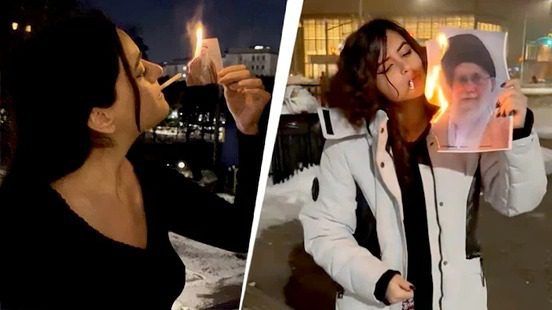
One of the most striking developments to emerge from the recent demonstrations is the circulation of visuals showing Iranian women lighting cigarettes using burning photographs of Ayatollah Ali Khamenei. In a country where both criticism of the Supreme Leader and women smoking are heavily restricted, this act has taken on powerful symbolic meaning. It represents a direct rejection of imposed authority and the moral codes enforced by the state.
These images have spread rapidly across digital platforms, transforming into an emblem of resistance that resonates far beyond Iran’s borders. They reflect a protest culture that is no longer subtle or reformist but openly confrontational.
The current wave of protests initially erupted due to economic hardship, rising inflation, and unemployment. However, the movement quickly expanded into a broader political uprising. Protesters are no longer asking for limited reforms; many are calling for an end to the Islamic Republic itself.
Chants heard across major cities, including Tehran, signal this shift in sentiment. Slogans openly condemning the ruling establishment have echoed through streets, marking a rare and dangerous form of dissent in modern Iran.
Since late December, demonstrations have involved people from all age groups. Young students, working professionals, and elderly citizens alike have participated, signaling widespread frustration across society. In some rallies, protesters have even voiced support for the return of the former monarchy, referencing Reza Pahlavi, the son of Iran’s last ruler before the 1979 revolution.
This blending of generational anger suggests that the unrest is not a temporary outburst but a deep-rooted societal rupture.
While men and women both participate in protests, women have become the defining face of resistance. Acts such as burning headscarves, appearing publicly without hijabs, and confronting security forces have directly challenged laws that govern female behavior.
These actions are especially significant in Iran, where the state tightly regulates women’s appearance and conduct. By defying these rules in public, women are not only opposing political authority but reclaiming personal autonomy.
This is not the first time such defiance has been witnessed. Similar expressions of resistance appeared during the 2022 protests following the death of Mahsa Amini, a young woman who died in police custody after being detained for allegedly violating dress codes. That movement resulted in hundreds of deaths but permanently altered the landscape of dissent in Iran.
Since then, acts of resistance against hijab laws and morality policing have become more frequent and more visible, especially in universities and public spaces.
The Iranian state has responded with severe measures. Burning images of the Supreme Leader is considered a major crime, and officials have publicly warned of extreme punishments, including execution, for those involved in violent protests or symbolic defiance.
Past incidents underscore these dangers. Individuals who have posted protest videos online have reportedly faced fatal consequences, reinforcing the risks protesters knowingly take.
Despite these threats, demonstrations continue. Reports from within Iran suggest that the death toll has risen into the hundreds, yet the movement shows little sign of slowing.
International observers, analysts, and public figures have reacted strongly to the visuals emerging from Iran. Many have described the actions of Iranian women as unprecedented in courage, highlighting how personal risk is embraced in pursuit of freedom.
Social media has amplified these voices, turning local acts of resistance into global statements against oppression.
Perhaps the most significant aspect of the current unrest is what it represents beneath the surface. These protests are not only about leadership or economic policy; they reflect a cultural transformation. Women cutting their hair, removing headscarves, or confronting authority figures symbolize a broader rejection of sexist and authoritarian norms.
An especially poignant image circulating online shows an elderly woman, injured yet unafraid, declaring that she has lived without freedom for decades. Such moments capture the emotional depth and historical weight of the movement.
The increasing frequency and boldness of symbolic defiance have intensified pressure on Iran’s leadership. Each act of protest chips away at the image of absolute control maintained by the state.
What is unfolding in Iran is not merely a political crisis but a redefinition of resistance, led in large part by women who refuse to remain silent.