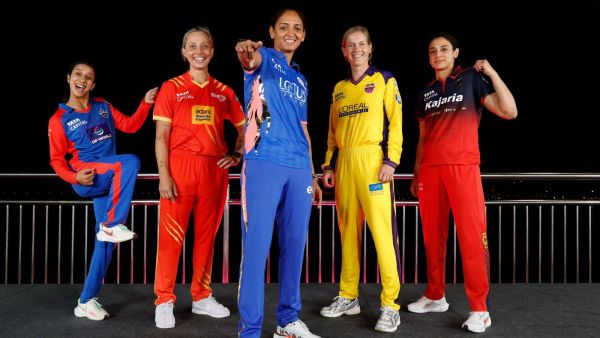
Three days ago, Royal Challengers Bengaluru (RCB) created a sensation by chasing down 90 runs in the last 10 overs to defeat Mumbai Indians in the Women’s Premier League’s (WPL) fourth season, which began recently. The contest was every bit as nail biting and thrilling as any battle in the men’s game. RCB needed 18 off the final over with three wickets left, but Nadine de Klerk pulled off an incredible victory against the Harmanpreet Kaur-led Mumbai team.
De Klerk finished with an unbeaten 63 in 44 balls. This was in addition to her 4 for 26 with the ball – a performance that left the opponents shell shocked. Harmanpreet Kaur could only muster a wry smile that conveyed more than words could.
With the fourth edition of the WPL now underway, it can safely be said that the tournament has been able to achieve many of its initial objectives. Launched by the Board of Control for Cricket in India (BCCI) in 2023, the WPL was conceived as a step to improve women’s cricket in India. It was a long-pending demand of the past players like Mithali Raj and Jhulan Goswami that the BCCI finally fulfilled.

Now, the WPL tournament has taken off like a rocket.
Foreign publications are writing about it, players from many different countries are flocking to take part in it and the discerning cricket fans are captivated by it. The Australian media has given India’s WPL wide ranging coverage on many aspects and discussed the different issues involved. In no way is the WPL behind the men’s Indian Premier League (IPL) in garnering attention.
In an article that Forbes magazine has written, it said: “These surreal scenes were once unimaginable in India, where women’s cricket had developed slowly due to underfunding and cultural norms. But now players earn huge pay cheques.”
India’s Smriti Mandhana, Australia’s Ashleigh Gardner and England’s Natalie Sciver-Brunt are jointly the highest paid players in this edition of the WPL, with salaries of Rs 3.5 crore. Although this is below the payments for the men IPL stars, it is expected that the women’s salaries will rise in the coming years.
The Forbes article quoted Meg (Meghann) Lanning, the Singapore-born World Cup winning Australian star player as saying: “It’s great to see the women’s game getting this level of recognition. A tournament like the WPL plays a crucial role in growing the sport globally.”
The key objectives of the Women’s Premier League were to create a platform for Indian women cricketers to excel as well as to offer the women players financial security and long-term careers. It was also meant to raise the standard of women’s cricket in India through exposure to elite international players and high pressure competitions.
In addition, the BCCI wanted to expand the talent pool by inspiring young girls to take up cricket. It also wanted to increase visibility of the game in the media and among the cricket loving public. Automatically, this would add commercial value to women’s cricket. Those were the immediate goals of the BCCI. Fortunately, the signals have been largely positive till today.
Player salaries, even for uncapped Indian cricketers, have seen a steady rise in women’s cricket. This has changed the economic reality for many players and validated cricket as a career choice for women.
The standard of competition has been consistently high and there have been many close matches as well as standout individual performances. Young Indian players have carved out worthwhile careers alongside the established stars. The newcomers have learnt tactics and methods to improve their game. In that respect, the WPL has already improved India’s bench strength in women’s cricket.
Just as in the IPL, performances in the WPL have translated into national selection. There are strong indications that the WPL has captured public attention. More importantly, it has created new role models for young and aspiring new players and fans.
However, there is still room for improvement. There always is. The WPL is not without its own challenges. The objective before the tournament organisers now should be to increase the number of participating teams from five to eight or 10, and expand the duration of the event.
This will automatically increase the number of venues and take the game to the grassroots level. With India having won the ICC Women’s World Cup and the steadily increasing viewership, there should not be a big problem to find new sponsors.So, all said and done, the overall picture is positive. The Women’s Premier League has largely met its core objectives within a short span of time. While it is still evolving, its impact on women’s cricket in India, across diverse fronts, has had an optimistic and encouraging effect. If nurtured carefully, the WPL has the potential to become the most influential women’s T20 league in the world. In future, it has the potential to enjoy the same worldwide status that the men’s IPL does nowadays.